Sensing and capture of toxic and hazardous gases and vapors by metal–organic frameworks
Hao Wang, William P. Lustig, Jing Li
文献索引:10.1039/C7CS00885F
全文:HTML全文
摘要
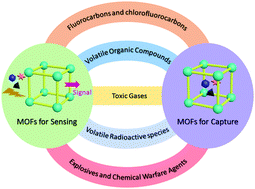
Toxic and hazardous chemical species are ubiquitous, predominantly emitted by anthropogenic activities, and pose serious risks to human health and the environment. Thus, the sensing and subsequent capture of these chemicals, especially in the gas or vapor phase, are of extreme importance. To this end, metal–organic frameworks have attracted significant interest, as their high porosity and wide tunability make them ideal for both applications. These tailorable framework materials are particularly promising for the specific sensing and capture of targeted chemicals, as they can be designed to fit a diverse range of required conditions. This review will discuss the advantages of metal–organic frameworks in the sensing and capture of harmful gases and vapors, as well as principles and strategies guiding the design of these materials. Recent progress in the luminescent detection of aromatic and aliphatic volatile organic compounds, toxic gases, and chemical warfare agents will be summarized, and the adsorptive removal of fluorocarbons/chlorofluorocarbons, volatile radioactive species, toxic industrial gases and chemical warfare agents will be discussed.