The characteristics as a chemosensor of the compound 3-methyl-6, 8-di (2-pyridyl)-[1, 2, 3] triazolo [5', 1': 6, 1] pyrido [2, 3-d] pyrimidine (1) have been analyzed. Interaction with Cu2+ produces a quenching of the fluorescence, while interaction with Zn2+ leads to a quenching of the fluorescence followed by a bathochromic shift. The crystal structure of the [Zn (1)(H2O) 3](ClO4) 2]⊙ H2O complex shows the coordination of Zn2+ through the terpyridine moiety ...
![[1,2,3]Triazolo[1,5-a]pyridine, 3-iodo结构式](https://image.chemsrc.com/caspic/432/916756-21-3.png)
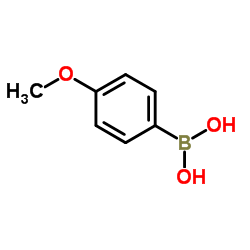
![3,3'-Bi[1,2,3]triazolo[1,5-a]pyridine结构式](https://image.chemsrc.com/caspic/266/59742-90-4.png)
![3-(4-methoxyphenyl)-[1,2,3]triazolo[1,5-a]pyridine结构式](https://image.chemsrc.com/caspic/140/78539-92-1.png)
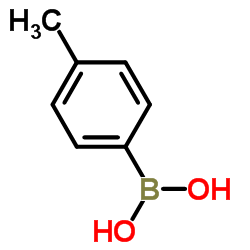
![3-(4-methylphenyl)-[1,2,3]triazolo[1,5-a]pyridine结构式](https://image.chemsrc.com/caspic/121/59742-89-1.png)
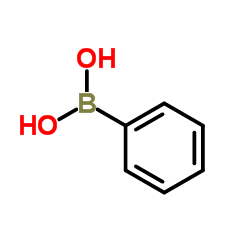
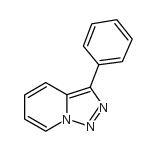
![[1,2,3]三唑并[1,5-a]吡啶结构式](https://image.chemsrc.com/caspic/182/274-59-9.png)

![3-(2-吡啶)-[1,2,3]噻唑并[1,5-a]吡啶结构式](https://image.chemsrc.com/caspic/254/947-88-6.png)