An investigation of the bactericidal and fungicidal effects of certain disinfectants by use of a capacity test.
I K Hegna, O G Clausen
文献索引:Ann. Inst. Pasteur. Microbiol. 139(4) , 473-83, (1988)
全文:HTML全文
摘要
The bactericidal and fungicidal effects of five disinfectants and one combination of two disinfectants were tested using a modified Kelsey-Sykes method in which living microorganisms suspended in a sterilized yeast suspension ("dirty" conditions) and in sterile distilled water ("clean" conditions) were added to the disinfectants in three stages. Six bacteria and two fungal organisms were employed as test microbes. Results showed that formaldehyde was virtually inactive at the dilution tested (1/50), whereas phenol and the combination propylene-phenoxetol + benzalkonium chloride were moderately effective, the latter compound being better. Glutaraldehyde was manifestly the most effective of the disinfectants tested, followed by tricresol. At a 1/50 dilution, chloramine proved to have a surprisingly strong fungicidal effect on Candida albicans and Aspergillus fumigatus under "dirty" conditions, whereas the same fungal organisms proved rather resistant to chloramine under "clean" conditions. The same was demonstrated--though less markedly--when higher dilutions of chloramine were used. The search for an explanation is still in progress. At relatively high dilutions, chloramine also proved quite effective against most of the test bacteria, especially under "clean" conditions. It is recommended that the yeast suspension be replaced by normal horse serum 20% v/v when testing the efficacy of chloramine against fungal strains under "dirty" conditions.
相关化合物
| 结构式 | 名称/CAS号 | 分子式 | 全部文献 |
|---|---|---|---|
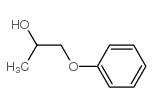 |
1-苯氧基-2-丙醇
CAS:770-35-4 |
C9H12O2 |
|
One rhinophore probably provides sufficient sensory input fo...
2014-12-01 [J. Exp. Biol. 217(Pt 23) , 4149-58, (2014)] |
|
1-Phenoxy-2-propanol is a useful anaesthetic for gastropods ...
2009-01-30 [J. Neurosci. Methods 176(2) , 121-8, (2009)] |
|
Synthesis and identification of propylene glycol phenyl ethe...
1948-11-01 [J. Am. Chem. Soc. 70(11) , 3606, (1948)] |
|
Effects of sub-lethal concentrations of the antimicrobial ag...
1984-01-01 [Microbios 39(156) , 101-8, (1984)] |
|
Polymerization of 1, 2-epoxypropane and 1, 2-epoxycyclohexan...
[Macromol. Chem. Phys. 195(2) , 401-411, (1994)] |