Immunohistochemical analysis in ethinylestradiol-treated breast cancers after prior long-term estrogen-deprivation therapy.
Yoko Omoto, Takashi Takeshita, Yutaka Yamamoto, Mutsuko Yamamoto-Ibusuki, Mitsuhiro Hayashi, Aiko Sueta, Saori Fujiwara, Tetsuya Taguchi, Hirotaka Iwase
文献索引:Springerplus 4 , 108, (2015)
全文:HTML全文
摘要
Estrogen receptor (ER) positive breast cancer can often be treated by hormone therapy; however a certain population of ER-positive patients become resistant to hormone therapy after long-term hormone treatment. Ethinylestradiol (EE2) is a derivative of estrogen, which has shown promising effects in these patients.We successfully obtained tissue samples from 6 patients undergoing EE2 treatment and examined 13 well-known breast cancer-related factors by immunohistochemistry. Of the 6 patients, 5 responded but one patient did not.Before EE2 treatment, staining for both ER and androgen receptor (AR) was strong in the nucleus, and the progesterone receptor (PgR) was almost no staining. EE2 treatment significantly down-regulated ER and up-regulated PgR while nuclear and cytosolic AR were oppositely down- and up-regulated, respectively. Cytosolic staining of BRCA1 was significantly up-regulated by EE2 whereas nuclear staining tended to decrease. Individual comparisons suggested less induction of PgR and decreasing AKT but increasing pAKT in the non-responder following EE2 treatment.Our observations revealed that EE2 activated ER downstream genes; however it did not stimulate cell growth. This suggests that hormone resistant cells might receive growth signals from a non-genomic pathway and this may be reflected in their sensitivity to EE2 treatment.
相关化合物
| 结构式 | 名称/CAS号 | 分子式 | 全部文献 |
|---|---|---|---|
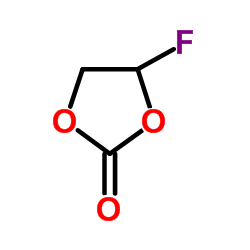 |
氟代碳酸乙烯酯
CAS:114435-02-8 |
C3H3FO3 |
|
Do we need covalent bonding of Si nanoparticles on graphene ...
2014-01-01 [Faraday Discuss. 173 , 391-402, (2014)] |
|
The anthelmintic efficacy of natural plant cysteine proteina...
2015-09-01 [J. Helminthol. 89 , 601-11, (2015)] |
|
Ex situ electrochemical sodiation/desodiation observation of...
2015-08-14 [Nanoscale 7 , 13088-95, (2015)] |
|
A phase Ia study to assess the safety and immunogenicity of ...
2014-01-01 [PLoS ONE 9(12) , e115161, (2014)] |
|
Cross-reactivity of hepatitis C virus specific vaccine-induc...
2015-01-01 [Eur. J. Immunol. 45(1) , 309-16, (2015)] |