Oxidase enzyme immobilisation through electropolymerised films to assemble biosensors for batch and flow injection analysis.
Mihaela Badea, Antonella Curulli, Giuseppe Palleschi
文献索引:Biosens. Bioelectron. 18(5-6) , 689-98, (2003)
全文:HTML全文
摘要
Glucose oxidase, lactate oxidase, L-aminoacid oxidase and alcohol oxidase were immobilised on new films based on 2,6-dihydroxynaphthalene (2,6-DHN) copolymerised with 2-(4-aminophenyl)-ethylamine (AP-EA) onto the Pt electrodes. The electropolymerisation was performed by cyclic voltammetry. Different scan rates and scan potential ranges were investigated and selected according to the monomers used. These sensors were tested for hydrogen peroxide, ascorbic acid and acetaminophen by cyclic voltammetry and amperometry. The amperometric studies were carried out in batch as well as in a flow injection analysis (FIA) system. Analytical parameters such as reproducibility, interference rejection, response time, buffer, storage and operational time of the sensors have been studied. These films were also characterised by X-ray photoelectron spectroscopy (XPS). Different strategies for enzyme immobilisation were performed and discussed: enzyme entrapment in the film during the electropolymerisation and covalent attachment of the enzyme to the film via a carbodiimide (1-ethtl-3-(3-dimethylaminopropyl)carbodiimide, EDC) or glutaraldehyde. Different parameters were considered in order to optimise the immobilisation procedures. Results provide a guide to design high sensitive, stable and interference-free biosensors. In addition, studies were performed using these probes in an original FIA based on solenoidal valves. Sensor stability, life time and dynamic range were also optimised in these conditions.
相关化合物
| 结构式 | 名称/CAS号 | 分子式 | 全部文献 |
|---|---|---|---|
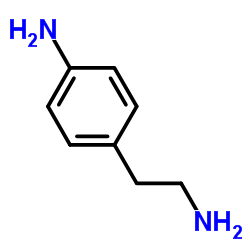 |
对氨基苯乙胺
CAS:13472-00-9 |
C8H12N2 |
|
Virtual screening identification of nonfolate compounds, inc...
2011-01-13 [J. Med. Chem. 54 , 211-221, (2011)] |
|
Efficient strategy for the selective determination of dopami...
2016-03-01 [J. Sep. Sci. 39 , 895-903, (2016)] |
|
Modification of silk fibroin using diazonium coupling chemis...
2008-07-01 [Biomaterials 29(19) , 2829-38, (2008)] |
|
A functional carbohydrate chip platform for analysis of carb...
2010-05-28 [Nanotechnology 21(21) , 215101, (2010)] |
|
Controlled release of cytokines using silk-biomaterials for ...
2015-12-01 [Biomaterials 73 , 272-83, (2015)] |