前往化源商城

The Journal of Steroid Biochemistry and Molecular Biology 2014-03-01

Ginsenoside-mediated blockade of 1,25-dihydroxyvitamin D3 inactivation in human liver and intestine in vitro.

Subrata Deb, MeiYieng Chin, Hans Adomat, EmmaSTomlinson Guns

文献索引:J. Steroid Biochem. Mol. Biol. 141 , 94-103, (2014)

全文:HTML全文

摘要

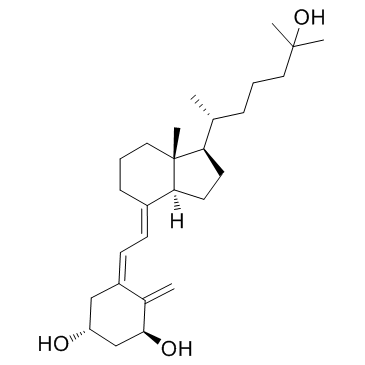
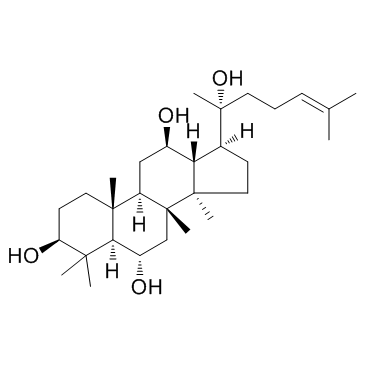
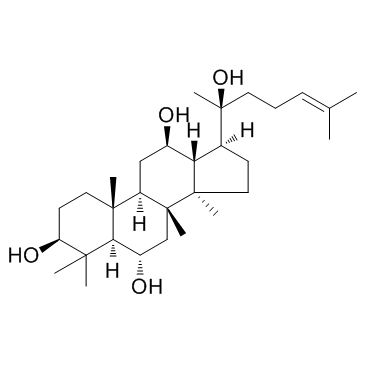
The beneficial effects of vitamin D3 are exerted through 1,25-dihydroxyvitamin D3 [1,25(OH)2D3], the dihydroxy metabolite of vitamin D3. Hepatic and intestinal biotransformation of 1,25(OH)2D3 and modifiers of metabolic capacity could be important determinants of bioavailability in serum and tissues. Ginsenosides and their aglycones, mainly 20(S)-protopanaxadiol (aPPD) and 20(S)-protopanaxatriol (aPPT), are routinely ingested as health supplements. The purpose of the present study was to investigate the potential of ginsenosides and their aglycones to block hepatic and intestinal inactivation of 1,25(OH)2D3, which is the most potent ligand of vitamin D receptor. In vitro biotransformation reactions were initiated with NADPH regenerating solutions following initial preincubation of pooled human hepatic or intestinal microsomal protein or human recombinant CYP3A4 supersomes with 1,25(OH)2D3 or midazolam. Formation of hydroxylated metabolites of 1,25(OH)2D3 or midazolam was analyzed using liquid chromatography-mass spectrometry. Co-incubation of 1,25(OH)2D3 with various ginsenosides (Rg1, Rh2, aPPD, aPPT and total ginsenosides) led to differential inhibition (30-100%) of its hydroxylation. Results suggest that aPPD, aPPT and Rh2 strongly attenuated the hydroxylation of 1,25(OH)2D3. Follow up inhibition studies with aPPD and aPPT at varying concentrations (0.5-100M) led to up to 91-100% inhibition of formation of hydroxylated metabolites of 1,25(OH)2D3 thus preventing inactivation of active vitamin D3. The IC50 values of aPPD or aPPT for the most abundant hydroxylated metabolites of 1,25(OH)2D3 ranged from 3.3 to 9.0M in human microsomes. The inhibitory mechanism of aPPD or aPPT for CYP3A4-mediated biotransformation of 1,25(OH)2D3 was competitive in nature (apparent Ki: 1.7-2.9M). Similar inhibitory effects were also observed upon addition of aPPD or aPPT into midazolam hydroxylation assay. In summary, our results suggest that ginsenosides, specifically aPPD and aPPT, inhibit the CYP3A4-mediated catabolism of active vitamin D3 in human liver and intestine, potentially providing additional vitamin D-related benefits to patients with cancer, neurodegenerative and metabolic diseases.

相关化合物

结构式 名称/CAS号 全部文献
骨化三醇 结构式 骨化三醇
CAS:32222-06-3
咪唑安定 结构式 咪唑安定
CAS:59467-70-8
原人参三醇 结构式 原人参三醇
CAS:1453-93-6
20(S)-原人参三醇 结构式 20(S)-原人参三醇
CAS:34080-08-5