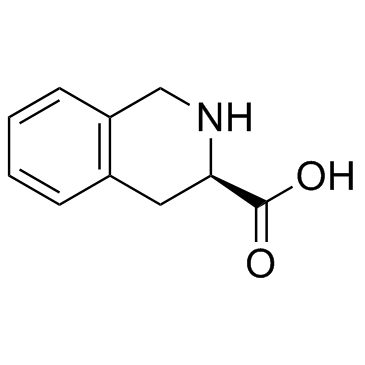
H-D-Tic-OH
更新时间:2024-09-17 06:09:40
| 常用名 | (R)-(+)-1,2,3,4-四氢异喹啉-3-羧酸 | CAS号 | 103733-65-9 |
|---|---|---|---|
| 价格 | ¥需询单/1kg ¥需询单/1g | 纯度 | 98.0% |
| 备货期 | 需询单 | 库存 | 询单 |
| 产品详情(用途,包装等)
用途: (R)-1,2,3,4-Tetrahydro-3-isoquinolinecarboxylic acid是Phe类似物。 物理化学性质: CAS号:103733-65-9 常用中文名:(R)-(+)-1,2,3,4-四氢异喹啉-3-羧酸 常用英文名:D-1,2,3,4-Tetrahydroisoquinoline-3-carboxylic acid 分子式:C10H11NO2 分子量:177.200 密度:1.2±0.1 g/cm3 沸点:372.0±42.0 °C at 760 mmHg 熔点:N/A 闪点:178.8±27.9 °C 储存条件:2-8°C |
- 上海阿拉丁生化科技股份有限公司
- 上海市 上海市 浦东新区
- 产品名:(R)-1,2,3,4-四氢-3-异喹啉羧酸
- 价格: ¥31.9/250mg ¥29.9/50mg ¥30.9/100mg ¥92.9/1g
- 纯度:98.0%
- 备货期:1天
- 联系人:阿拉丁

 2881459338
复制
2881459338
复制
- 上海化源世纪贸易有限公司
- 上海市 上海市 普陀区
- 产品名:(R)-1,2,3,4-四氢-3-异喹啉羧酸
- 价格:
- 纯度:98.0%
- 备货期:10天
- 联系人:徐经理
351666998
复制


 133 1186 9306
复制
133 1186 9306
复制

查看所有供应商和价格请点击:
(R)-(+)-1,2,3,4-四氢异喹啉-3-羧酸生产厂家
参考价格:$198/10mM*1mLinDMSO