Using RAPD and ISSR Molecular Markers to Analyze the Genetic Diversity of Rose scented Pelargonium Populations
Qing-yuan Yi, Shao-wen Yi, Tai-feng Qin, Cheng-yun Li
Index: 10.1002/ffj.3427
Full Text: HTML
Abstract
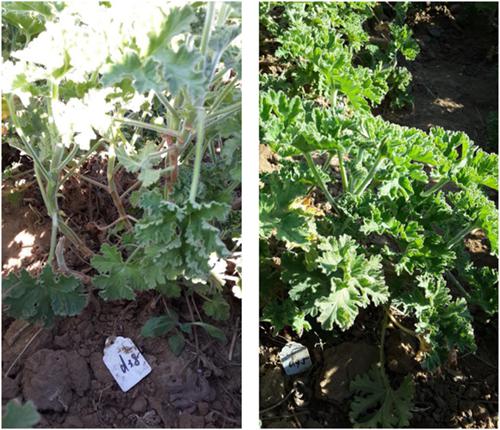
In the field, the chemical constituents of the essential oil of Pelargonium graveolens cutting (diploid) and polyploid seedlings are the same, but the principal components of geraniol, geranyl formate, and linalool in polyploid plants are remarkably higher than those of cutting seedlings. The contents of citronellol, citronellyl formate, and rose oxide are significantly lower in polyploid seedlings than in cutting seedlings. ISSR and RAPD molecular markers were used to analyze P. graveolens in two different genetic populations and to compare the genetic background of differences between cutting and polyploid seedlings. The genomic DNA of 60 cutting and polyploid seedlings was extracted for PCR amplification by using 3 ISSR primers and 11 RAPD primers for random sampling from adjacent cultivated fields. Among the primers, ISSR-25 primer detected the highest diversity of the loci. Seven loci of variation were found in the two populations. The variation rates detected using 3 ISSR primers were 13.3% and 6.7% for the cutting and polyploid populations, respectively. Genetic polymorphisms in P. graveolens genome with mutation rates of 11.7% and 3.3% were respectively determined in cutting and polyploid seedlings by using 3 RAPD primers (B11, P4, and R19). Both types of molecular markers also revealed the mutation in cutting and polyploid seedlings. Results demonstrated that a genetic difference can be observed by the molecular markers, although no evident phenotypic difference exists in cutting and polyploid seedlings in fields. The trend of these molecular markers is consistent, that is, individual genetic differences in cutting seedlings are greater than those in polyploid seedlings. These results suggested that polyploid seedlings in a population are relative uniform and applicable to production. Morphological characteristics of mutants d38 and d45 are found based on RAPD molecular markers. The pictures show that d38 (left) branches at base, and d45 (right) branches at top end of tems, have more lateral buds.