Environmental Toxicology 2013-09-01

Lanthanum chloride promotes mitochondrial apoptotic pathway in primary cultured rat astrocytes.

Jinghua Yang, Qiufang Liu, Ming Qi, Shuai Lu, Shengwen Wu, Qi Xi, Yuan Cai

Index: Environ. Toxicol. 28(9) , 489-97, (2013)

Full Text: HTML

Abstract

Population surveys and animal experiments have shown that rare earth elements (REEs) cause neurological defects. However, the detailed mechanisms underlying these effects are still unclear. Given that lanthanum is commonly used for investigating into REEs-induced neurological defects, this study chose lanthanum chloride (LaCl3 ) to show that LaCl3 promotes mitochondrial apoptotic pathway in primary cultured rat astrocytes by regulating expression of Bcl-2 family proteins. The main findings of this study are (1) LaCl3 treatment (0.25, 0.5, and 1.0 mM for 12-48 h) induced the astrocytes damages with a concentration-dependent manner, which were confirmed with methyl thiazolyl tetrazolium and lactate dehydrogenase release assays, and morphological examination. (2) A 24 h treatment of LaCl3 concentration-dependently decreased mitochondrial membrane potential, increased cytochrome c release from mitochondria into cytosol, elevated caspase 9 and 3 expression, and promoted astrocyte apoptosis. (3) LaCl3 treatment increased the ratio of pro-apoptotic Bax and antiapoptotic Bcl-2 proteins, which in turn broke the balance among pro-apoptotic and antiapoptotic Bcl-2 family proteins, leading to astrocyte apoptosis. Our results indicate that LaCl3 alters Bcl-2 family protein expressions, which in turn promote mitochondrial apoptotic pathway, and thus astrocytic damage.Copyright © 2011 Wiley Periodicals, Inc., a Wiley company.

Related Compounds

Structure Name/CAS No. Articles
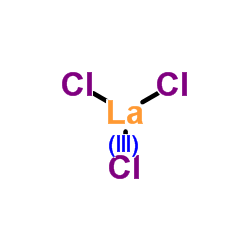
Lanthanum(III) chloride Structure Lanthanum(III) chloride
CAS:10099-58-8
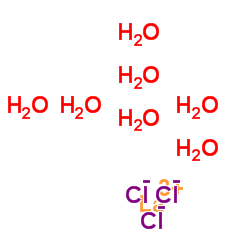
lanthanum chloride heptahydrate Structure lanthanum chloride heptahydrate
CAS:10025-84-0
lanthanum Structure lanthanum
CAS:7439-91-0