MicrobiologyOpen 2015-08-01

A factor converting viable but nonculturable Vibrio cholerae to a culturable state in eukaryotic cells is a human catalase.

Mitsutoshi Senoh, Takashi Hamabata, Yoshifumi Takeda

Index: Microbiologyopen 4 , 589-96, (2015)

Full Text: HTML

Abstract

In our previous work, we demonstrated that viable but nonculturable (VBNC) Vibrio cholerae O1 and O139 were converted to culturable by coculture with eukaryotic cells. Furthermore, we isolated a factor converting VBNC V. cholerae to culturable (FCVC) from a eukaryotic cell line, HT-29. In this study, we purified FCVC by successive column chromatographies comprising UNO Q-6 anion exchange, Bio-Scale CHT2-1 hydroxyapatite, and Superdex 200 10/300 GL. Homogeneity of the purified FCVC was demonstrated by SDS-PAGE. Nano-LC MS/MS analysis showed that the purified FCVC was a human catalase. An experiment of RNAi knockdown of catalase mRNA from HT-29 cells and treatment of the purified FCVC with a catalase inhibitor, 3-amino-1,2,4-triazole confirmed that the FCVC was a catalase. A possible role of the catalase in converting a VBNC V. cholerae to a culturable state in the human intestine is discussed.© 2015 The Authors. MicrobiologyOpen published by John Wiley & Sons Ltd.

Related Compounds

Structure Name/CAS No. Articles
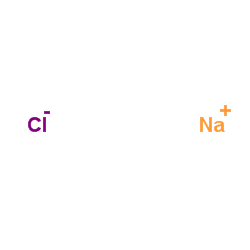
sodium chloride Structure sodium chloride
CAS:7647-14-5
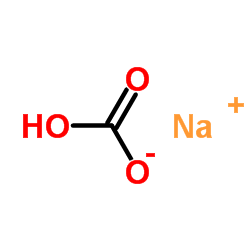
SodiuM bicarbonate Structure SodiuM bicarbonate
CAS:144-55-8
SODIUM CHLORIDE-35 CL Structure SODIUM CHLORIDE-35 CL
CAS:20510-55-8
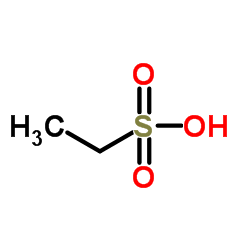
Ethanesulfonic acid Structure Ethanesulfonic acid
CAS:594-45-6
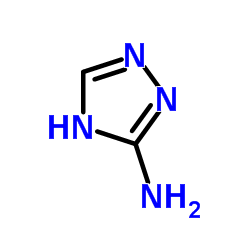
Amitrole Structure Amitrole
CAS:61-82-5
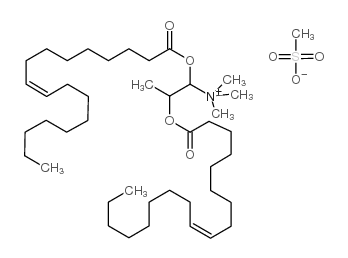
DOTAP Transfection Reagent Structure DOTAP Transfection Reagent
CAS:144189-73-1