Planta Medica 2012-11-01

Quantitative determination of phenolic compounds in lotus (Nelumbo nucifera) leaves by capillary zone electrophoresis.

Tho Chau Minh Vinh Do, Tuan Duc Nguyen, Hung Tran, Hermann Stuppner, Markus Ganzera

Index: Planta Med. 78(16) , 1796-9, (2012)

Full Text: HTML

Abstract

The traditional use of lotus leaves as an anti-inflammatory remedy is associated with the occurrence of phenolic compounds. In this study the first CE method for the analysis of all major phenolic constituents in Nelumbo nucifera leaves is presented. It permits the separation of nine relevant markers in less than 10 min. The optimized procedure was fully validated and then used to analyze diverse samples collected in Vietnam. They revealed significant qualitative and quantitative differences depending on growing area and season. Yet, in all of them, quercetin-3-O-β-D-glucuronide, hyperoside, and isoquercitrin were the most dominant flavonoids.Georg Thieme Verlag KG Stuttgart · New York.

Related Compounds

Structure Name/CAS No. Articles
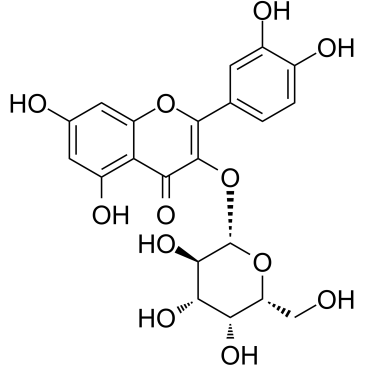
Hyperoside Structure Hyperoside
CAS:482-36-0
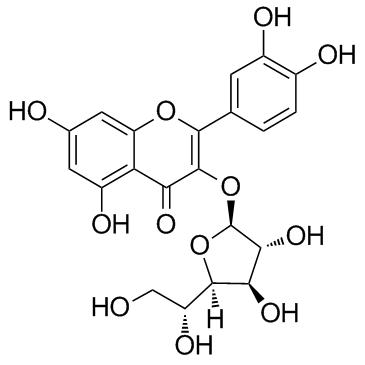
Isoquercitrin Structure Isoquercitrin
CAS:21637-25-2