[Compatibility and efficacy of Meditonsin].
D Loew, R Fuhr, F J Bibo
Index: Fortschr. Med. 102(12) , 352-4, (1984)
Full Text: HTML
Abstract
Heavy metals, including mercury, have recently been in discussion in connection with ecology and therapy. As Meditonsin represents a 0,004% solution of mercury cyanide the following were investigated: absorption, excretion, effect on the kidneys and the chemical behaviour of mercury cyanide and other mercury salts as well as the antimicrobial effectivity in in vitro tests. With the dose recommended for adults neither an increase of mercury ions nor an increased excretion of these could be detected in the blood or the urine respectively. Even in minimal inhibitory concentrations Meditonsin is characterised in the in vitro tests by an excellent antimicrobial effect.
Related Compounds
| Structure | Name/CAS No. | Molecular Formula | Articles |
|---|---|---|---|
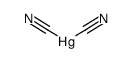 |
Mercury cyanide
CAS:592-04-1 |
C2HgN2 |
|
Mechanisms of absorption of inorganic mercury from rat small...
1990-05-01 [Pharmacol. Toxicol. 66(5) , 347-53, (1990)] |
|
Cyanoglycosylation products of 17-O-acetyl-testosterone.
1998-08-01 [Carbohydr. Res. 310(4) , 239-52, (1998)] |
|
Synthesis and characterization of some anomeric pairs of per...
1984-09-01 [Carbohydr. Res. 132(1) , 61-82, (1984)] |
|
Complexations of Hg(CN)(2) with imidazolidine-2-thione and i...
2007-12-31 [Spectrochim. Acta. A. Mol. Biomol. Spectrosc. 68(5) , 1207-12, (2007)] |
|
Alternative routes for entry of HgX2 into the active site of...
1999-03-23 [Biochemistry 38(12) , 3519-29, (1999)] |