Oxendolone

Modify Date: 2026-07-01 20:14:24

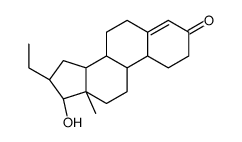
Oxendolone Structure
Oxendolone structure
Common Name Oxendolone
CAS Number 33765-68-3 Molecular Weight 302.45100
Density 1.1g/cm3 Boiling Point 451.7ºC at 760mmHg
Molecular Formula C20H30O2 Melting Point 152-153℃
MSDS N/A Flash Point 192.4ºC

 Names

This table lists Chinese names, IUPAC names and various aliases of this chemical substance.

Name (8R,9S,10R,13S,14S,16S,17S)-16-ethyl-17-hydroxy-13-methyl-2,6,7,8,9,10,11,12,14,15,16,17-dodecahydro-1H-cyclopenta[a]phenanthren-3-one
Synonym More Synonyms

 Chemical & Physical Properties

This table shows physicochemical parameters including melting point, boiling point, density, solubility and optical rotation. Missing data is marked as N/A.

Density 1.1g/cm3
Boiling Point 451.7ºC at 760mmHg
Melting Point 152-153℃
Molecular Formula C20H30O2
Molecular Weight 302.45100
Flash Point 192.4ºC
Exact Mass 302.22500
PSA 37.30000
LogP 4.12520
Index of Refraction 1.553
InChIKey FCKLFGKATYPJPG-SSTBVEFVSA-N
SMILES CCC1CC2C3CCC4=CC(=O)CCC4C3CCC2(C)C1O

 Toxicological Information

This table summarizes toxicological test data, acute & chronic toxicity and ecological hazard parameters for this chemical.

CHEMICAL IDENTIFICATION

RTECS NUMBER :
KG7963000
CHEMICAL NAME :
Estr-4-en-3-one, 16-beta-ethyl-17-beta-hydroxy-
CAS REGISTRY NUMBER :
33765-68-3
LAST UPDATED :
199706
DATA ITEMS CITED :
12
MOLECULAR FORMULA :
C20-H30-O2
MOLECULAR WEIGHT :
302.50
WISWESSER LINE NOTATION :
L E5 B666 OV MUTJ E1 FQ G2

HEALTH HAZARD DATA

ACUTE TOXICITY DATA

TYPE OF TEST :
LD50 - Lethal dose, 50 percent kill
ROUTE OF EXPOSURE :
Oral
SPECIES OBSERVED :
Rodent - rat
DOSE/DURATION :
12105 mg/kg
TOXIC EFFECTS :
Behavioral - somnolence (general depressed activity) Behavioral - muscle weakness Lungs, Thorax, or Respiration - respiratory depression
REFERENCE :
YACHDS Yakuri to Chiryo. Pharmacology and Therapeutics. (Raifu Saiensu Shuppan K.K., 2-5-13, Yaesu, Chuo-ku, Tokyo 104, Japan) V.1- 1972- Volume(issue)/page/year: 7,937,1979
TYPE OF TEST :
LD50 - Lethal dose, 50 percent kill
ROUTE OF EXPOSURE :
Intraperitoneal
SPECIES OBSERVED :
Rodent - rat
DOSE/DURATION :
5879 mg/kg
TOXIC EFFECTS :
Sense Organs and Special Senses (Eye) - lacrimation Kidney, Ureter, Bladder - urine volume increased Nutritional and Gross Metabolic - body temperature decrease
REFERENCE :
YACHDS Yakuri to Chiryo. Pharmacology and Therapeutics. (Raifu Saiensu Shuppan K.K., 2-5-13, Yaesu, Chuo-ku, Tokyo 104, Japan) V.1- 1972- Volume(issue)/page/year: 7,937,1979
TYPE OF TEST :
LD50 - Lethal dose, 50 percent kill
ROUTE OF EXPOSURE :
Subcutaneous
SPECIES OBSERVED :
Rodent - rat
DOSE/DURATION :
>10 gm/kg
TOXIC EFFECTS :
Details of toxic effects not reported other than lethal dose value
REFERENCE :
YAKUD5 Gekkan Yakuji. Pharmaceuticals Monthly. (Yakugyo Jihosha, Inaoka Bldg., 2-36 Jinbo-cho, Kanda, Chiyoda-ku, Tokyo 101, Japan) V.1- 1959- Volume(issue)/page/year: 23,2291,1981
TYPE OF TEST :
LD50 - Lethal dose, 50 percent kill
ROUTE OF EXPOSURE :
Intramuscular
SPECIES OBSERVED :
Rodent - rat
DOSE/DURATION :
>10 gm/kg
TOXIC EFFECTS :
Details of toxic effects not reported other than lethal dose value
REFERENCE :
NIIRDN Drugs in Japan (Ethical Drugs). (Yakugyo Jiho Co., Ltd., Tokyo, Japan) Volume(issue)/page/year: 6,157,1982
TYPE OF TEST :
LD50 - Lethal dose, 50 percent kill
ROUTE OF EXPOSURE :
Oral
SPECIES OBSERVED :
Rodent - mouse
DOSE/DURATION :
5480 mg/kg
TOXIC EFFECTS :
Details of toxic effects not reported other than lethal dose value
REFERENCE :
IYKEDH Iyakuhin Kenkyu. Study of Medical Supplies. (Nippon Koteisho Kyokai, 12-15, 2-chome, Shibuya, Shibuya-ku, Tokyo 150, Japan) V.1- 1970- Volume(issue)/page/year: 12,1204,1981
TYPE OF TEST :
LD50 - Lethal dose, 50 percent kill
ROUTE OF EXPOSURE :
Intraperitoneal
SPECIES OBSERVED :
Rodent - mouse
DOSE/DURATION :
2925 mg/kg
TOXIC EFFECTS :
Sense Organs and Special Senses (Eye) - lacrimation Behavioral - ataxia Lungs, Thorax, or Respiration - respiratory depression
REFERENCE :
YACHDS Yakuri to Chiryo. Pharmacology and Therapeutics. (Raifu Saiensu Shuppan K.K., 2-5-13, Yaesu, Chuo-ku, Tokyo 104, Japan) V.1- 1972- Volume(issue)/page/year: 7,937,1979
TYPE OF TEST :
LD50 - Lethal dose, 50 percent kill
ROUTE OF EXPOSURE :
Subcutaneous
SPECIES OBSERVED :
Rodent - mouse
DOSE/DURATION :
>10 gm/kg
TOXIC EFFECTS :
Details of toxic effects not reported other than lethal dose value
REFERENCE :
YAKUD5 Gekkan Yakuji. Pharmaceuticals Monthly. (Yakugyo Jihosha, Inaoka Bldg., 2-36 Jinbo-cho, Kanda, Chiyoda-ku, Tokyo 101, Japan) V.1- 1959- Volume(issue)/page/year: 23,2291,1981
TYPE OF TEST :
LD50 - Lethal dose, 50 percent kill
ROUTE OF EXPOSURE :
Intramuscular
SPECIES OBSERVED :
Rodent - mouse
DOSE/DURATION :
>10 gm/kg
TOXIC EFFECTS :
Details of toxic effects not reported other than lethal dose value
REFERENCE :
NIIRDN Drugs in Japan (Ethical Drugs). (Yakugyo Jiho Co., Ltd., Tokyo, Japan) Volume(issue)/page/year: 6,157,1982 ** OTHER MULTIPLE DOSE TOXICITY DATA **
TYPE OF TEST :
TDLo - Lowest published toxic dose
ROUTE OF EXPOSURE :
Intramuscular
SPECIES OBSERVED :
Mammal - dog
DOSE/DURATION :
5200 mg/kg/1Y-I
TOXIC EFFECTS :
Skin and Appendages - dermatitis, other (after systemic exposure)
REFERENCE :
YACHDS Yakuri to Chiryo. Pharmacology and Therapeutics. (Raifu Saiensu Shuppan K.K., 2-5-13, Yaesu, Chuo-ku, Tokyo 104, Japan) V.1- 1972- Volume(issue)/page/year: 7,968,1979 ** REPRODUCTIVE DATA **
TYPE OF TEST :
TDLo - Lowest published toxic dose
ROUTE OF EXPOSURE :
Intramuscular
DOSE :
150 mg/kg
SEX/DURATION :
male 30 day(s) pre-mating
TOXIC EFFECTS :
Reproductive - Paternal Effects - testes, epididymis, sperm duct Reproductive - Paternal Effects - prostate, seminal vesicle, Cowper's gland, accessory glands Reproductive - Paternal Effects - other effects on male
REFERENCE :
YACHDS Yakuri to Chiryo. Pharmacology and Therapeutics. (Raifu Saiensu Shuppan K.K., 2-5-13, Yaesu, Chuo-ku, Tokyo 104, Japan) V.1- 1972- Volume(issue)/page/year: 7,943,1979
TYPE OF TEST :
TDLo - Lowest published toxic dose
ROUTE OF EXPOSURE :
Intramuscular
DOSE :
15 mg/kg
SEX/DURATION :
female 30 day(s) pre-mating
TOXIC EFFECTS :
Reproductive - Maternal Effects - uterus, cervix, vagina
REFERENCE :
YACHDS Yakuri to Chiryo. Pharmacology and Therapeutics. (Raifu Saiensu Shuppan K.K., 2-5-13, Yaesu, Chuo-ku, Tokyo 104, Japan) V.1- 1972- Volume(issue)/page/year: 7,943,1979
TYPE OF TEST :
TDLo - Lowest published toxic dose
ROUTE OF EXPOSURE :
Intramuscular
DOSE :
750 mg/kg
SEX/DURATION :
male 30 day(s) pre-mating
TOXIC EFFECTS :
Reproductive - Paternal Effects - spermatogenesis (incl. genetic material, sperm morphology, motility, and count) Reproductive - Paternal Effects - testes, epididymis, sperm duct Reproductive - Paternal Effects - impotence
REFERENCE :
INJFA3 International Journal of Fertility. (Allen Press, 1041 New Hampshire, St., Lawrence, KS 66044) V.1- 1955- Volume(issue)/page/year: 34,235,1989

 Precursor & DownStream

This table lists upstream starting materials and downstream derivative products related to this chemical.

Precursor  3

DownStream  0

 OxendoloneBioassay

View more

This table contains target information, in‑vitro & in‑vivo assay data for this compound.

Name: Primary qHTS assay for inhibitors of alpha-synuclein gene (SNCA) expression
Source: NCGC
External Id: SNCA-p-activity-luciferase
Name: p53 small molecule agonists, cell-based qHTS assay
Source: 824
External Id: P53344
Name: p53 small molecule agonists, cell-based qHTS assay with human liver microsomes
Source: 824
Target: tumor suppressor p53 [Homo sapiens]
External Id: P53MS233
Name: p53 small molecule agonists, cell-based qHTS assay with rat liver microsomes
Source: 824
Target: tumor suppressor p53 [Homo sapiens]
External Id: P53MS898
Total 250, Current Page 1 of 25
1
2
3
4
5

 Synonyms

This table collects all English aliases, systematic names and CAS‑related synonyms of the compound.

Oxendolona [INN-Spanish]
Oxendolone [USAN:INN:JAN]
Tsaa 291
oxendolone
Oxendolonum [INN-Latin]
Oxendolona
Prostetin

 Oxendolone | FAQ

This section contains frequently‑asked‑questions about this compound, including basic parameters, properties, storage conditions and corresponding answers.

Q: What is the molecular weight of (8R,9S,10R,13S,14S,16S,17S)-16-ethyl-17-hydroxy-13-methyl-2,6,7,8,9,10,11,12,14,15,16,17-dodecahydro-1H-cyclopenta[a]phenanthren-3-one?
A: Molecular weight of (8R,9S,10R,13S,14S,16S,17S)-16-ethyl-17-hydroxy-13-methyl-2,6,7,8,9,10,11,12,14,15,16,17-dodecahydro-1H-cyclopenta[a]phenanthren-3-one is 302.45100.
Q: What is the polar surface area (PSA) of (8R,9S,10R,13S,14S,16S,17S)-16-ethyl-17-hydroxy-13-methyl-2,6,7,8,9,10,11,12,14,15,16,17-dodecahydro-1H-cyclopenta[a]phenanthren-3-one?
A: Polar surface area (PSA) of (8R,9S,10R,13S,14S,16S,17S)-16-ethyl-17-hydroxy-13-methyl-2,6,7,8,9,10,11,12,14,15,16,17-dodecahydro-1H-cyclopenta[a]phenanthren-3-one is 37.30000.
Q: What is the English name of (8R,9S,10R,13S,14S,16S,17S)-16-ethyl-17-hydroxy-13-methyl-2,6,7,8,9,10,11,12,14,15,16,17-dodecahydro-1H-cyclopenta[a]phenanthren-3-one?
A: The English name of (8R,9S,10R,13S,14S,16S,17S)-16-ethyl-17-hydroxy-13-methyl-2,6,7,8,9,10,11,12,14,15,16,17-dodecahydro-1H-cyclopenta[a]phenanthren-3-one is (8R,9S,10R,13S,14S,16S,17S)-16-ethyl-17-hydroxy-13-methyl-2,6,7,8,9,10,11,12,14,15,16,17-dodecahydro-1H-cyclopenta[a]phenanthren-3-one.
Q: What is the LogP of (8R,9S,10R,13S,14S,16S,17S)-16-ethyl-17-hydroxy-13-methyl-2,6,7,8,9,10,11,12,14,15,16,17-dodecahydro-1H-cyclopenta[a]phenanthren-3-one?
A: LogP of (8R,9S,10R,13S,14S,16S,17S)-16-ethyl-17-hydroxy-13-methyl-2,6,7,8,9,10,11,12,14,15,16,17-dodecahydro-1H-cyclopenta[a]phenanthren-3-one is 4.12520.
Q: What is the SMILES notation of (8R,9S,10R,13S,14S,16S,17S)-16-ethyl-17-hydroxy-13-methyl-2,6,7,8,9,10,11,12,14,15,16,17-dodecahydro-1H-cyclopenta[a]phenanthren-3-one?
A: SMILES notation of (8R,9S,10R,13S,14S,16S,17S)-16-ethyl-17-hydroxy-13-methyl-2,6,7,8,9,10,11,12,14,15,16,17-dodecahydro-1H-cyclopenta[a]phenanthren-3-one is CCC1CC2C3CCC4=CC(=O)CCC4C3CCC2(C)C1O.
Q: What is the CAS number of (8R,9S,10R,13S,14S,16S,17S)-16-ethyl-17-hydroxy-13-methyl-2,6,7,8,9,10,11,12,14,15,16,17-dodecahydro-1H-cyclopenta[a]phenanthren-3-one?
A: CAS number of (8R,9S,10R,13S,14S,16S,17S)-16-ethyl-17-hydroxy-13-methyl-2,6,7,8,9,10,11,12,14,15,16,17-dodecahydro-1H-cyclopenta[a]phenanthren-3-one is 33765-68-3.
Q: What are the upstream materials of (8R,9S,10R,13S,14S,16S,17S)-16-ethyl-17-hydroxy-13-methyl-2,6,7,8,9,10,11,12,14,15,16,17-dodecahydro-1H-cyclopenta[a]phenanthren-3-one?
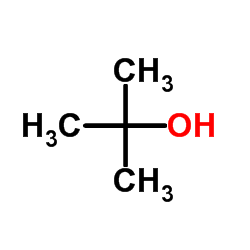
A: Related upstream materials(CAS) of (8R,9S,10R,13S,14S,16S,17S)-16-ethyl-17-hydroxy-13-methyl-2,6,7,8,9,10,11,12,14,15,16,17-dodecahydro-1H-cyclopenta[a]phenanthren-3-one: 33765-85-4;75-65-0;33765-70-7.
Q: What is the boiling point of (8R,9S,10R,13S,14S,16S,17S)-16-ethyl-17-hydroxy-13-methyl-2,6,7,8,9,10,11,12,14,15,16,17-dodecahydro-1H-cyclopenta[a]phenanthren-3-one?
A: Boiling point of (8R,9S,10R,13S,14S,16S,17S)-16-ethyl-17-hydroxy-13-methyl-2,6,7,8,9,10,11,12,14,15,16,17-dodecahydro-1H-cyclopenta[a]phenanthren-3-one is 451.7ºC at 760mmHg.
Q: What is the InChIKey of (8R,9S,10R,13S,14S,16S,17S)-16-ethyl-17-hydroxy-13-methyl-2,6,7,8,9,10,11,12,14,15,16,17-dodecahydro-1H-cyclopenta[a]phenanthren-3-one?
A: InChIKey of (8R,9S,10R,13S,14S,16S,17S)-16-ethyl-17-hydroxy-13-methyl-2,6,7,8,9,10,11,12,14,15,16,17-dodecahydro-1H-cyclopenta[a]phenanthren-3-one is FCKLFGKATYPJPG-SSTBVEFVSA-N.
Q: What is the molecular formula of (8R,9S,10R,13S,14S,16S,17S)-16-ethyl-17-hydroxy-13-methyl-2,6,7,8,9,10,11,12,14,15,16,17-dodecahydro-1H-cyclopenta[a]phenanthren-3-one?
A: Molecular formula of (8R,9S,10R,13S,14S,16S,17S)-16-ethyl-17-hydroxy-13-methyl-2,6,7,8,9,10,11,12,14,15,16,17-dodecahydro-1H-cyclopenta[a]phenanthren-3-one is C20H30O2.

 Oxendolonefactory

This table lists manufacturers and suppliers of this compound, including vendor names and product supply reference information.

Shanghai Nianxing Industrial Co., Ltd
The content on this webpage is sourced from various professional data sources. If you have any questions or concerns regarding the content, please feel free to contact service1@chemsrc.com.