N-(2-Chloro-6-methylphenyl)-N'-4-pyridinylurea
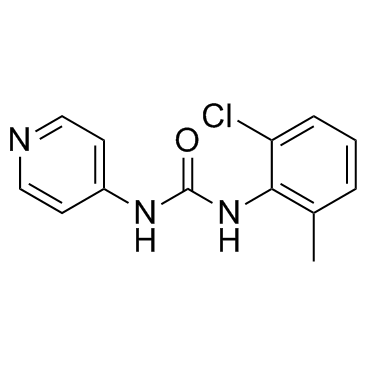
N-(2-Chloro-6-methylphenyl)-N'-4-pyridinylurea structure
|
Common Name | N-(2-Chloro-6-methylphenyl)-N'-4-pyridinylurea | ||
|---|---|---|---|---|
| CAS Number | 97627-24-2 | Molecular Weight | 261.70700 | |
| Density | N/A | Boiling Point | N/A | |
| Molecular Formula | C13H12ClN3O | Melting Point | N/A | |
| MSDS | N/A | Flash Point | N/A | |
Use of N-(2-Chloro-6-methylphenyl)-N'-4-pyridinylureaN-[(1R)-4-[(Aminoiminomethyl)amino]-1-[[[(1R)-1-(4-hydroxyphenyl)ethyl]amino]carbonyl]butyl]-α-phenylbenzeneacetamide is an anticonvulsant agent with potential for the treatment of generalized tonic-clonic and partial seizures. |
Summary: N-(2-Chloro-6-methylphenyl)-N'-4-pyridinylurea (1-(2-chloro-6-methylphenyl)-3-pyridin-4-ylurea) is an anticonvulsant with potential for treating generalized tonic and partial seizures. Its CAS number is 97627-24-2, and the molecular formula is C13H12ClN3O. For research-use only, not for medical or clinical usage.
This table lists Chinese names, IUPAC names and various aliases of this chemical substance.
| Name | 1-(2-chloro-6-methylphenyl)-3-pyridin-4-ylurea |
|---|---|
| Synonym | More Synonyms |
This table contains bioactivity, target information and biological‑assay experimental data of this compound.
| Description | N-[(1R)-4-[(Aminoiminomethyl)amino]-1-[[[(1R)-1-(4-hydroxyphenyl)ethyl]amino]carbonyl]butyl]-α-phenylbenzeneacetamide is an anticonvulsant agent with potential for the treatment of generalized tonic-clonic and partial seizures. |
|---|---|
| Related Catalog | |
| In Vivo | Compound shows anticonvulsant activity at 30 mg/kg in the initial tests with no signs of ataxia until 300 mg/kg. The activity seen with 30 mg/kg 37 is still present 4 h postdose. Compound is effective against seizures induced by maximal electroshock but does not protect mice from clonic seizures produced by the convulsant pentylenetetrazol. The overall pharmacological profile suggests that Compound would be of therapeutic use in the treatment of generalized tonic-clonic and partial seizures. Compound is selected for clinical trials[1]. |
| Animal Admin | Mice: Five mice are tested at each of three doses (30,100, and 300 mg/kg) and three times (0.5, 2, and 4 h). The mice are subjected to electrical current delivered through ear clips for 0.2 s (90 mA, 1-ms monophasic pulses at 100 Hz). This current strength is approximately 4 times that required to produce seizures in 99% of mice and reliably produce seizures in 100% of control mice. Prevention of tonic hind limb extension is taken as an anticonvulsant effect. Behavioral side effects are measured in mice[1]. |
| References |
[1]. Pavia MR, et al. N-Phenyl-N'-pyridinylureas as Anticonvulsant Agents. J. Med. Chem. 1990,33, 854-861 |
This table shows physicochemical parameters including melting point, boiling point, density, solubility and optical rotation. Missing data is marked as N/A.
| Molecular Formula | C13H12ClN3O |
|---|---|
| Molecular Weight | 261.70700 |
| Exact Mass | 261.06700 |
| PSA | 60.74000 |
| LogP | 3.12290 |
| InChIKey | ZSBWDKCIIZYQIR-UHFFFAOYSA-N |
| SMILES | Cc1cccc(Cl)c1NC(=O)Nc1ccncc1 |
This table presents publicly reported synthetic routes, reaction conditions, reactants and product information of the compound.
|
~78%
N-(2-Chloro-6-m... CAS#:97627-24-2 |
| Literature: Pavia; Lobbestael; Taylor; Hershenson; Miskell Journal of Medicinal Chemistry, 1990 , vol. 33, # 2 p. 854 - 861 |

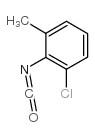
This table lists upstream starting materials and downstream derivative products related to this chemical.
| Precursor 2 | |
|---|---|
| DownStream 0 | |
This table contains target information, in‑vitro & in‑vivo assay data for this compound.
This table collects all English aliases, systematic names and CAS‑related synonyms of the compound.
| Urea,N-(2-chloro-6-methylphenyl)-N'-4-pyridinyl |
| N-(2-CHLORO-6-METHYLPHENYL)-N'-(PYRIDIN-4-YL)UREA |
| N-(2-chloro-6-methylphenyl)-N'-4-pyridinyl urea |
| N-(2-Chloro-6-methylphenyl)-N'-4-pyridinylurea |
This section contains frequently‑asked‑questions about this compound, including basic parameters, properties, storage conditions and corresponding answers.
| Q: What is the InChIKey of 1-(2-chloro-6-methylphenyl)-3-pyridin-4-ylurea? |
| A: InChIKey of 1-(2-chloro-6-methylphenyl)-3-pyridin-4-ylurea is ZSBWDKCIIZYQIR-UHFFFAOYSA-N. |
| Q: What is the LogP of 1-(2-chloro-6-methylphenyl)-3-pyridin-4-ylurea? |
| A: LogP of 1-(2-chloro-6-methylphenyl)-3-pyridin-4-ylurea is 3.12290. |
| Q: What English synonyms does 1-(2-chloro-6-methylphenyl)-3-pyridin-4-ylurea have? |
| A: English synonyms of 1-(2-chloro-6-methylphenyl)-3-pyridin-4-ylurea: Urea,N-(2-chloro-6-methylphenyl)-N'-4-pyridinyl, N-(2-CHLORO-6-METHYLPHENYL)-N'-(PYRIDIN-4-YL)UREA, N-(2-chloro-6-methylphenyl)-N'-4-pyridinyl urea, N-(2-Chloro-6-methylphenyl)-N'-4-pyridinylurea. |
| Q: What are the uses of 1-(2-chloro-6-methylphenyl)-3-pyridin-4-ylurea? |
| A: Main uses of 1-(2-chloro-6-methylphenyl)-3-pyridin-4-ylurea: N-[(1R)-4-[(Aminoiminomethyl)amino]-1-[[[(1R)-1-(4-hydroxyphenyl)ethyl]amino]carbonyl]butyl]-α-phenylbenzeneacetamide is an anticonvulsant agent with potential for the treatment of generalized tonic-clonic and partial seizures. |
| Q: What is the English name of 1-(2-chloro-6-methylphenyl)-3-pyridin-4-ylurea? |
| A: The English name of 1-(2-chloro-6-methylphenyl)-3-pyridin-4-ylurea is 1-(2-chloro-6-methylphenyl)-3-pyridin-4-ylurea. |
| Q: What is the SMILES notation of 1-(2-chloro-6-methylphenyl)-3-pyridin-4-ylurea? |
| A: SMILES notation of 1-(2-chloro-6-methylphenyl)-3-pyridin-4-ylurea is Cc1cccc(Cl)c1NC(=O)Nc1ccncc1. |
| Q: What is the molecular formula of 1-(2-chloro-6-methylphenyl)-3-pyridin-4-ylurea? |
| A: Molecular formula of 1-(2-chloro-6-methylphenyl)-3-pyridin-4-ylurea is C13H12ClN3O. |
| Q: What are the upstream materials of 1-(2-chloro-6-methylphenyl)-3-pyridin-4-ylurea? |
| A: Related upstream materials(CAS) of 1-(2-chloro-6-methylphenyl)-3-pyridin-4-ylurea: 504-24-5;40398-01-4. |
| Q: What is the molecular weight of 1-(2-chloro-6-methylphenyl)-3-pyridin-4-ylurea? |
| A: Molecular weight of 1-(2-chloro-6-methylphenyl)-3-pyridin-4-ylurea is 261.70700. |
| Q: What is the CAS number of 1-(2-chloro-6-methylphenyl)-3-pyridin-4-ylurea? |
| A: CAS number of 1-(2-chloro-6-methylphenyl)-3-pyridin-4-ylurea is 97627-24-2. |
This table lists manufacturers and suppliers of this compound, including vendor names and product supply reference information.
| Shanghai Nianxing Industrial Co., Ltd |