Silver-nanoparticles increase bactericidal activity and radical oxygen responses against bacterial pathogens in human osteoclasts
Valerie Aurore, Fabienne Caldana, Marianne Blanchard, Solange Kharoubi Hess, Nils Lannes, Pierre-Yves Mantel, Luis Filgueira, Michael Walch
文献索引:10.1016/j.nano.2017.11.006
全文:HTML全文
摘要
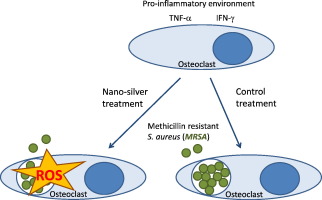
Bone infections are difficult to treat and can lead to severe tissue destruction. Acute bone infections are usually caused by Staphylococcus aureus. Osteoclasts, which belong to the monocyte/macrophage lineage, are the key cells in bone infections. They are not well equipped for killing bacteria and may serve as a reservoir for bacterial pathogens. Silver has been known for centuries for its bactericidal activity. Here, we investigated the bactericidal effects of nano-silver particles in bacteria infected human osteoclasts. We found that nano-silver in per se non-toxic concentration enhanced the bactericidal activity in osteoclasts against intracellular Methicillin-resistant, virulent Staphylococcus aureus. The reduced bacterial survival in nano-silver pretreated cells correlated with increased reactive oxygen responses towards the invading pathogens. Overall, these results indicate that nano-silver compounds should be considered as an effective treatment and prevention option for bacterial bone and orthopedic implant infections.