
- 上海阿拉丁生化科技股份有限公司
- 上海市 上海市 浦东新区
- 产品名:3-溴-2-丁酮
- 纯度:97.0%
- 规格:1g/5g/25g/1g
- 联系人:阿拉丁

 2881459338
复制
2881459338
复制
- 联系电话:400-620-6333
- 上海化源世纪贸易有限公司
- 上海市 上海市 普陀区
- 产品名:3-溴-2-丁酮
- 纯度:98.0%
- 规格:
- 联系人:徐经理
351666998
复制


 133 1186 9306
复制
133 1186 9306
复制

- 联系电话:133 1186 9306
查看所有供应商和价格请点击:
814-75-5
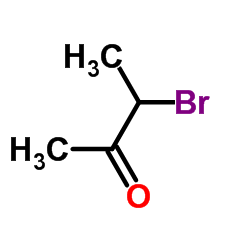
- 常用中文名:3-溴-2-丁酮
- 常用英文名:3-Bromo-2-butanone
- CAS号:814-75-5
- 分子式:C4H7BrO
- 分子量:151.002
- 相关类别: 化学试剂 有机试剂 脂肪酮(含烯醇)
- 发布时间:2018-03-31 08:00:00
- 更新时间:2026-07-01 18:15:48
-
【用途一】
医药中间体。
| 中文名 | 3-溴-2-丁酮 |
|---|---|
| 英文名 | 3-Bromo-2-butanone |
| 中文别名 |
3-溴丁-2-酮
3-溴-2-丁酮 含有 氧化镁稳定剂 3-溴-2-丁酮 STAB. WITH MAGNESIUM OXIDE 3-溴丁酮 3-溴丁烷-2-酮 3-溴-2-丁酮 STAB. WITH |
| 英文别名 |
3-Bromo-2-butanone, %, stab. with magnesium oxid
3-bromo-2-butanon 2-Bromobutan-2-one 3-BROMO-2-BUTANONE (+-)-alpha-bromoethylmethylketone 3-BROMO-2-BUTANONE , WITH MAGNESIUM OXIDE 2-BROMO-3-BUTANONE (3S)-3-bromo-2-butanone 3-BROMO-2-BUTANONE STAB . WITH MAGNESIUM OXIDE 3-Bromobut-2-one alpha-bromoethylmethylketone TIANFU-CHEM - 3-BROMO-2-BUTANONE 2-Butanone, 3-bromo 1-bromoethylmethylketone EINECS 212-404-6 MFCD00013538 3-Bromobutane-2-one 3-bromobutan-2-one 3-Bromobutan-2-one,( with CaCO3) 1-Bromoethyl methyl ketone, 2-Bromo-3-oxobutane 3-Bromo-2-butanone, stab. with magnesium oxide |
| 密度 | 1.4±0.1 g/cm3 |
|---|---|
| 沸点 | 141.5±13.0 °C at 760 mmHg |
| 分子式 | C4H7BrO |
| 分子量 | 151.002 |
| 闪点 | 62.4±7.2 °C |
| 精确质量 | 149.968018 |
| PSA | 17.07000 |
| LogP | 0.89 |
| 外观性状 | 透明淡黄色至棕色液体 |
| 蒸汽压 | 5.8±0.3 mmHg at 25°C |
| 折射率 | 1.450 |
| 储存条件 | 保持容器密封,储存在阴凉,干燥的地方 |
| 稳定性 | 常温常压下稳定,避免氧化物接触 |
| 分子结构 | 1、 摩尔折射率:28.30 2、 摩尔体积(cm3/mol):105.2 3、 等张比容(90.2K):245.8 4、 表面张力(dyne/cm):29.7 5、 介电常数: 6、 偶极距(10-24cm3): 7、 极化率:11.21 |
| 计算化学 | 1.疏水参数计算参考值(XlogP):1.1 2.氢键供体数量:0 3.氢键受体数量:1 4.可旋转化学键数量:1 5.互变异构体数量:3 6.拓扑分子极性表面积17.1 7.重原子数量:6 8.表面电荷:0 9.复杂度:60.6 10.同位素原子数量:0 11.确定原子立构中心数量:0 12.不确定原子立构中心数量:1 13.确定化学键立构中心数量:0 14.不确定化学键立构中心数量:0 15.共价键单元数量:1 |
| 更多 | 1. 性状:未确定 2. 密度(g/mL,25/4℃):1.438 3. 相对密度(20℃,4℃):1.44118 4. 熔点(ºC):未确定 5. 沸点(ºC,常压):87150 6. 沸点(ºC, 1.46kPa):36 °C 7. 折射率:1.458-1.46 8. 闪点(ºC):>100°C 9.常温折射率(n20):1.457118 10. 自燃点或引燃温度(ºC):未确定 11. 蒸气压(kPa,25ºC):未确定 12. 饱和蒸气压(kPa,60ºC):未确定 13. 燃烧热(KJ/mol):未确定 14. 临界温度(ºC):未确定 15. 临界压力(KPa):未确定 16. 油水(辛醇/水)分配系数的对数值:未确定 17. 爆炸上限(%,V/V):未确定 18. 爆炸下限(%,V/V):未确定 19. 溶解性:未确定 |
Synonym: Section 2 - COMPOSITION, INFORMATION ON INGREDIENTS
Risk Phrases: 36/37/38 Section 3 - HAZARDS IDENTIFICATION EMERGENCY OVERVIEW
Irritating to eyes, respiratory system and skin.Lachrymator (substance which increases the flow of tears).The toxicological properties of this material have not been fully investigated. Potential Health Effects Eye: Causes eye irritation. Lachrymator (substance which increases the flow of tears). Skin: Causes skin irritation. Ingestion: The toxicological properties of this substance have not been fully investigated. Inhalation: Causes respiratory tract irritation. Chronic: No information found. Section 4 - FIRST AID MEASURES Eyes: Flush eyes with plenty of water for at least 15 minutes, occasionally lifting the upper and lower eyelids. Get medical aid immediately. Skin: Get medical aid. Flush skin with plenty of water for at least 15 minutes while removing contaminated clothing and shoes. Remove contaminated clothing and shoes. Ingestion: If victim is conscious and alert, give 2-4 cupfuls of milk or water. Never give anything by mouth to an unconscious person. Get medical aid immediately. Inhalation: Remove from exposure and move to fresh air immediately. If not breathing, give artificial respiration. If breathing is difficult, give oxygen. Get medical aid. Notes to Physician: Section 5 - FIRE FIGHTING MEASURES General Information: As in any fire, wear a self-contained breathing apparatus in pressure-demand, MSHA/NIOSH (approved or equivalent), and full protective gear. During a fire, irritating and highly toxic gases may be generated by thermal decomposition or combustion. Extinguishing Media: Use extinguishing media most appropriate for the surrounding fire. Section 6 - ACCIDENTAL RELEASE MEASURES General Information: Use proper personal protective equipment as indicated in Section 8. Spills/Leaks: Clean up spills immediately, observing precautions in the Protective Equipment section. Provide ventilation. Section 7 - HANDLING and STORAGE Handling: Wash thoroughly after handling. Remove contaminated clothing and wash before reuse. Avoid contact with eyes, skin, and clothing. Keep container tightly closed. Avoid ingestion and inhalation. Storage: Keep container closed when not in use. Store in a tightly closed container. Store in a cool, dry, well-ventilated area away from incompatible substances. Section 8 - EXPOSURE CONTROLS, PERSONAL PROTECTION Engineering Controls: Use adequate ventilation to keep airborne concentrations low. Exposure Limits CAS# 814-75-5: Personal Protective Equipment Eyes: Wear appropriate protective eyeglasses or chemical safety goggles as described by OSHA's eye and face protection regulations in 29 CFR 1910.133 or European Standard EN166. Skin: Wear appropriate protective gloves to prevent skin exposure. Clothing: Wear appropriate protective clothing to prevent skin exposure. Respirators: Follow the OSHA respirator regulations found in 29 CFR 1910.134 or European Standard EN 149. Use a NIOSH/MSHA or European Standard EN 149 approved respirator if exposure limits are exceeded or if irritation or other symptoms are experienced. Section 9 - PHYSICAL AND CHEMICAL PROPERTIES Physical State: Liquid Color: light yellow Odor: Not available. pH: Not available. Vapor Pressure: 4 mm Hg @20C Viscosity: Not available. Boiling Point: 128 deg C Freezing/Melting Point: Not available. Autoignition Temperature: Not available. Flash Point: Not available. Explosion Limits, lower: Not available. Explosion Limits, upper: Not available. Decomposition Temperature: Solubility in water: Specific Gravity/Density: Molecular Formula: C4H7BrO Molecular Weight: 151.00 Section 10 - STABILITY AND REACTIVITY Chemical Stability: Stable under normal temperatures and pressures. Conditions to Avoid: Incompatible materials, strong oxidants. Incompatibilities with Other Materials: Strong oxidizing agents. Hazardous Decomposition Products: Carbon monoxide, carbon dioxide, hydrogen bromide. Hazardous Polymerization: Will not occur. Section 11 - TOXICOLOGICAL INFORMATION RTECS#: CAS# 814-75-5: EL7005000 LD50/LC50: CAS# 814-75-5: Dermal, guinea pig: LD50 = 1 mL/kg. Not available. Carcinogenicity: 3-Bromo-2-butanone - Not listed by ACGIH, IARC, or NTP. Other: See actual entry in RTECS for complete information. Section 12 - ECOLOGICAL INFORMATION Section 13 - DISPOSAL CONSIDERATIONS Dispose of in a manner consistent with federal, state, and local regulations. Section 14 - TRANSPORT INFORMATION IATA Not regulated as a hazardous material. IMO Not regulated as a hazardous material. RID/ADR Not regulated as a hazardous material. Section 15 - REGULATORY INFORMATION European/International Regulations European Labeling in Accordance with EC Directives Hazard Symbols: XI Risk Phrases: R 36/37/38 Irritating to eyes, respiratory system and skin. Safety Phrases: S 26 In case of contact with eyes, rinse immediately with plenty of water and seek medical advice. S 36/37/39 Wear suitable protective clothing, gloves and eye/face protection. WGK (Water Danger/Protection) CAS# 814-75-5: No information available. Canada CAS# 814-75-5 is listed on Canada's NDSL List. CAS# 814-75-5 is not listed on Canada's Ingredient Disclosure List. US FEDERAL TSCA CAS# 814-75-5 is listed on the TSCA inventory. SECTION 16 - ADDITIONAL INFORMATION N/A |
|
毒理学数据: 急性毒性:大鼠口经LD50:50mg/kg 生态学数据: 对水是稍微有害的,不要让未稀释或大量的产品接触地下水,水道或者污水系统,若无政府许可,勿将材料排入周围环境
|
| 符号 |


GHS02, GHS05, GHS07 |
|---|---|
| 信号词 | Danger |
| 危害声明 | H226-H302-H312-H314 |
| 警示性声明 | P280-P305 + P351 + P338-P310 |
| 个人防护装备 | Faceshields;full-face respirator (US);Gloves;Goggles;multi-purpose combination respirator cartridge (US);type ABEK (EN14387) respirator filter |
| 危害码 (欧洲) | Xn: Harmful; |
| 风险声明 (欧洲) | R36/37/38 |
| 安全声明 (欧洲) | S36/37/39-S26 |
| 危险品运输编码 | 1224 |
| RTECS号 | EL7005000 |
| 包装等级 | III |
| 危险类别 | 8 |