Diversification of non-visual photopigment parapinopsin in spectral sensitivity for diverse pineal functions.
Mitsumasa Koyanagi, Seiji Wada, Emi Kawano-Yamashita, Yuichiro Hara, Shigehiro Kuraku, Shigeaki Kosaka, Koichi Kawakami, Satoshi Tamotsu, Hisao Tsukamoto, Yoshinori Shichida, Akihisa Terakita
Index: BMC Biol. 13 , 73, (2015)
Full Text: HTML
Abstract
Recent genome projects of various animals have uncovered an unexpectedly large number of opsin genes, which encode protein moieties of photoreceptor molecules, in most animals. In visual systems, the biological meanings of this diversification are clear; multiple types of visual opsins with different spectral sensitivities are responsible for color vision. However, the significance of the diversification of non-visual opsins remains uncertain, in spite of the importance of understanding the molecular mechanism and evolution of varied non-visual photoreceptions.Here, we investigated the diversification of the pineal photopigment parapinopsin, which serves as the UV-sensitive photopigment for the pineal wavelength discrimination in the lamprey, linking it with other pineal photoreception. Spectroscopic analyses of the recombinant pigments of the two teleost parapinopsins PP1 and PP2 revealed that PP1 is a UV-sensitive pigment, similar to lamprey parapinopsin, but PP2 is a blue-sensitive pigment, with an absorption maximum at 460-480 nm, showing the diversification of non-visual pigment with respect to spectral sensitivity. We also found that PP1 and PP2 exhibit mutually exclusive expressions in the pineal organs of three teleost species. By using transgenic zebrafish in which these parapinopsin-expressing cells are labeled, we found that PP1-expressing cells basically possess neuronal processes, which is consistent with their involvement in wavelength discrimination. Interestingly, however, PP2-expressing cells rarely possess neuronal processes, raising the possibility that PP2 could be involved in non-neural responses rather than neural responses. Furthermore, we found that PP2-expressing cells contain serotonin and aanat2, the key enzyme involved in melatonin synthesis from serotonin, whereas PP1-expressing cells do not contain either, suggesting that blue-sensitive PP2 is instead involved in light-regulation of melatonin secretion.In this paper, we have clearly shown the different molecular properties of duplicated non-visual opsins by demonstrating the diversification of parapinopsin with respect to spectral sensitivity. Moreover, we have shown a plausible link between the diversification and its physiological impact by discovering a strong candidate for the underlying pigment in light-regulated melatonin secretion in zebrafish; the diversification could generate a new contribution of parapinopsin to pineal photoreception. Current findings could also provide an opportunity to understand the "color" preference of non-visual photoreception.
Related Compounds
| Structure | Name/CAS No. | Molecular Formula | Articles |
|---|---|---|---|
 |
sucrose
CAS:57-50-1 |
C12H22O11 | |
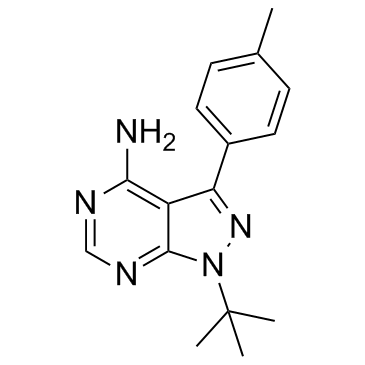 |
pp1
CAS:172889-26-8 |
C16H19N5 |
|
Salicylic acid signaling controls the maturation and localiz...
2014-08-01 [Mol. Plant 7(8) , 1365-83, (2014)] |
|
G-protein-coupled estrogen receptor 1 is anatomically positi...
2015-02-11 [J. Neurosci. 35(6) , 2384-97, (2015)] |
|
Itraconazole suppresses the growth of glioblastoma through i...
2014-07-01 [Autophagy 10(7) , 1241-55, (2014)] |
|
SSX2 is a novel DNA-binding protein that antagonizes polycom...
2015-01-01 [Nucleic Acids Res. 42(18) , 11433-46, (2014)] |
|
Functional screening in Drosophila reveals the conserved rol...
2014-12-20 [Hum. Mol. Genet. 23(25) , 6762-72, (2014)] |