Analyst (Cambridge UK) 2015-02-21

Synthesis of a carbon-dot-based photoluminescent probe for selective and ultrasensitive detection of Hg(2+) in water and living cells.

Sasmita Mohapatra, Swagatika Sahu, Niharika Sinha, Sujit K Bhutia

Index: Analyst 140(4) , 1221-8, (2015)

Full Text: HTML

Abstract

A nitrogen and sulphur co-doped carbon dot (NSCD) based highly selective photoluminescent probe for mercury detection has been designed. The NSCDs with a PL quantum yield of 69% are easily prepared from a single polymeric molecular precursor. The turn on-off fluorescence change upon mercury addition is attributed to the nonradiative electron transfer from the excited state to the d-orbital of the metal ion. The soft-soft acid-base interaction between the sulphur part of the NSCD and Hg(2+) makes the fluorescence probe more specific and selective towards Hg(2+) in contrast to other metal ions. The limit of detection of mercury ions is found to be 0.05 nM. Due to their high photostability, low toxicity and low detection limit, these carbon dots are demonstrated to be excellent probes for the detection of Hg(2+) in the living cell.

Related Compounds

Structure Name/CAS No. Articles
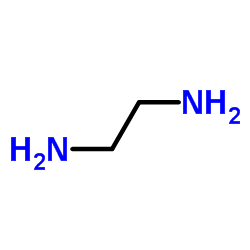
1,2-Ethanediamine Structure 1,2-Ethanediamine
CAS:107-15-3
Mercury chloride Structure Mercury chloride
CAS:7487-94-7
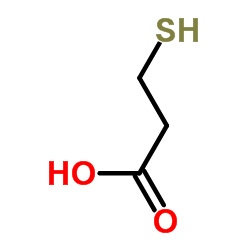
3-Mercaptopropionic acid Structure 3-Mercaptopropionic acid
CAS:107-96-0
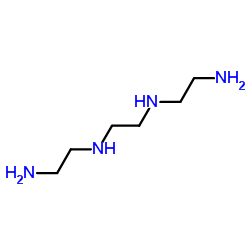
Triethylenetetramine Structure Triethylenetetramine
CAS:112-24-3
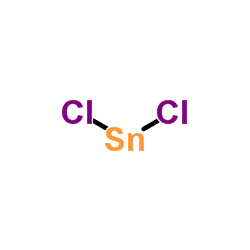
Tin(II) chloride Structure Tin(II) chloride
CAS:7772-99-8