Archives of Environmental & Occupational Health 2013-01-01

Pulmonary fibrosis effect of ammonium perchlorate exposure in rabbit.

Fenghong Wu, Hongxia Chen, Xuan Zhou, Rao Zhang, Miaohong Ding, Qin Liu, Kai-liang Peng

Index: Arch. Environ. Occup. Health 68(3) , 161-5, (2013)

Full Text: HTML

Abstract

Ammonium perchlorate (AP) is a kind of inorganic chemical. To evaluate the potential pulmonary fibrosis caused by occupational exposure to this compound, 25 male rabbits were randomly allocated into 5 groups to receive AP or bleomycin or saline by intratracheal injection. All rabbits were sacrificed and lung tissues were removed to prepare hematoxylin and eosin (HE) staining for microscope observation and to perform electron microscopy examine. In microscope observation, AP-instilled lung tissue showed inflammatory infiltrates, alveolar collapse, subpleural thickening, and lymphocyte proliferation. Electron microscopy examination of lung tissue showed massive fibroblast accumulation, collagen fiber hyperplasia, and dense collagen deposition. The histopathological changes were considered as effective indicator linking to the development of pulmonary fibrosis. These results demonstrated that chronic instillation of AP can induce pulmonary fibrosis. And these results revealed that AP has pulmonary toxic effect.

Related Compounds

Structure Name/CAS No. Articles
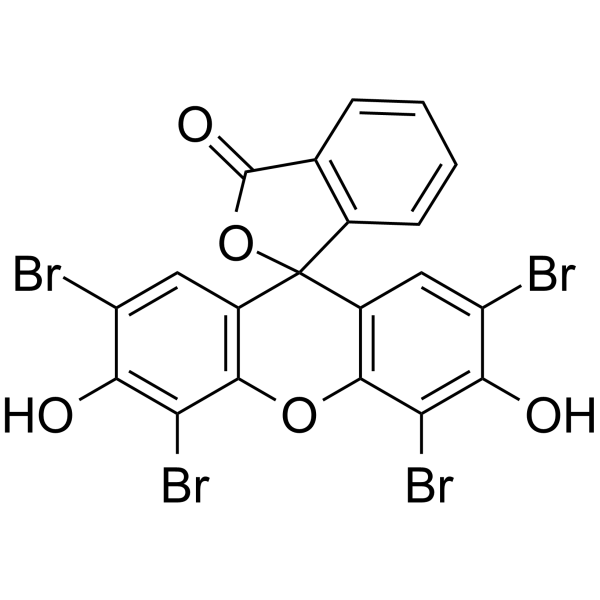
Acid Red 87 Structure Acid Red 87
CAS:17372-87-1
Eosin Y Structure Eosin Y
CAS:15086-94-9
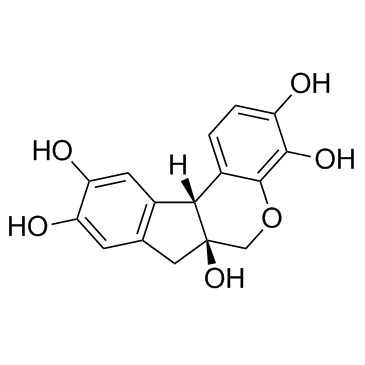
Hematoxylin Structure Hematoxylin
CAS:517-28-2
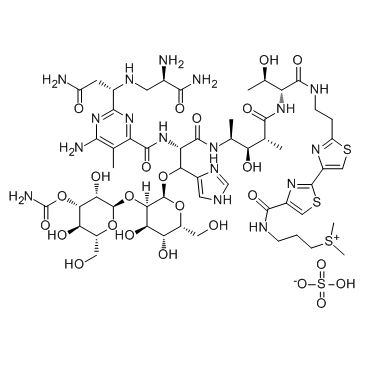
Bleomycin sulfate Structure Bleomycin sulfate
CAS:9041-93-4
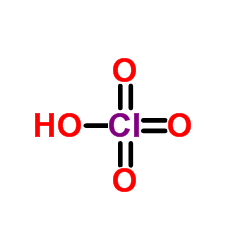
PERCHLORIC ACID Structure PERCHLORIC ACID
CAS:7601-90-3
Ammonium Perchlorate Structure Ammonium Perchlorate
CAS:7790-98-9