Proteome Science 2011-01-01

Antibody cross-linking and target elution protocols used for immunoprecipitation significantly modulate signal-to noise ratio in downstream 2D-PAGE analysis.

Mirta Ml Sousa, Kristian W Steen, Lars Hagen, Geir Slupphaug

Index: Proteome Sci. 9 , 45, (2011)

Full Text: HTML

Abstract

Immunoprecipitation and subsequent 2D-PAGE/mass spectrometry are powerful tools to study post-translational protein modifications. Often disregarded in this workflow is the impact of the chemical cross-linker upon antibody affinity, as well as incomplete elution of primary target protein in buffers commonly used in 2D-PAGE. This may impede detection of non-abundant protein isoforms.Here we have compared cross-linking of antibodies to Dynabeads® Protein A by using DMP or BS3, as well as the efficiency of various target elution buffers prior to 2D-PAGE separation. BS3 cross-linking generally resulted in less non-specific binding than DMP, whereas DMP cross-linking gave overall higher yield of target protein. Regardless of the cross-linker used, incomplete elution of target protein was observed with conventional glycine- or urea-based buffers. Conversely, complete elution was obtained with 2% hot SDS and subsequent dilution in urea buffer containing 4% CHAPS, to 0.2% final SDS yielded perfectly focused gels suitable for mass spectrometry analysis.Careful choice of Ig cross-linker as well as efficient elution of target protein in SDS prior to downstream 2D-PAGE may be key factors to analyze low-abundance proteins enriched by magnetic bead immunoprecipitation.

Related Compounds

Structure Name/CAS No. Articles
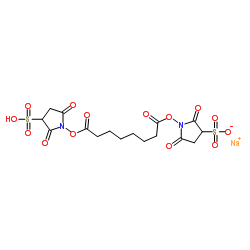
BS3 Crosslinker Structure BS3 Crosslinker
CAS:82436-77-9
RuBPS Structure RuBPS
CAS:301206-84-8