Materials Science and Engineering: C 2015-11-01

Biodegradable hyaluronic acid hydrogels to control release of dexamethasone through aqueous Diels-Alder chemistry for adipose tissue engineering.

Ming Fan, Ye Ma, Ziwei Zhang, Jiahui Mao, Huaping Tan, Xiaohong Hu

Index: Mater. Sci. Eng. C. Mater. Biol. Appl. 56 , 311-7, (2015)

Full Text: HTML

Abstract

A robust synthetic strategy of biopolymer-based hydrogels has been developed where hyaluronic acid derivatives reacted through aqueous Diels-Alder chemistry without the involvement of chemical catalysts, allowing for control and sustain release of dexamethasone. To conjugate the hydrogel, furan and maleimide functionalized hyaluronic acid were synthesized, respectively, as well as furan functionalized dexamethasone, for the covalent immobilization. Chemical structure, gelation time, morphologies, swelling kinetics, weight loss, compressive modulus and dexamethasone release of the hydrogel system in PBS at 37°C were studied. The results demonstrated that the aqueous Diels-Alder chemistry provides an extremely selective reaction and proceeds with high efficiency for hydrogel conjugation and covalent immobilization of dexamethasone. Cell culture results showed that the dexamethasone immobilized hydrogel was noncytotoxic and preserved proliferation of entrapped human adipose-derived stem cells. This synthetic approach uniquely allows for the direct fabrication of biologically functionalized gel scaffolds with ideal structures for adipose tissue engineering, which provides a competitive alternative to conventional conjugation techniques such as copper mediated click chemistry. Copyright © 2015. Published by Elsevier B.V.

Related Compounds

Structure Name/CAS No. Articles
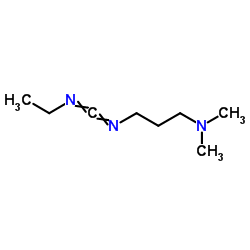
1-(3-Dimethylaminopropyl)-3-ethylcarbodiimide Structure 1-(3-Dimethylaminopropyl)-3-ethylcarbodiimide
CAS:1892-57-5
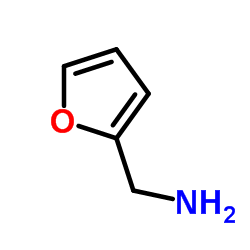
Furfurylamine Structure Furfurylamine
CAS:617-89-0
Dexamethasone Structure Dexamethasone
CAS:50-02-2
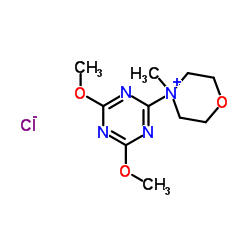
DMTMM Structure DMTMM
CAS:3945-69-5