1632118-69-4
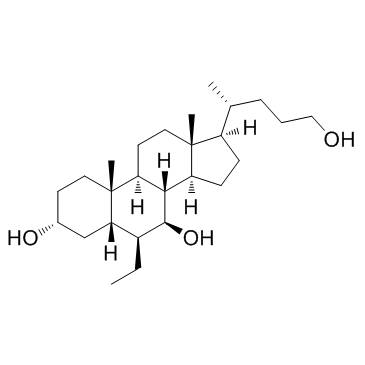
1632118-69-4 structure
- Name: BAR501
- Chemical Name: BAR 501
- CAS Number: 1632118-69-4
- Molecular Formula: C26H46O3
- Molecular Weight: 406.64
- Catalog: Signaling Pathways GPCR/G Protein GPCR19
- Create Date: 2018-05-23 03:02:51
- Modify Date: 2026-06-29 19:24:41
-
BAR501 is a potent and selective agonist of GPBAR1 with an EC50 of 1 μM.
| Name | BAR 501 |
|---|---|
| Synonyms |
Inhibitor,GPB1,T5,GPCR19,G-protein coupled rector 19,B-501,B501,G protein-coupled Bile Acid Rector 1,inhibit
DD0945 (3R,5S,6S,7S,8S,9S,10S,13R,14S,17R)-6-ethyl-17-((R)-5-hydroxypentan-2-yl)-10,13-dimethylhexadecahydro-1H-cyclopenta[a]phenanthrene-3,7-diol B501; B-501 B501 a potent and selective agonist of GPB1 B501, 10 mM in DMSO Cholane-3,7,24-triol, 6-ethyl-, (3α,5β,6β,7β) |
| Description | BAR501 is a potent and selective agonist of GPBAR1 with an EC50 of 1 μM. |
|---|---|
| Related Catalog | |
| Target |
EC50: 1 μM (GPBAR1)[1] |
| In Vitro | BAR501 is a selective GPBAR1 agonist devoid of FXR agonistic activity. It effectively transactivates GPBAR1 in HEK293 cells overexpressing a CRE along with GPBAR1, with an EC50 of 1 μM. Exposure of GLUTAg cells to BAR501 (10 μM) increases the expression of GLP-1 mRNA by 2.5 folds[1]. |
| In Vivo | Pretreating rats for 6 days with BAR501, 15 mg/kg, reduces basal portal pressure and blunts the vasoconstriction activity of norepinephrine. Pretreatment with BAR501 attenuates the hepatic vasomotor activity induced by shear stress and methoxamine. Administration of BAR501 exerts a direct vasodilatory activity in the CCl4 model. Treating mice with BAR501 at the dose of 15 mg/Kg reduces portal pressure and AST plasma levels. BAR501 attenuates endothelial dysfunction by regulating CSE expression/activity[1]. |
| Cell Assay | For GPBAR1 mediated transactivation, HEK-293T cells are plated at 10000 cells/well in a 24 well-plate and transfected with 200 ng of pGL4.29, a reporter vector containing a cAMP response element (CRE) that drives the transcription of the luciferase reporter gene luc2P, with 100 ng of pCMVSPORT6-human GPBAR1, and with 100 ng of pGL4.70. At 24 h post-transfection, HepG2 and HEK293T cells are incubated with 10 μM BAR501 for 18 h and luciferase activities are assayed and normalized against the Renilla activities[1]. |
| Animal Admin | Mice: C57BL6 mice are administered i.p. 500 μL/Kg body weight of CCl4 in an equal volume of paraffin oil twice a week for 9 weeks. CCL4 mice are randomized to receive BAR501 (15 mg/Kg daily by gavage) or vehicle (distilled water). Serum bilirubin, albumin, aspartate aminotransferase, alanine aminotransferase and alkaline phosphatase are measured by routine biochemical clinical chemistry[1]. |
| References |
| Molecular Formula | C26H46O3 |
|---|---|
| Molecular Weight | 406.64 |
| Storage condition | -20℃ |