- Shanghai Nianxing Industrial Co., Ltd
- China
- Product Name: Palmitic acid
- Price: Check
- Purity: 98.0%
- Stocking Period: 10 Day
- Contact: Yang
- Email: sales@echemcloud.com
- Dayang Chem (Hangzhou) Co., Ltd.
- China
- Product Name: Picolinic acid
- Price: $Inquiry/100g $Inquiry/1kg $Inquiry/100kg $Inquiry/1000kg
- Purity: 98.0%
- Stocking Period: Inquiry
- Contact: Ms Wang
- Email: enquiry@dycnchem.com
- Henan Tianfu Chemical Co., Ltd.
- China
- Product Name: picolinic acid
- Price: $Inquiry/1kg $Inquiry/25kg $Inquiry/1000kg $Inquiry/10ton
- Purity: 99.0%
- Stocking Period: Inquiry
- Contact: Anson
- Email: info@tianfuchem.com
- Zhongshan Xingrui Chemical Co. , Ltd.
- China
- Product Name: 2-Picolinic acid
- Price: ¥Inquiry/25kg
- Purity: 99.0%
- Stocking Period: Inquiry
- Contact: Wang Jie

- Email: 3096638339@qq.com
98-98-6
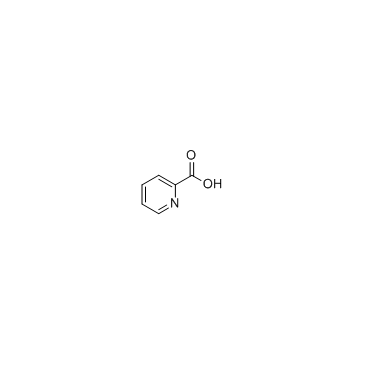
98-98-6 structure
- Name: 2-Picolinic acid
- Chemical Name: picolinic acid
- CAS Number: 98-98-6
- Molecular Formula: C6H5NO2
- Molecular Weight: 123.109
- Catalog: Pharmaceutical intermediate Heterocyclic compound Pyridine compound Pyridine derivative
- Create Date: 2018-07-22 14:46:39
- Modify Date: 2026-06-30 21:43:48
-
PCL 016 is a topical antiviral agent, which inhibits adenovirus replication in rabbit.
| Name | picolinic acid |
|---|---|
| Synonyms |
2- picolinate
2-PYRIDINECBOXYLIC ACID Pyridinecboxylic acid Picolinic acid, R 2-Picolinic acid ReagentPlus(R) 2-Cboxypyridine acidepicolique 2-PicoL 2-Pyridinecboxylic Picolinicacid(PCL016) 2-Picolinic acid ISO 9001:2015 REACH o-pyridinecboxylicacid Pyridine-cboxylique-2 Pyridine-2-cboxylicAcid> a-PICOLINIC ACID 2-PicolinicAcid inic acid 2-Pyridylcboxylic acid alpha-pyridinecboxylicacid 2-acid pyridine a-Pyridinecboxylic acid Pyridin-2-cbonsure 2-Picolinic acid,α-Picolinic acid, Pyridine-2-cboxylic acid Picolinic Acid 2 Sorafenib Impurity 18 PYRIDINE-2-CBOXYLIC ACID PYRIDINE-ALPHA-CBOXYLIC ACID Pyridine-2-cboxylic Picolinic aci 2-PICOLINIC ACID PICOLINIC ACID SOLUTION 2-Carboxypyridine Acide picolique PICOLINIC ACID Picolinic acid pyridine-2-carboxylic acid RECHEM AL BO 0209 Picolinsαure EINECS 202-719-7 2-Pyridine Cboxylic Acid TIMTEC-BB SBB004277 PICOLINIC(2-) ACID acidicolique 2-pyridinecarboxylic acid OEM Pyridine-2-cboxylic acid alpha-Pyridinecboxylic acid PCL 016 o-Pyridinecboxylic acid ALPHA-PICOLINIC ACID Picolinic acid, 2-Cboxypyridine Isoniazid Impurity G PICOLINIC ACID PYRIDINE-2-CBOXYLIC ACID MFCD00006293 picolinic acid,2-Pyridinecboxylic acid Picolonic acid 2-Pyridinecboxylic Aicd 2-Picolinic acid Vetec(TM) ade |
| Description | PCL 016 is a topical antiviral agent, which inhibits adenovirus replication in rabbit. |
|---|---|
| Related Catalog | |
| Target |
Human Endogenous Metabolite |
| In Vivo | Topical 1.5% PCL, 0.8% PCL, 0.369% PCL (pH7), 0.369% PCL (pH4) and 0.5% CDV are significantly more effective than the Control in reducing Ad Positive Cultures/Total (Days 1-14) and the Duration of Ad Shedding in the Ad5/NZW rabbit ocular model. Although not statistically significant, there appears to be a trend toward concentration-dependent efficacy of PCL 016 on the Duration of Ad Shedding. There is no apparent ocular toxicity associated with PCL 016 concentrations[1]. |
| Animal Admin | Rabbits[1] 25 NZW rabbits are topically inoculated in both eyes, following corneal scarification, with 1.5 x 10⁶ pfu/eye of Ad5. On day 1, the rabbits are divided into 6 topical treatment groups: I - 1.5% PCL 016 pH 7.0 (n=4); II - 0.8% PCL 016 pH 7.0 (n=4); III - 0.369% PCL 016 pH 7.0 (n=4); IV - 0.369% PCL 016 pH 4.0 (n=4); V - 0.5% Cidofovir (CDV) (n=4); VI - Control (saline) (n=5). PCL 016 and control rabbits are treated in both eyes 4 times daily for 7 days, while CDV rabbits are treated in both eyes twice daily for 7 days. All eyes are cultured for virus on days 0, 1, 3, 4, 5, 7, 9, 11, and 14[1]. |
| References |
| Density | 1.3±0.1 g/cm3 |
|---|---|
| Boiling Point | 292.5±13.0 °C at 760 mmHg |
| Melting Point | 139-142 °C(lit.) |
| Molecular Formula | C6H5NO2 |
| Molecular Weight | 123.109 |
| Flash Point | 130.7±19.8 °C |
| Exact Mass | 123.032028 |
| PSA | 50.19000 |
| LogP | -0.10 |
| Vapour Pressure | 0.0±0.6 mmHg at 25°C |
| Index of Refraction | 1.571 |
| Storage condition | Store at RT. |
| Water Solubility | 887 g/L (20 ºC) |
CHEMICAL IDENTIFICATION
HEALTH HAZARD DATAACUTE TOXICITY DATA
|
| Symbol |

GHS07 |
|---|---|
| Signal Word | Warning |
| Hazard Statements | H302-H319 |
| Precautionary Statements | P305 + P351 + P338 |
| Personal Protective Equipment | dust mask type N95 (US);Eyeshields;Gloves |
| Hazard Codes | Xn,Xi |
| Risk Phrases | R22:Harmful if swallowed. R36:Irritating to the eyes. R36/37/38:Irritating to eyes, respiratory system and skin . |
| Safety Phrases | S26-S36-S33-S24/25 |
| RIDADR | NONH for all modes of transport |
| WGK Germany | 3 |
| RTECS | TJ7344000 |
| HS Code | 29333999 |
| Precursor 8 | |
|---|---|
| DownStream 9 | |



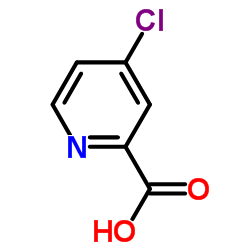
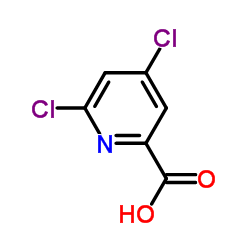
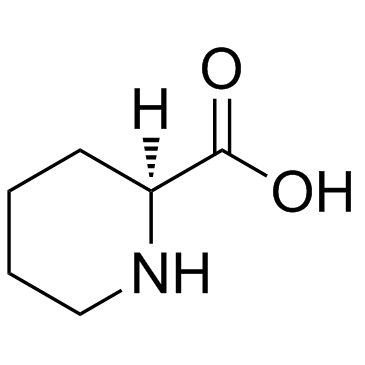
| HS Code | 29333999 |
|---|