786643-20-7
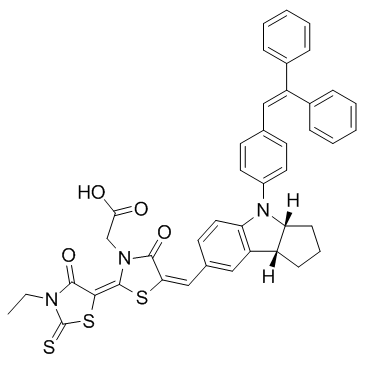
786643-20-7 structure
- Name: D149 Dye
- Chemical Name: D-149 Dye
- CAS Number: 786643-20-7
- Molecular Formula: C42H35N3O4S3
- Molecular Weight: 741.94000
- Catalog: Dye Reagents
- Create Date: 2018-12-04 16:06:30
- Modify Date: 2026-07-08 19:34:19
-
D149 Dye is an indoline-based dye, which is a high-extinction-coefficient metal-free organic sensitizer.
| Name | D-149 Dye |
|---|---|
| Synonyms |
D149 DYE
D149 Dye (HPLC) 3-Thiazolidineacetic acid, 5-[[4-[4-(2,2-diphenylethenyl)phenyl]-1,2,3,3a,4,8b-hexahydrocyclopent[b]indol-7-yl]methylene]-2-(3-ethyl-4-oxo-2-thioxo-5-thiazolidinylidene)-4-oxo 5-[[4-[4-(2,2-Diphenylethenyl)phenyl]-1,2,3,3a,4,8b-hexahydrocyclopent[b]indol-7-yl]methylene]-2-(3-ethyl-4-oxo-2-thioxo-5-thiazolidinylidene)-4-oxo-3-thiazolidineacetic acid 2-(5-((4-(4-(2,2-Diphenylvinyl)phenyl)-1,2,3,3a,4,8b-hexahydrocyclopenta[b]indol-7-yl)methylene)-3'-ethyl-4,4'-dioxo-2'-thioxo-3',4,4',5-tetrahydro-2'H,3H-[2,5'-bithiazolylidene]-3-yl)acetic acid D 149(D149 Dye,Indoline dye D149) 5-[[(3,8bR)-4-[4-(2,2-diphenylethenyl)phenyl]-1,2,3,3a,4,8b-hexahydrocyclopent[b]indol-7-yl]methylene]-2-(3-ethyl-4-oxo-2-thioxo-5-thiazolidinylidinylidene)-4-oxo-(2E,5E)-rel-3-Thiazolidineacetic acid Indoline dye D149 |
| Description | D149 Dye is an indoline-based dye, which is a high-extinction-coefficient metal-free organic sensitizer. |
|---|---|
| Related Catalog | |
| In Vitro | D149 is a metal-free organic dye, which is promising all-organic alternatives. D149 displays power conversion efficiency of up to 9%. Furthermore, D149 has a peak extinction co-efficient of 68700 M-1 cm-1 at 540 nm, significantly higher than 13900 M-1cm-1 at 535 nm for N719[1]. D149, a metal-free indoline dye, is one of the most promising sensitizers for dye-sensitized solar cells (DSSCs) and has shown very high solar energy conversion efficiencies of 9%. D149 shows a large number of unresolved aromatic and olefinic signals between 7 and 7.5 ppm[2] |
| Cell Assay | The porous TiO2 films are immersed in a 0.5 mM D149 (1-material) dye solution in a 1:1 (v/v) mixture of acetonitrile (HPLC) and tert-butanol (LR) overnight once their temperature decreased to approximately 110°C. The samples are then taken out of the dye bath, washed with acetonitrile, and dried. The working electrode and Pt counter electrode [produced using a pre-drilled piece of 2.3 mm FTO glass, coated with one drop of 10 mM platinic acid solution [H2PtCl6] and heated to 400°C for 20 min] are assembled into a sandwich type cell and sealed with a spacer of 25 μm Surlyn. An I-1/I3-1 organic solvent based electrolyte solution [50 mM iodine, 0.6 M 1,2-dimethyl-3-propylimidazelium iodide, 0.1 M lithium iodide in methoxypropionitrile] is introduced via vacuum back-filling. The hole is sealed with a piece of aluminium foil-backed Surlyn[1]. |
| References |
| Density | 1.47g/cm3 |
|---|---|
| Molecular Formula | C42H35N3O4S3 |
| Molecular Weight | 741.94000 |
| Exact Mass | 741.17900 |
| PSA | 168.48000 |
| LogP | 7.19120 |
| Storage condition | -20℃ |
| RIDADR | NONH for all modes of transport |
|---|
|
~%
786643-20-7 |
| Literature: Dyes and Pigments, , vol. 91, # 2 p. 145 - 152 |
|
~%
786643-20-7 |
| Literature: Dyes and Pigments, , vol. 91, # 2 p. 145 - 152 |
|
~%
786643-20-7 |
| Literature: Dyes and Pigments, , vol. 91, # 2 p. 145 - 152 |
|
~%
786643-20-7 |
| Literature: Dyes and Pigments, , vol. 91, # 2 p. 145 - 152 |
|
~%
786643-20-7 |
| Literature: Dyes and Pigments, , vol. 91, # 2 p. 145 - 152 |


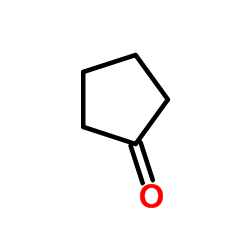


| Precursor 5 | |
|---|---|
| DownStream 0 | |