16673-34-0
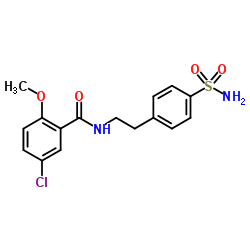
16673-34-0 structure
- Name: NLRP3-IN-2
- Chemical Name: 4-[2-(5-Chloro-2-methoxybenzamido)ethyl]benzene Sulfonamide
- CAS Number: 16673-34-0
- Molecular Formula: C16H17ClN2O4S
- Molecular Weight: 368.835
- Catalog: Organic raw materials Amino compound Amide compound
- Create Date: 2018-12-18 09:12:16
- Modify Date: 2026-07-02 23:26:36
-
NLRP3-IN-2, an intermediate substrate in the synthesis of glyburide, inhibits the formation of the NLRP3 inflammasome in cardiomyocytes and limits the infarct size following myocardial ischemia/reperfusion in the mouse, without affecting glucose metabolism[1].
| Name | 4-[2-(5-Chloro-2-methoxybenzamido)ethyl]benzene Sulfonamide |
|---|---|
| Synonyms |
4-(2-(5-Chloro-2-methoxybenzamido)ethyl)benzenesulfamide
Einecs -5 Glibenclamide Impurity 1(Glibenclamide Impurity A) 5-Chloro-N-(p-sulfamoylphenethyl)-o-anisamide|||NP3 Inflammasome Inhibitor I Glibenclamide Impurity A/ Glyburide Related Compound A 4-[2-(5-CHLORO-2-METHOXYBENZAMIDO)ETHYL]PHENYLSULPHONAMIDE 4-[2-(2-METHOXY-5-CHLOROBENZAMIDO)ETHYL]BENZENESULFONAMIDE Glyburide Related Compound A (4-[2-(5-chloro-2-methoxybenzamido)ethyl]benzenesulfonamide) Glyburide Related CoMpound A N-(2-(4-(Aminosulfonyl)phenyl)ethyl)-5-chloro-2-methoxybenzamide 16-0 NP3i 5-Chloro-2-Methoxy-N-(4-sulfaMoylphenethyl)benzaMide Glibenclamide Impurity AQ: What is Glibenclamide Impurity A Q: What is the CAS Number of Glibenclamide Impurity A Q: What is the storage condition of Glibenclamide Impurity A Q: What e the applications of Glibenclamide Impurity A NP3 Inflammasome Inhibitor I NP3-IN-2 Glyburide Related Compound A (25 mg) (5-chloro-2-methoxy-N-[2-(4-sulfamoylphenyl)ethyl]benzamide) 4-(5-CHLORO-2-METHOXYBENZAMIDOETHYL)BENZENESULFONAMIDE 5-Chloro-N-(p-sulfaMoylphenethyl)-o-anisaMide Glyburide Related Compound A (25 mg) (4-[2-(5-chloro-2-methoxybenzamido)ethyl]benzenesulfonamide) Glibenclamide ImpurityⅠ:5-Chloro-2-methoxy-N-[2-(4-sulfamoylphenyl)ethyl]benzamide Glibenclamide Impurity Ⅰ(4-[2-(5-chloro-2-methoxybenzamido)ethyl]benzenesulfonamide) Glibenclamide (Glyburide) Impurity A 4-[2-(2-Methoxy-5-chlorobenzene-1-cboxaMido)ethyl]benzenesulfonaMide EINECS 240-722-5 5-CHLORO-2-METHOXY-N-[2-(4-SULFAMOYLPHENYL)ETHYL]BENZAMIDE 5-chloro-2-methoxy-N-[2-(4-sulphamoylphenyl)ethyl]benzamide [2-(5-Chloro-2.methoxybenzamido)-ethyl]-phenylsulfonamide 5-chloro-2-methoxy-n-(2-(4-sulfamoyl-phenyl)ethyl NP3 Inflammasome InhibitorⅠ 4-Ethyl-3-(2-methoxy-5-chlorbenzamido)-benzolsulfonamid 4-(2-(5-Chloro-2-methoxybenzamido)ethyl)benzenesulfamide ISO 9001:2015 REACH 4-[2-(5-CHLORO-2-METHOXY-BENZAMIDE)ETHYL]-BENZENESULPHONAMIDE 4-(2-(5-CHLORO-2-METHOXYBENZAMIDO)ETHYL)PHENYLSULFONAMIDE Benzamide, N-[2-[4-(aminosulfonyl)phenyl]ethyl]-5-chloro-2-methoxy 5-Chloro-2-methoxy-N-[2-(4-sulfamoy 5-Chloro-2- methoxy-N-[2-(4-sulphamoylphenyl N-[2-[4-(aminosulphonyl)phenyl]ethyl]-5-chloro-2-methoxybenzamide N-(2-(4-sulfamoyl)phenyl)ethyl-5-chloro-2-methoxybenzamide Glibenclamide (Glyburide) Impurity A (Glibenclamide (Glyburide) Related Compound A) Glyburide RC A 5-Chloro-2-methoxy-N-[2-(4-sulfamoylphenyl)ethyl]benzamide 4-[2-(5-chloro-2-methoxy-benzamide)ethyl]-benzenesulphonamide (5-CHLORO-2-METHOXYBENZAMIDO)-ETHYL BENZENSULFONAMIDE 5-CHLORO-2-METHOXY-N-[2-(P-SULFAMOYLPHENYL)ETHYL]BENZAMIDE Sulphonamide of Glibenclamide Glibenclamide Impurity 7 4-[2-(2-Methoxy-5-Chloro Benzamido)Ethyl]Sulphonamide BENZAMIDE, N-[2-[4-(AMINOSULFONYL) PHENYL]ETHYL]-5-CHLORO-2-METHOXY (GLYBIN SULFONAMIDE) Glibenclamide Impurity A NP3i N-[4-(Aminosulfonyl)phenethyl]-2-methoxy-5-chlorobenzamide 5-Chloro-2-methoxy-N-(4-sulfamoylphenethyl)benzamide MFCD00193756 |
| Description | NLRP3-IN-2, an intermediate substrate in the synthesis of glyburide, inhibits the formation of the NLRP3 inflammasome in cardiomyocytes and limits the infarct size following myocardial ischemia/reperfusion in the mouse, without affecting glucose metabolism[1]. |
|---|---|
| Related Catalog | |
| In Vivo | NLRP3-IN-2 is well tolerated with no effects on the glucose levels in vivo[1]. NLRP3-IN-2 (100 mg/kg) treatment in a model of AMI due to ischemia+reperfusion significantly inhibits the activity of inflammasome (caspase-1) in the heart by 90% (P<0.01) and reduced infarct size, measured at pathology (by >40%, P<0.01) and with troponin I levels (by >70%, P<0.01) [1]. Animal Model: Experimental acute myocardial infarction (AMI) model in mice[1]. Dosage: 100 mg/kg. Administration: Intraperitoneal administration 30 minutes prior to surgery, then every 6 hours for 3 additional doses. Result: Led to a significant >90% reduction in caspase-1 activity (reflective of the formation of an active inflammasome) in the heart tissue measured 24 hours after ischemia. Led to a significant reduction in the infarct size measured with TTC (>40% reduction) or troponin I levels (>70% reduction) when compared with vehicle alone. |
| References |
| Density | 1.4±0.1 g/cm3 |
|---|---|
| Melting Point | 209-214 °C |
| Molecular Formula | C16H17ClN2O4S |
| Molecular Weight | 368.835 |
| Exact Mass | 368.059753 |
| PSA | 106.87000 |
| LogP | 1.74 |
| Index of Refraction | 1.598 |
| Storage condition | Refrigerator |
| Hazard Codes | T |
|---|---|
| Risk Phrases | R23/24/25 |
| Safety Phrases | S26-S36-S36/37-S22 |
| RIDADR | NONH for all modes of transport |
| WGK Germany | 3 |
| HS Code | 2935009090 |
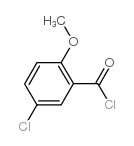
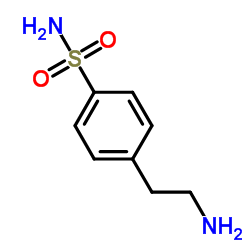
| Precursor 2 | |
|---|---|
| DownStream 1 | |

| HS Code | 2935009090 |
|---|---|
| Summary | 2935009090 other sulphonamides VAT:17.0% Tax rebate rate:9.0% Supervision conditions:none MFN tariff:6.5% General tariff:35.0% |