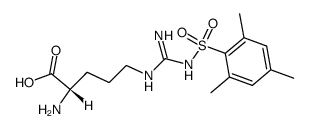
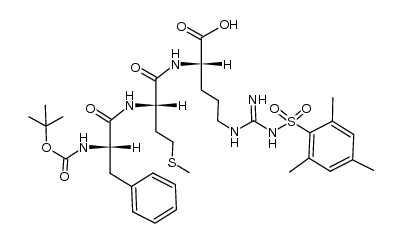
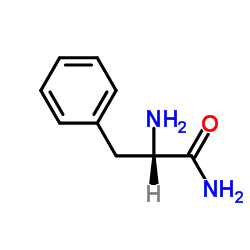
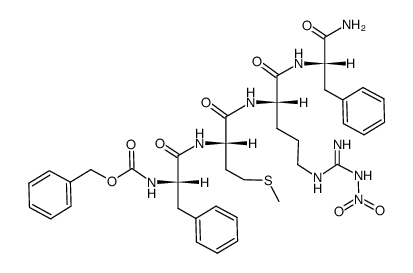
64190-70-1
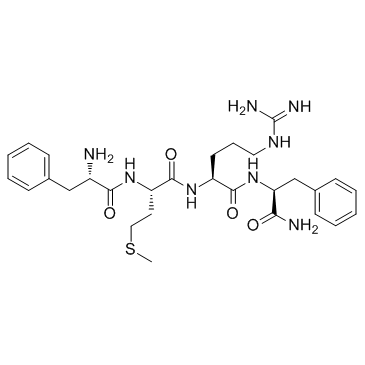
64190-70-1 structure
- Name: Phe-Met-Arg-Phe, amide
- Chemical Name: fmrf amide
- CAS Number: 64190-70-1
- Molecular Formula: C29H42N8O4S
- Molecular Weight: 598.76000
- Catalog: Peptides
- Create Date: 2016-01-15 09:14:25
- Modify Date: 2026-07-02 14:10:35
-
Phe-Met-Arg-Phe, amide dose dependently (ED50=23 nM) activates a K+ current in the peptidergic caudodorsal neurons.
| Name | fmrf amide |
|---|---|
| Synonyms |
(2S)-N-[(2S)-1-azanyl-1-oxo-3-phenyl-propan-2-yl]-2-[[2-[[(2S)-2-azanyl-3-phenyl-propanoyl]amino]-4-methylsulfanyl-butanoyl]amino]-5-[bis(azanyl)methylideneamino]pentanamide
L-Phenylalaninamide,L-phenylalanyl-L-methionyl-L-ginyl FMRF-AMIDE 1 1/2ACOH 2H2O FMRF-NH2 PHE-MET-G-PHE-NH2 1/2ACOH 2H2O (2S)-N-[(2S)-1-amino-1-oxo-3-phenylpropan-2-yl]-2-[[2-[[(2S)-2-amino-3-phenylpropanoyl]amino]-4-methylsulfanylbutanoyl]amino]-5-(diaminomethylideneamino)pentanamide neuroptide C PHE-MET-G-PHE AMIDE FMRF amide, Molluscan cdioexcitatory neuroptide FMRF AMIDE MOLLUSCAN CDIOEXCITATORY PTIDE H-PHE-MET-G-PHE-NH2 6-O-D-Glucopyranosyl-D-glucitol MOLLUSCAN CDIOEXCITATORY NEUROPTIDE PHE-MET-G-PHE-NH2 Neuroptide C (Macrocallista nimbosa cdioexcitatory) Phe-Met-g-Phe amide, (HPLC) Phe-Met-Arg-Phe-amide (2S)-N-[(1S)-2-amino-1-(benzyl)-2-keto-ethyl]-2-[[2-[[(2S)-2-amino-3-phenyl-propanoyl]amino]-4-(methylthio)butanoyl]amino]-5-guanidino-valeramide L-PHENYLALANYL-L-METHIONYL-L-GINYL-L-PHENYLALANINAMIDE) Cdioexcitatory ptide (mollusk) Phe-Met-Arg-Phe-NH2 H-Phe-Met-Arg-Phe-NH2 phenylalanyl-methionyl-arginyl-phenylalaninamide FMRF AMIDE phe-met MFRF amide L-PHE-MET L-PHENYLALANYL-L-METHIONINE MOLLUSCAN CDIOEXCITATORY PTIDE L-Phe-L-Met L-Phe-L-Met-L-Arg-L-Phe-NH2 L-Phe-L-Met-L-g-Phe-NH2 L-Phe-L-Met-L-g-L-Phe-NH2 MOLLUSCAN CDIOEXCITATORY NEUROPTIDE 1 1/2 ACOH 2H2O (S)-N-((S)-1-Amino-1-oxo-3-phenylpropan-2-yl)-2-((S)-2-((S)-2-amino-3-phenylpropanamido)-4-(methylthio)butanamido)-5-guanidinopentanamide |
| Description | Phe-Met-Arg-Phe, amide dose dependently (ED50=23 nM) activates a K+ current in the peptidergic caudodorsal neurons. |
|---|---|
| Related Catalog | |
| Target |
ED50: 23 nM (K+ current)[1] |
| In Vitro | In the molluscan central nervous system, Phe-Met-Arg-Phe, amide (FMRFa) acts on K+ channels in sensory, motor-, and neuroendocrine neurones. Phe-Met-Arg-Phe, amide activates a novel K+ current that is characterized by a combined voltage- and receptor-dependent gating mechanism, with both factors being necessary for opening of the channels[1]. Phe-Met-Arg-Phe, amide (1 μM) significantly inhibits glucose stimulated (300 mg/dL) insulin release (p<0.005) and somatostatin release (p<0.01) from the isolated perfused pancreas. Phe-Met-Arg-Phe, amide (FMRF-NH2) (1 and 10 μM) is without effect on glucagon secretion, either in low glucose (50 mg/dL), high glucose (300 mg/dL), or during arginine stimulation (5 mM)[2]. |
| In Vivo | Phe-Met-Arg-Phe, amide (FMRFamide) stimulates growth hormone secretion in conscious OVX rats. The presence of Phe-Met-Arg-Phe, amide-like immunoreactivity in neuronal elements in the hypothalamus suggested a role for this in the hypothalamic control of the anterior pituitary function. The injection of 200 ng (313.8 picomoles) of FMRFamide (in 2 uL) produces a significantly increased plasma GH 15 min after injection. The GH-increasing effect of 400-800 ng (627-1255 picomoles) of FMRFamide is already developed after 5 min and lasted up to 30 min[3]. |
| References |
| Density | 1.32 g/cm3 |
|---|---|
| Molecular Formula | C29H42N8O4S |
| Molecular Weight | 598.76000 |
| Exact Mass | 598.30500 |
| PSA | 243.61000 |
| LogP | 3.51940 |
| Index of Refraction | 1.639 |
| Personal Protective Equipment | Eyeshields;Gloves;type N95 (US);type P1 (EN143) respirator filter |
|---|---|
| RIDADR | NONH for all modes of transport |
| Precursor 7 | |
|---|---|
| DownStream 0 | |