Silvisar
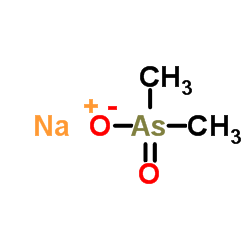
Silvisar structure
|
Common Name | Silvisar | ||
|---|---|---|---|---|
| CAS Number | 124-65-2 | Molecular Weight | 159.979 | |
| Density | N/A | Boiling Point | 253.1ºC at 760 mmHg | |
| Molecular Formula | C2H6AsNaO2 | Melting Point | 60ºC | |
| MSDS | Chinese | Flash Point | 109.4ºC | |
Use of SilvisarSodium cacodylate is an arsenical that has been used as a dermatologic agent and as an herbicide. |
Summary: Sodium dimethylarsinate (CAS: 124-65-2) is a white crystalline or powdered substance with the molecular formula C2H6AsNaO2 and a molecular weight of 159.979. For research-use only, not for medical or clinical usage.
This table lists Chinese names, IUPAC names and various aliases of this chemical substance.
| Name | sodium dimethylarsinate |
|---|---|
| Synonym | More Synonyms |
This table shows physicochemical parameters including melting point, boiling point, density, solubility and optical rotation. Missing data is marked as N/A.
| Boiling Point | 253.1ºC at 760 mmHg |
|---|---|
| Melting Point | 60ºC |
| Molecular Formula | C2H6AsNaO2 |
| Molecular Weight | 159.979 |
| Flash Point | 109.4ºC |
| Exact Mass | 159.948151 |
| PSA | 40.13000 |
| LogP | 0.54920 |
| InChIKey | IHQKEDIOMGYHEB-UHFFFAOYSA-M |
| SMILES | C[As](C)(=O)[O-].[Na+] |
| Stability | Stable. |
| Water Solubility | H2O: 0.5 M at 20 °C, clear, colorless |
This table provides MSDS information including hazard classification, first‑aid, fire‑fighting, spill handling, operation and storage instructions.
This table summarizes toxicological test data, acute & chronic toxicity and ecological hazard parameters for this chemical.
CHEMICAL IDENTIFICATION
HEALTH HAZARD DATAACUTE TOXICITY DATA
MUTATION DATA
|
This table covers safety warnings, protective measures, incompatible substances and disposal guidelines for this compound.
| Hazard Codes | T,N |
|---|---|
| Risk Phrases | R23/25 |
| Safety Phrases | S20/21-S28-S45-S60-S61 |
| RIDADR | UN 1688 6.1/PG 2 |
| WGK Germany | 3 |
| RTECS | CH7890000 |
| Packaging Group | II |
| Hazard Class | 6.1(a) |
| HS Code | 2931900022 |
This table presents publicly reported synthetic routes, reaction conditions, reactants and product information of the compound.
|
~%
Silvisar CAS#:124-65-2 |
| Literature: Comptes Rendus Hebdomadaires des Seances de l'Academie des Sciences, , vol. 137, p. 927 |

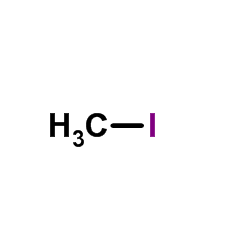
This table lists upstream starting materials and downstream derivative products related to this chemical.
| Precursor 2 | |
|---|---|
| DownStream 3 | |
 CAS#:593-57-7
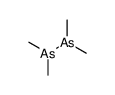 CAS#:471-35-2
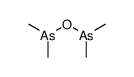 CAS#:503-80-0
This table shows customs‑related data including HS‑code, tariff and regulatory conditions for import and export.
| HS Code | 2931900022 |
|---|---|
| Summary | 2931900022 dimethylarsinic acid。supervision conditions:x(environment control release notice for poisonous chemicals)。VAT:17.0%。tax rebate rate:0.0%。MFN tarrif:6.5%。general tariff:30.0% |
This table collects all English aliases, systematic names and CAS‑related synonyms of the compound.
| arsycodile |
| [(Dimethylarsino)oxy]sodium As-oxide |
| EINECS 204-708-2 |
| Arsinic acid, dimethyl-, sodium salt (1:1) |
| Sodium dimethylarsinate |
| arsecodile |
| chemaid |
| Natrium-dimethylarsinat |
| arsicodile |
| bophy |
| Silvisar |
| ansar560 |
| broadside |
| MFCD00002096 |
| cacodylic acid sodium salt |
| sodium dimethylarsenite |
| alkarsodyl |
| Sodium cacodylate 97+ |
| sodium cacodylate |
| bolate |
| sodium As,As-dimethylarsinate |
| cacodylate de sodium |
| ansar160 |
| dimethylarsinic acid sodium salt |
This section contains frequently‑asked‑questions about this compound, including basic parameters, properties, storage conditions and corresponding answers.
| Q: What is the melting point of sodium dimethylarsinate? |
| A: Melting point of sodium dimethylarsinate is 60ºC. |
| Q: What is the polar surface area (PSA) of sodium dimethylarsinate? |
| A: Polar surface area (PSA) of sodium dimethylarsinate is 40.13000. |
| Q: What is the InChIKey of sodium dimethylarsinate? |
| A: InChIKey of sodium dimethylarsinate is IHQKEDIOMGYHEB-UHFFFAOYSA-M. |
| Q: What is the boiling point of sodium dimethylarsinate? |
| A: Boiling point of sodium dimethylarsinate is 253.1ºC at 760 mmHg. |
| Q: What is the SMILES notation of sodium dimethylarsinate? |
| A: SMILES notation of sodium dimethylarsinate is C[As](C)(=O)[O-].[Na+]. |
| Q: What is the molecular weight of sodium dimethylarsinate? |
| A: Molecular weight of sodium dimethylarsinate is 159.979. |
| Q: What is the safety information for sodium dimethylarsinate? |
| A: Safety information for sodium dimethylarsinate: S20/21-S28-S45-S60-S61. |
| Q: How is the water solubility of sodium dimethylarsinate? |
| A: Water solubility of sodium dimethylarsinate: H2O: 0.5 M at 20 °C, clear, colorless. |
| Q: What are the uses of sodium dimethylarsinate? |
| A: Main uses of sodium dimethylarsinate: Sodium cacodylate is an arsenical that has been used as a dermatologic agent and as an herbicide. |
| Q: What is the CAS number of sodium dimethylarsinate? |
| A: CAS number of sodium dimethylarsinate is 124-65-2. |
This table lists manufacturers and suppliers of this compound, including vendor names and product supply reference information.
| Shanghai Nianxing Industrial Co., Ltd |
| Dayang Chem (Hangzhou) Co., Ltd. |