UNII:3J848924K5
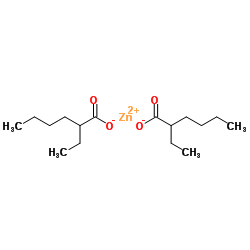
UNII:3J848924K5 structure
|
Common Name | UNII:3J848924K5 | ||
|---|---|---|---|---|
| CAS Number | 136-53-8 | Molecular Weight | 351.816 | |
| Density | 1.07 | Boiling Point | 228ºC at 760 mmHg | |
| Molecular Formula | C16H30O4Zn | Melting Point | 115-117ºC | |
| MSDS | N/A | Flash Point | 40ºC | |
This table lists Chinese names, IUPAC names and various aliases of this chemical substance.
| Name | Zinc 2-Ethylhexanoate |
|---|---|
| Synonym | More Synonyms |
This table shows physicochemical parameters including melting point, boiling point, density, solubility and optical rotation. Missing data is marked as N/A.
| Density | 1.07 |
|---|---|
| Boiling Point | 228ºC at 760 mmHg |
| Melting Point | 115-117ºC |
| Molecular Formula | C16H30O4Zn |
| Molecular Weight | 351.816 |
| Flash Point | 40ºC |
| Exact Mass | 350.143555 |
| PSA | 52.60000 |
| LogP | 4.41810 |
| Vapour Pressure | 0.027mmHg at 25°C |
| Index of Refraction | 1.5280 (20ºC) |
| InChIKey | IFNXAMCERSVZCV-UHFFFAOYSA-L |
| SMILES | CCCCC(CC)C(=O)[O-].CCCCC(CC)C(=O)[O-].[Zn+2] |
This table provides MSDS information including hazard classification, first‑aid, fire‑fighting, spill handling, operation and storage instructions.
|
Section 1: Product Identification Chemical Name:Zinc 2-ethylhexanoate, approx.80% in mineral spirits (14-15% Zn) CAS Registry Number:136-53-8 Formula:Zn[OOCCH(C2H5)C4H9]2 EINECS Number:none Chemical Family:metal carboxylate Synonym:2-ethylhexanoic acid, zinc salt, in petroleum spirits, paraffin oil.
Section 2: Composition and Information on Ingredients IngredientCAS NumberPercentACGIH (TWA)OSHA (PEL) Title Compound136-53-880%no datano data mineral spirits64475-85-020%no datano data Section 3: Hazards Identification Emergency Overview:Irritating to eyes, skin and respiratory tract, and causes drowsiness. May be harmful if swallowed. Primary Routes of Exposure:Ingestion, eyes, inhalation, skin Eye Contact:Causes mild irritation of the eyes. Skin Contact:Causes slight to mild irritation of the skin. Inhalation:Vapor is irritating to the nose, mucous membranes and respiratory tract, and cause drowsiness. Ingestion:Ingestion may cause gastrointestinal distress, dizziness, weakness, and drowsiness. Irritating to skin, eyes and respiratory tract. Mineral spirits entering lungs during vomiting can cause severe Acute Health Affects: pulmonary injury. Chronic Health Affects:No data available NTP:No IARC:No OSHA:No SECTION 4: First Aid Measures Immediately flush the eyes with copious amounts of water for at least 10-15 minutes. A victim may need Eye Exposure: assistance in keeping their eye lids open. Get immediate medical attention. Wash the affected area with soap and water. Remove contaminated clothes if necessary. Seek medical Skin Exposure: assistance if irritation persists. Remove the victim to fresh air. Closely monitor the victim for signs of respiratory problems, such as difficulty Inhalation: in breathing, coughing, wheezing, or pain. In such cases seek immediate medical assistance. Seek medical attention immediately. Keep the victim calm. Give the victim water (only if conscious). Do not Ingestion: induce vomiting unless directed by medical personnel. SECTION 5: Fire Fighting Measures Flash Point:104 °F Autoignition Temperature:445 °F (mineral sp Explosion Limits:0.7-8.9% in air (mineral s Extinguishing Medium:carbon dioxide, dry powder or foam If involved in a fire, fire fighters should be equipped with a NIOSH approved positive pressure self-contained Special Fire Fighting Procedures: breathing apparatus and full protective clothing. Hazardous Combustion andIf involved in a fire this material may emit toxic organic fumes. Decomposion Products: Unusual Fire or Explosion Hazards: Flammable material. No unusual fire or explosion hazards. SECTION 6: Accidental Release Measures Eliminate all ignition sources. Small spills may be adsorbed into diatomaceous earth, sand, or other suitable Spill and Leak Procedures: adsorbent, and swept up. SECTION 7: Handling and Storage Handling and Storage:Store in a tightly sealed container and store in a cool place. Handle in a well ventilated area. SECTION 8: Exposure Controls and Personal Protection Eye Protection:Always wear approved safety glasses when handling a chemical substance in the laboratory. Skin Protection:Wear appropriate chemical resistant gloves and protective clothing. Ventilation:Material may form a vapor. If possible, handle the material in an efficient fume hood. If ventilation is not available a respirator should be worn. The use of respirators requires a Respirator Respirator: Protection Program to be in compliance with 29 CFR 1910.134. Ventilation:Material may form a vapor. If possible, handle the material in an efficient fume hood. Additional Protection:No additional protection required. SECTION 9: Physical and Chemical Properties Color and Form:off-white, viscous liq. Molecular Weight:351.79 Melting Point:no data Boiling Point:no data Vapor Pressure:no data Specific Gravity:1.07 Odor:organic odor Solubility in Water:insoluble SECTION 10: Stability and Reactivity Stability:air and moisture stable liquid Hazardous Polymerization:no hazardous polymerization Conditions to Avoid:Keep away from heat and ignition sources including open flame and electrostatic discharge. Incompatibility:Oxidizing agents Decomposition Products:Carbon dioxide, carbon monoxide, organic vapors, and metal oxides and carbonates. SECTION 11: Toxicological Information No information available in the RTECS files for title compound. For Mineral Spirits: Oral (rat); LD50:>34600 RTECS Data:mg/Kg; Inhalation (rat) LC50: >21400 mg/m3/4H; Intraperitoneal (rat) LDLo: 8560 mg/kg; Skin (rabbit) LD50: 15400 mg/kg. Carcinogenic Effects:No data available Mutagenic Effects:No data available Tetratogenic Effects:No data available SECTION 12: Ecological Information Ecological Information:No information available SECTION 13: Disposal Considerations Disposal:Dispose of according to local, state and federal regulations. SECTION 14: Transportation Shipping Name (CFR):Non-hazardous Hazard Class (CFR):NA Additional Hazard Class (CFR):NA Packaging Group (CFR):NA UN ID Number (CFR):NA Shipping Name (IATA):Non-hazardous Hazard Class (IATA):NA Additional Hazard Class (IATA):NA Packaging Group (IATA):NA UN ID Number (IATA):NA SECTION 15: Regulatory Information TSCA:Listed in the TSCA inventory. SARA (Title 313):Title compound: See Category Code N982 for reporting. Second Ingredient:Listed in the TSCA inventory SECTION 16 - ADDITIONAL INFORMATION N/A |
This table covers safety warnings, protective measures, incompatible substances and disposal guidelines for this compound.
| Hazard Codes | Xi |
|---|---|
| Risk Phrases | R36/37/38 |
| Safety Phrases | 26-36/37/39 |
| RIDADR | UN 1993 |
| Packaging Group | III |
This table collects all English aliases, systematic names and CAS‑related synonyms of the compound.
| Ethylhexanoic acid zinc salt |
| MFCD00053316 |
| EINECS 205-251-1 |
| Hexanoic acid, 2-ethyl-, zinc salt (2:1) |
| UNII:3J848924K5 |
| Zinc bis(2-ethylhexanoate) |
| Zinc 2-ethylhexanoate |
This section contains frequently‑asked‑questions about this compound, including basic parameters, properties, storage conditions and corresponding answers.
| Q: What is the SMILES notation of Zinc 2-Ethylhexanoate? |
| A: SMILES notation of Zinc 2-Ethylhexanoate is CCCCC(CC)C(=O)[O-].CCCCC(CC)C(=O)[O-].[Zn+2]. |
| Q: What is the boiling point of Zinc 2-Ethylhexanoate? |
| A: Boiling point of Zinc 2-Ethylhexanoate is 228ºC at 760 mmHg. |
| Q: What is the InChIKey of Zinc 2-Ethylhexanoate? |
| A: InChIKey of Zinc 2-Ethylhexanoate is IFNXAMCERSVZCV-UHFFFAOYSA-L. |
| Q: What is the safety information for Zinc 2-Ethylhexanoate? |
| A: Safety information for Zinc 2-Ethylhexanoate: 26-36/37/39. |
| Q: What is the English name of Zinc 2-Ethylhexanoate? |
| A: The English name of Zinc 2-Ethylhexanoate is Zinc 2-Ethylhexanoate. |
| Q: What is the melting point of Zinc 2-Ethylhexanoate? |
| A: Melting point of Zinc 2-Ethylhexanoate is 115-117ºC. |
| Q: What is the LogP of Zinc 2-Ethylhexanoate? |
| A: LogP of Zinc 2-Ethylhexanoate is 4.41810. |
| Q: What is the molecular weight of Zinc 2-Ethylhexanoate? |
| A: Molecular weight of Zinc 2-Ethylhexanoate is 351.816. |
| Q: What is the molecular formula of Zinc 2-Ethylhexanoate? |
| A: Molecular formula of Zinc 2-Ethylhexanoate is C16H30O4Zn. |
| Q: What is the polar surface area (PSA) of Zinc 2-Ethylhexanoate? |
| A: Polar surface area (PSA) of Zinc 2-Ethylhexanoate is 52.60000. |
This table lists manufacturers and suppliers of this compound, including vendor names and product supply reference information.
| Shanghai Nianxing Industrial Co., Ltd |
| Dayang Chem (Hangzhou) Co., Ltd. |
| Henan Tianfu Chemical Co., Ltd. |