Aluminum Fluoride Trihydrate
Modify Date: 2026-06-30 18:16:07
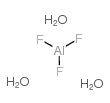
Aluminum Fluoride Trihydrate structure
|
Common Name | Aluminum Fluoride Trihydrate | ||
|---|---|---|---|---|
| CAS Number | 15098-87-0 | Molecular Weight | 138.02300 | |
| Density | 2.88 g/mL at 25 °C(lit.) | Boiling Point | N/A | |
| Molecular Formula | AlF3H6O3 | Melting Point | N/A | |
| MSDS | Chinese USA | Flash Point | N/A | |
| Symbol |

GHS07 |
Signal Word | Warning | |
| Name | Aluminum Fluoride Trihydrate |
|---|---|
| Synonym | More Synonyms |
| Density | 2.88 g/mL at 25 °C(lit.) |
|---|---|
| Molecular Formula | AlF3H6O3 |
| Molecular Weight | 138.02300 |
| Exact Mass | 138.00800 |
| PSA | 27.69000 |
| LogP | 1.06770 |
| InChIKey | XTXFDUABTPNTFB-UHFFFAOYSA-K |
| SMILES | F[Al](F)F.O |
Synonym: Section 2 - COMPOSITION, INFORMATION ON INGREDIENTS
Risk Phrases: 36/37/38 Section 3 - HAZARDS IDENTIFICATION EMERGENCY OVERVIEW
Irritating to eyes, respiratory system and skin. Potential Health Effects Eye: Causes eye irritation. Skin: Causes skin irritation. Chronic effects include excessive calcification of the bones, ligaments, and tendons. Ingestion: May cause gastrointestinal irritation with nausea, vomiting and diarrhea. Inhalation: Causes respiratory tract irritation. May cause salivation, nausea, vomiting, abdominal pain, fever, and labored breathing. Chronic: Chronic inhalation may cause nasal septum ulceration and perforation. Chronic effects include excessive calcification of the bones, ligaments, and tendons. Section 4 - FIRST AID MEASURES Eyes: Immediately flush eyes with plenty of water for at least 15 minutes, occasionally lifting the upper and lower eyelids. Get medical aid immediately. Skin: Immediately flush skin with plenty of water for at least 15 minutes while removing contaminated clothing and shoes. Get medical aid if irritation develops or persists. Ingestion: If victim is conscious and alert, give 2-4 cupfuls of milk or water. Get medical aid immediately. Inhalation: Remove from exposure and move to fresh air immediately. If not breathing, give artificial respiration. If breathing is difficult, give oxygen. Get medical aid. Notes to Physician: Section 5 - FIRE FIGHTING MEASURES General Information: As in any fire, wear a self-contained breathing apparatus in pressure-demand, MSHA/NIOSH (approved or equivalent), and full protective gear. During a fire, irritating and highly toxic gases may be generated by thermal decomposition or combustion. Substance is noncombustible. Extinguishing Media: Use extinguishing media most appropriate for the surrounding fire. Section 6 - ACCIDENTAL RELEASE MEASURES General Information: Use proper personal protective equipment as indicated in Section 8. Spills/Leaks: Vacuum or sweep up material and place into a suitable disposal container. Wash area with soap and water. Clean up spills immediately, observing precautions in the Protective Equipment section. Avoid generating dusty conditions. Provide ventilation. Section 7 - HANDLING and STORAGE Handling: Wash thoroughly after handling. Avoid contact with skin and eyes. Avoid ingestion and inhalation. Use only in a chemical fume hood. Storage: Store in a cool, dry place. Store in a tightly closed container. Do not store in metal or glass containers. Section 8 - EXPOSURE CONTROLS, PERSONAL PROTECTION Engineering Controls: Facilities storing or utilizing this material should be equipped with an eyewash facility and a safety shower. Use only under a chemical fume hood. Exposure Limits CAS# 15098-87-0: United States OSHA: 2.5 mg/m3 TWA (as F) (listed under Fluorides).2.5 mg/m3 TWA (as F) (listed under Fluorides). France - VME: (listed as fluorides): 2.5 mg/m3 VME (as F) Germany: (listed as fluorides): 2.5 mg/m3 VME (as F) Malaysia: (listed as fluorides): 2.5 mg/m3 TWA (as F) Netherlands: (listed as fluorides): 3.5 mg/m3 STEL (as F) Personal Protective Equipment Eyes: Wear appropriate protective eyeglasses or chemical safety goggles as described by OSHA's eye and face protection regulations in 29 CFR 1910.133 or European Standard EN166. Skin: Wear appropriate protective gloves to prevent skin exposure. Clothing: Wear appropriate protective clothing to prevent skin exposure. Respirators: Follow the OSHA respirator regulations found in 29 CFR 1910.134 or European Standard EN 149. Use a NIOSH/MSHA or European Standard EN 149 approved respirator if exposure limits are exceeded or if irritation or other symptoms are experienced. Section 9 - PHYSICAL AND CHEMICAL PROPERTIES Physical State: Solid Color: white Odor: None reported pH: Not available. Vapor Pressure: Not available. Viscosity: Not available. Boiling Point: Not available. Freezing/Melting Point: Not available. Autoignition Temperature: Not available. Flash Point: Not available. Explosion Limits, lower: Not available. Explosion Limits, upper: Not available. Decomposition Temperature: Solubility in water: slightly soluble in water Specific Gravity/Density: Molecular Formula: AlF3.3H2O Molecular Weight: 138.02 Section 10 - STABILITY AND REACTIVITY Chemical Stability: Stable under normal temperatures and pressures. Conditions to Avoid: Incompatible materials. Incompatibilities with Other Materials: Strong acids; glass containers. Hazardous Decomposition Products: Hydrogen fluoride gas, aluminum oxide. Hazardous Polymerization: Has not been reported Section 11 - TOXICOLOGICAL INFORMATION RTECS#: CAS# 15098-87-0 unlisted. LD50/LC50: Not available. Carcinogenicity: Aluminum fluoride trihydrate - Not listed by ACGIH, IARC, or NTP. Section 12 - ECOLOGICAL INFORMATION Section 13 - DISPOSAL CONSIDERATIONS Dispose of in a manner consistent with federal, state, and local regulations. Section 14 - TRANSPORT INFORMATION IATA Not regulated as a hazardous material. IMO Not regulated as a hazardous material. RID/ADR Not regulated as a hazardous material. Section 15 - REGULATORY INFORMATION European/International Regulations European Labeling in Accordance with EC Directives Hazard Symbols: XI Risk Phrases: R 36/37/38 Irritating to eyes, respiratory system and skin. Safety Phrases: S 26 In case of contact with eyes, rinse immediately with plenty of water and seek medical advice. S 37/39 Wear suitable gloves and eye/face protection. WGK (Water Danger/Protection) CAS# 15098-87-0: 1 Canada None of the chemicals in this product are listed on the DSL/NDSL list. CAS# 15098-87-0 is not listed on Canada's Ingredient Disclosure List. US FEDERAL TSCA CAS# 15098-87-0 is not listed on the TSCA inventory. It is for research and development use only. SECTION 16 - ADDITIONAL INFORMATION N/A |
| Symbol |
GHS07 |
|---|---|
| Signal Word | Warning |
| Hazard Statements | H302-H315-H319-H335 |
| Precautionary Statements | P261-P305 + P351 + P338 |
| Hazard Codes | Xn: Harmful;Xi: Irritant;T: Toxic; |
| Risk Phrases | R22 |
| Safety Phrases | S26 |
| RIDADR | 3260 |
| WGK Germany | 1 |
| Packaging Group | III |
| Hazard Class | 8 |
|
~%
Aluminum Fluori... CAS#:15098-87-0 |
| Literature: Inorganic Chemistry, , vol. 39, # 12 p. 2530 - 2537 |
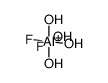

| Precursor 2 | |
|---|---|
| DownStream 0 | |
|
Growth and dissolution kinetics of aluminium fluoride trihydrate crystals. Nielsen AE and Altintas ND.
J. Cryst. Growth 69(2) , 213-230, (1984)
|
|
|
The Thermal Decomposition of Ammonium Hexafluoroferrate (III) and Ammonium Hexafluoroaluminate. A New Crystalline Form of Aluminum Fluoride. Shinn DB, et al.
Inorg. Chem. 5(11) , 1927-1933, (1966)
|
|
|
Crystallographic Evidence for the Trihydrate of Aluminum Fluoride. Freeman RD.
J. Phys. Chem. 61(2) , 256-256, (1957)
|
| Aluminum fluoride trihydrate |
| MFCD00149141 |
| aluminum,trifluoride,trihydrate |
| EINECS 232-051-1 |
| Aluminium fluoride trihydrate |