(+)-Camphor
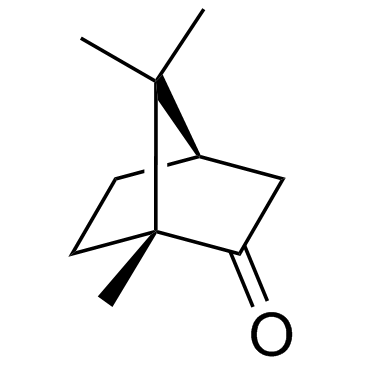
(+)-Camphor structure
|
Common Name | (+)-Camphor | ||
|---|---|---|---|---|
| CAS Number | 464-49-3 | Molecular Weight | 152.233 | |
| Density | 1.0±0.1 g/cm3 | Boiling Point | 207.4±0.0 °C at 760 mmHg | |
| Molecular Formula | C10H16O | Melting Point | 176-180ºC | |
| MSDS | Chinese USA | Flash Point | 64 ºC | |
| Symbol |


GHS02, GHS07 |
Signal Word | Warning | |
Use of (+)-Camphor(+)-Camphor is an ingredient in cooking, and as an embalming fluid for medicinal purposes, |
This table lists Chinese names, IUPAC names and various aliases of this chemical substance.
| Name | (R)-camphor |
|---|---|
| Synonym | More Synonyms |
This table contains bioactivity, target information and biological‑assay experimental data of this compound.
| Description | (+)-Camphor is an ingredient in cooking, and as an embalming fluid for medicinal purposes, |
|---|---|
| Related Catalog |
This table shows physicochemical parameters including melting point, boiling point, density, solubility and optical rotation. Missing data is marked as N/A.
| Density | 1.0±0.1 g/cm3 |
|---|---|
| Boiling Point | 207.4±0.0 °C at 760 mmHg |
| Melting Point | 176-180ºC |
| Molecular Formula | C10H16O |
| Molecular Weight | 152.233 |
| Flash Point | 64 ºC |
| Exact Mass | 152.120117 |
| PSA | 17.07000 |
| LogP | 2.13 |
| Vapour density | 5.24 (vs air) |
| Vapour Pressure | 0.2±0.4 mmHg at 25°C |
| Index of Refraction | 1.485 |
| Stability | Stable. Incompatible with strong reducing agents, strong oxidizing agents, chlorinated solvents. Protect from direct sunlight. |
This table provides MSDS information including hazard classification, first‑aid, fire‑fighting, spill handling, operation and storage instructions.
This table summarizes toxicological test data, acute & chronic toxicity and ecological hazard parameters for this chemical.
CHEMICAL IDENTIFICATION
HEALTH HAZARD DATAACUTE TOXICITY DATA
|
This table covers safety warnings, protective measures, incompatible substances and disposal guidelines for this compound.
| Symbol |
GHS02, GHS07 |
|---|---|
| Signal Word | Warning |
| Hazard Statements | H228-H302-H315-H319-H335 |
| Precautionary Statements | P210-P261-P305 + P351 + P338 |
| Personal Protective Equipment | dust mask type N95 (US);Eyeshields;full-face particle respirator type N100 (US);Gloves;respirator cartridge type N100 (US);type P1 (EN143) respirator filter;type P3 (EN 143) respirator cartridges |
| Hazard Codes | F;Xi |
| Risk Phrases | R11;R36/37/38 |
| Safety Phrases | S16-S26-S37/39 |
| RIDADR | UN 2717 4.1/PG 3 |
| WGK Germany | 1 |
| RTECS | EX1260000 |
| Packaging Group | III |
| Hazard Class | 4.1 |
| HS Code | 2914299000 |
This table presents publicly reported synthetic routes, reaction conditions, reactants and product information of the compound.
This table lists upstream starting materials and downstream derivative products related to this chemical.
| Precursor 7 | |
|---|---|
| DownStream 10 | |
 CAS#:464-43-7
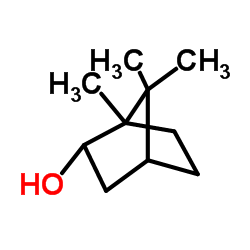 CAS#:124-76-5
 CAS#:2792-42-9
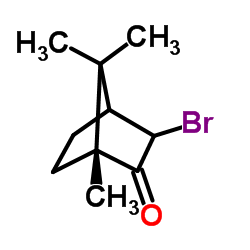 CAS#:10293-06-8
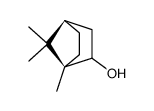 CAS#:405197-74-2
 CAS#:917-54-4
![(R)-tert-butyl 1-[3-[(2R)-2-hydroxy-1,7,7-trimethylbicyclo[2.2.1]heptan-2-yl]-3-oxo-propyl]-2-oxocyclohexanecarboxylate Structure](https://image.chemsrc.com/caspic/041/1034980-92-1.png) CAS#:1034980-92-1
CAS#:1034980-92-1 CAS#:32511-35-6
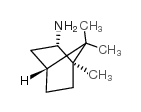 CAS#:32511-34-5
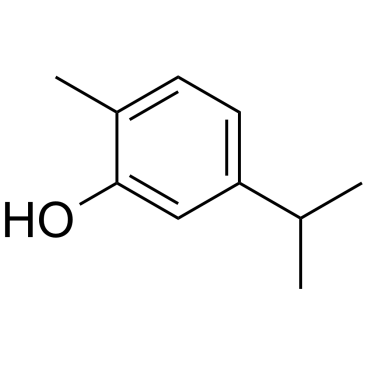 CAS#:499-75-2
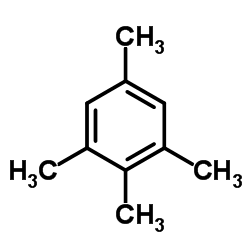 CAS#:527-53-7
 CAS#:535-77-3
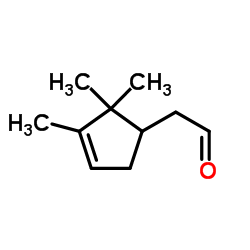 CAS#:4501-58-0
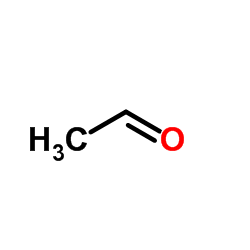 CAS#:75-07-0
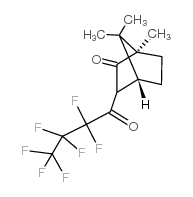 CAS#:51800-99-8
 CAS#:6627-72-1
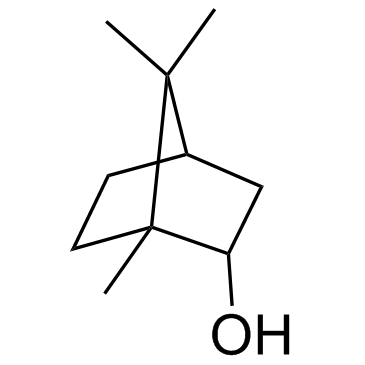 CAS#:507-70-0
This table shows customs‑related data including HS‑code, tariff and regulatory conditions for import and export.
| HS Code | 2914299000 |
|---|---|
| Summary | 2914299000. other cyclanic, cyclenic or cyclotherpenic ketones without other oxygen function. VAT:17.0%. Tax rebate rate:13.0%. . MFN tariff:5.5%. General tariff:30.0% |
This table lists relevant public references with title, journal and publication metadata for this compound.
|
Carvacrol and rosemary essential oil manifest cytotoxic, DNA-protective and pro-apoptotic effect having no effect on DNA repair.
Neoplasma 61(6) , 690-9, (2014) For several thousand years natural products were successfully used to treat a variety of diseases and to maintain health in humans, but until now it is not fully known what causes these medicinal effe... |
|
|
In vitro antifungal activity and probable fungicidal mechanism of aqueous extract of Barleria grandiflora.
Appl. Biochem. Biotechnol. 175(8) , 3571-84, (2015) Barleria grandiflora Dalz. (Acanthaceae) is being used in India to treat different types of disorders including skin infections. Therefore, there are good possibilities to find antifungal compounds in... |
|
|
Development and application of a non-targeted extraction method for the analysis of migrating compounds from plastic baby bottles by GC-MS.
Food Addit. Contam. Part A. Chem. Anal. Control. Expo. Risk Assess. 31(12) , 2090-102, (2014) In 2011, the European Union prohibited the production of polycarbonate (PC) baby bottles due to the toxic effects of the PC monomer bisphenol-A. Therefore, baby bottles made of alternative materials, ... |
This table contains target information, in‑vitro & in‑vivo assay data for this compound.
This table collects all English aliases, systematic names and CAS‑related synonyms of the compound.
| (1R,4R)-1,7,7-trimethylnorbornan-2-one |
| (+)-bornan-2-one |
| Alcanfor |
| UNII:5TJD82A1ET |
| (+)-2-Bornanone |
| D-CAMPHOR |
| 2-Bornanone,2-Camphanone,D-Camphor |
| EINECS 207-355-2 |
| D-(+)-Camphor |
| DL-2-Bornanone |
| (+)-Camphor |
| (1R,4R)-camphor |
| 1,7,7-Trimethylbicyclo[2.2.1]heptan-2-one |
| DL-Camphor |
| (1R,4R)-1,7,7-Trimethylbicyclo(2.2.1)heptan-2-one |
| 2-Keto-1,7,7-trimethylnolcamphane |
| (±)-Camphor |
| (1R)-(+)-Camphor |
| 2-Camphonone |
| Camphor |
| 2-Bornanone,2-Camphanone |
| D(+)-Camphor |
| 2-Bornanone 2-Camphanone |
| (+)-Camphor,(1R)-1,7,7-Trimethylbicyclo[2.2.1]heptan-2-one |
| MFCD00064149 |
| (1R,4R)-(+)-CAMPHOR |
| (R)-(+)-camphor |
| (1R,4R)-1,7,7-Trimethylbicyclo[2.2.1]heptan-2-one |
| EINECS 207-355-2 |
This section contains frequently‑asked‑questions about this compound, including basic parameters, properties, storage conditions and corresponding answers.
| Q: What are the upstream materials of (R)-camphor? |
| A: Related upstream materials(CAS) of (R)-camphor: 464-43-7;124-76-5;2792-42-9;10293-06-8;405197-74-2;917-54-4;1034980-92-1. |
| Q: What is the melting point of (R)-camphor? |
| A: Melting point of (R)-camphor is 176-180ºC. |
| Q: What is the English name of (R)-camphor? |
| A: The English name of (R)-camphor is (R)-camphor. |
| Q: What is the safety information for (R)-camphor? |
| A: Safety information for (R)-camphor: S16-S26-S37/39. |
| Q: What is the boiling point of (R)-camphor? |
| A: Boiling point of (R)-camphor is 207.4±0.0 °C at 760 mmHg. |
| Q: What is the CAS number of (R)-camphor? |
| A: CAS number of (R)-camphor is 464-49-3. |
| Q: What is the polar surface area (PSA) of (R)-camphor? |
| A: Polar surface area (PSA) of (R)-camphor is 17.07000. |
| Q: What is the molecular weight of (R)-camphor? |
| A: Molecular weight of (R)-camphor is 152.233. |
| Q: What is the LogP of (R)-camphor? |
| A: LogP of (R)-camphor is 2.13. |
| Q: What are the uses of (R)-camphor? |
| A: Main uses of (R)-camphor: (+)-Camphor is an ingredient in cooking, and as an embalming fluid for medicinal purposes,. |
This table lists manufacturers and suppliers of this compound, including vendor names and product supply reference information.
| Shanghai Nianxing Industrial Co., Ltd |
| Henan Tianfu Chemical Co., Ltd. |