(2,3-Dimethylphenyl)hydrazine hydrochloride

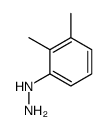
(2,3-Dimethylphenyl)hydrazine hydrochloride structure
|
Common Name | (2,3-Dimethylphenyl)hydrazine hydrochloride | ||
|---|---|---|---|---|
| CAS Number | 56737-75-8 | Molecular Weight | 172.65500 | |
| Density | N/A | Boiling Point | 238.7ºC at 760 mmHg | |
| Molecular Formula | C8H13ClN2 | Melting Point | 210ºC | |
| MSDS | N/A | Flash Point | 112.3ºC | |
This table lists Chinese names, IUPAC names and various aliases of this chemical substance.
| Name | 2,3-dimethylphenylhydrazine hydrochloride |
|---|---|
| Synonym | More Synonyms |
This table shows physicochemical parameters including melting point, boiling point, density, solubility and optical rotation. Missing data is marked as N/A.
| Boiling Point | 238.7ºC at 760 mmHg |
|---|---|
| Melting Point | 210ºC |
| Molecular Formula | C8H13ClN2 |
| Molecular Weight | 172.65500 |
| Flash Point | 112.3ºC |
| Exact Mass | 172.07700 |
| PSA | 38.05000 |
| LogP | 3.16430 |
| InChIKey | UKAYNIJBIXNDDJ-UHFFFAOYSA-N |
| SMILES | Cc1cccc(NN)c1C.Cl |
This table provides MSDS information including hazard classification, first‑aid, fire‑fighting, spill handling, operation and storage instructions.
Synonym: Section 2 - COMPOSITION, INFORMATION ON INGREDIENTS
Risk Phrases: 20/21/22 Section 3 - HAZARDS IDENTIFICATION EMERGENCY OVERVIEW
Harmful by inhalation, in contact with skin and if swallowed. Potential Health Effects Eye: May cause eye irritation. Skin: May cause skin irritation. Harmful if absorbed through the skin. Ingestion: Harmful if swallowed. May cause irritation of the digestive tract. Inhalation: Harmful if inhaled. May cause respiratory tract irritation. Chronic: Not available. Section 4 - FIRST AID MEASURES Eyes: Flush eyes with plenty of water for at least 15 minutes, occasionally lifting the upper and lower eyelids. Get medical aid. Skin: Get medical aid. Flush skin with plenty of water for at least 15 minutes while removing contaminated clothing and shoes. Ingestion: Get medical aid. Wash mouth out with water. Inhalation: Remove from exposure and move to fresh air immediately. If not breathing, give artificial respiration. If breathing is difficult, give oxygen. Get medical aid. Notes to Physician: Section 5 - FIRE FIGHTING MEASURES General Information: As in any fire, wear a self-contained breathing apparatus in pressure-demand, MSHA/NIOSH (approved or equivalent), and full protective gear. Extinguishing Media: Use water spray, dry chemical, carbon dioxide, or chemical foam. Section 6 - ACCIDENTAL RELEASE MEASURES General Information: Use proper personal protective equipment as indicated in Section 8. Spills/Leaks: Vacuum or sweep up material and place into a suitable disposal container. Section 7 - HANDLING and STORAGE Handling: Avoid breathing dust, vapor, mist, or gas. Avoid contact with skin and eyes. Storage: Store in a cool, dry place. Store in a tightly closed container. Section 8 - EXPOSURE CONTROLS, PERSONAL PROTECTION Engineering Controls: Use adequate ventilation to keep airborne concentrations low. Exposure Limits CAS# 56737-75-8: Personal Protective Equipment Eyes: Not available. Skin: Wear appropriate protective gloves to prevent skin exposure. Clothing: Wear appropriate protective clothing to prevent skin exposure. Respirators: Follow the OSHA respirator regulations found in 29 CFR 1910.134 or European Standard EN 149. Use a NIOSH/MSHA or European Standard EN 149 approved respirator if exposure limits are exceeded or if irritation or other symptoms are experienced. Section 9 - PHYSICAL AND CHEMICAL PROPERTIES Physical State: Solid Color: tan Odor: Not available. pH: Not available. Vapor Pressure: Not available. Viscosity: Not available. Boiling Point: Not available. Freezing/Melting Point: 210 - 212 deg C Autoignition Temperature: Not available. Flash Point: Not available. Explosion Limits, lower: Not available. Explosion Limits, upper: Not available. Decomposition Temperature: Not available. Solubility in water: Specific Gravity/Density: Molecular Formula: C8H13ClN2 Molecular Weight: 173 Section 10 - STABILITY AND REACTIVITY Chemical Stability: Not available. Conditions to Avoid: Incompatible materials. Incompatibilities with Other Materials: Oxidizing agents, bases, acid chlorides. Hazardous Decomposition Products: Hydrogen chloride, chlorine, nitrogen oxides, carbon monoxide, carbon dioxide. Hazardous Polymerization: Has not been reported Section 11 - TOXICOLOGICAL INFORMATION RTECS#: CAS# 56737-75-8 unlisted. LD50/LC50: Not available. Carcinogenicity: 1-(2,3-Dimethylphenyl)hydrazine hydrochloride - Not listed by ACGIH, IARC, or NTP. Section 12 - ECOLOGICAL INFORMATION Section 13 - DISPOSAL CONSIDERATIONS Dispose of in a manner consistent with federal, state, and local regulations. Section 14 - TRANSPORT INFORMATION IATA Shipping Name: TOXIC SOLID, ORGANIC, N.O.S.* Hazard Class: 6.1 UN Number: 2811 Packing Group: III IMO Shipping Name: TOXIC SOLID, ORGANIC, N.O.S. Hazard Class: 6.1 UN Number: 2811 Packing Group: III RID/ADR Shipping Name: TOXIC SOLID, ORGANIC, N.O.S. Hazard Class: 6.1 UN Number: 2811 Packing group: III Section 15 - REGULATORY INFORMATION European/International Regulations European Labeling in Accordance with EC Directives Hazard Symbols: XN Risk Phrases: R 20/21/22 Harmful by inhalation, in contact with skin and if swallowed. Safety Phrases: S 36/37 Wear suitable protective clothing and gloves. WGK (Water Danger/Protection) CAS# 56737-75-8: No information available. Canada None of the chemicals in this product are listed on the DSL/NDSL list. CAS# 56737-75-8 is not listed on Canada's Ingredient Disclosure List. US FEDERAL TSCA CAS# 56737-75-8 is not listed on the TSCA inventory. It is for research and development use only. SECTION 16 - ADDITIONAL INFORMATION N/A |
This table covers safety warnings, protective measures, incompatible substances and disposal guidelines for this compound.
| Hazard Codes | Xi |
|---|---|
| Risk Phrases | R36/37/38 |
| Safety Phrases | 26-36/37/39 |
| RTECS | MV3262500 |
| HS Code | 2928000090 |
This table lists upstream starting materials and downstream derivative products related to this chemical.
| Precursor 0 | |
|---|---|
| DownStream 2 | |
 CAS#:792953-00-5
 CAS#:84401-19-4
This table shows customs‑related data including HS‑code, tariff and regulatory conditions for import and export.
| HS Code | 2928000090 |
|---|---|
| Summary | 2928000090 other organic derivatives of hydrazine or of hydroxylamine VAT:17.0% Tax rebate rate:9.0% Supervision conditions:none MFN tariff:6.5% General tariff:20.0% |
This table collects all English aliases, systematic names and CAS‑related synonyms of the compound.
| MFCD00013380 |
| 2,3-DIMETHYLPHENYLHYDRAZINE HCL |
| 3-Hydrazino-o-xylene hydrochloride |
This section contains frequently‑asked‑questions about this compound, including basic parameters, properties, storage conditions and corresponding answers.
| Q: What is the molecular formula of 2,3-dimethylphenylhydrazine hydrochloride? |
| A: Molecular formula of 2,3-dimethylphenylhydrazine hydrochloride is C8H13ClN2. |
| Q: What is the InChIKey of 2,3-dimethylphenylhydrazine hydrochloride? |
| A: InChIKey of 2,3-dimethylphenylhydrazine hydrochloride is UKAYNIJBIXNDDJ-UHFFFAOYSA-N. |
| Q: What is the boiling point of 2,3-dimethylphenylhydrazine hydrochloride? |
| A: Boiling point of 2,3-dimethylphenylhydrazine hydrochloride is 238.7ºC at 760 mmHg. |
| Q: What is the polar surface area (PSA) of 2,3-dimethylphenylhydrazine hydrochloride? |
| A: Polar surface area (PSA) of 2,3-dimethylphenylhydrazine hydrochloride is 38.05000. |
| Q: What are the downstream products of 2,3-dimethylphenylhydrazine hydrochloride? |
| A: Related downstream products(CAS) of 2,3-dimethylphenylhydrazine hydrochloride: 792953-00-5;84401-19-4. |
| Q: What is the CAS number of 2,3-dimethylphenylhydrazine hydrochloride? |
| A: CAS number of 2,3-dimethylphenylhydrazine hydrochloride is 56737-75-8. |
| Q: What is the LogP of 2,3-dimethylphenylhydrazine hydrochloride? |
| A: LogP of 2,3-dimethylphenylhydrazine hydrochloride is 3.16430. |
| Q: What English synonyms does 2,3-dimethylphenylhydrazine hydrochloride have? |
| A: English synonyms of 2,3-dimethylphenylhydrazine hydrochloride: MFCD00013380, 2,3-DIMETHYLPHENYLHYDRAZINE HCL, 3-Hydrazino-o-xylene hydrochloride. |
| Q: What is the molecular weight of 2,3-dimethylphenylhydrazine hydrochloride? |
| A: Molecular weight of 2,3-dimethylphenylhydrazine hydrochloride is 172.65500. |
| Q: What is the safety information for 2,3-dimethylphenylhydrazine hydrochloride? |
| A: Safety information for 2,3-dimethylphenylhydrazine hydrochloride: 26-36/37/39. |
This table lists manufacturers and suppliers of this compound, including vendor names and product supply reference information.
| Shanghai Nianxing Industrial Co., Ltd |
| Dayang Chem (Hangzhou) Co., Ltd. |