Cilostamide
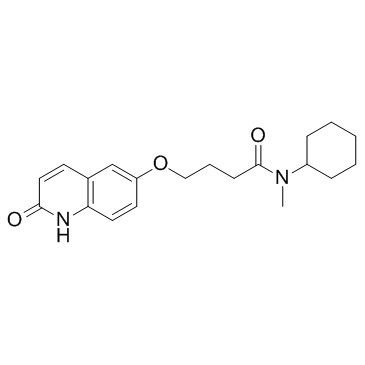
Cilostamide structure
|
Common Name | Cilostamide | ||
|---|---|---|---|---|
| CAS Number | 68550-75-4 | Molecular Weight | 342.432 | |
| Density | 1.2±0.1 g/cm3 | Boiling Point | 594.3±50.0 °C at 760 mmHg | |
| Molecular Formula | C20H26N2O3 | Melting Point | N/A | |
| MSDS | Chinese USA | Flash Point | 313.2±30.1 °C | |
Use of CilostamideCilostamide is a selective and potent PDE3 inhibitor, with IC50s of 27 nM and 50 nM for PDE3A and PDE3B, respectively, and has antithrombotic and anti-intimal hyperplastic activity. |
Summary: Cilostamide, CAS number 68550-75-4, molecular formula C20H26N2O3, molecular weight 342.432. White to gray-white solid, boiling point 594.3±50.0 °C, density 1.2±0.1 g/cm3. For research-use only, not for medical or clinical usage.
This table lists Chinese names, IUPAC names and various aliases of this chemical substance.
| Name | Cilostamide |
|---|---|
| Synonym | More Synonyms |
This table contains bioactivity, target information and biological‑assay experimental data of this compound.
| Description | Cilostamide is a selective and potent PDE3 inhibitor, with IC50s of 27 nM and 50 nM for PDE3A and PDE3B, respectively, and has antithrombotic and anti-intimal hyperplastic activity. |
|---|---|
| Related Catalog | |
| Target |
IC50: 27 nM (PDE3A), 50 nM (PDE3B)[1] |
| In Vitro | Cilostamide is a selective and potent PDE3 inhibitor, with IC50s of 27 nM and 50 nM for PDE3A and PDE3B, respectively, and has antithrombotic and anti-intimal hyperplastic activity. Cilostamide weakly inhibits PDE2, PDE4, PDE5, PDE7, and PDE1, with IC50s of 12.5, 88.8, 15.2, 22.0 and > 300 μM, respectively. Cilostamide potently inhibits thrombin-induced platelet aggregation (IC50, 1.1 μM)[1]. |
| Animal Admin | Platelet aggregation is investigated in the assay. Washed platelets (200 μL of a suspension containing 3 × 10⁸ cells/mL in Tyrode HEPES buffer, pH 7.4) are incubated for 3 min at 37°C in the presence or absence of different concentrations of OPC-33540, OPC-33536, and Cilostamide alone, or in combination with 3 nM PGE1, followed by incubation with 5 μL of 2 units/mL of thrombin for 5 min at 37°C. The intensity of light transmitted over 5 min is measured using a PAM-8C aggregometer. The inhibition rate is calculated by comparison of maximum aggregation rates with the control value[1]. |
| References |
This table shows physicochemical parameters including melting point, boiling point, density, solubility and optical rotation. Missing data is marked as N/A.
| Density | 1.2±0.1 g/cm3 |
|---|---|
| Boiling Point | 594.3±50.0 °C at 760 mmHg |
| Molecular Formula | C20H26N2O3 |
| Molecular Weight | 342.432 |
| Flash Point | 313.2±30.1 °C |
| Exact Mass | 342.194336 |
| PSA | 62.40000 |
| LogP | 2.70 |
| Vapour Pressure | 0.0±1.7 mmHg at 25°C |
| Index of Refraction | 1.586 |
| InChIKey | UIAYVIIHMORPSJ-UHFFFAOYSA-N |
| SMILES | CN(C(=O)CCCOc1ccc2[nH]c(=O)ccc2c1)C1CCCCC1 |
| Storage condition | -20℃ |
This table provides MSDS information including hazard classification, first‑aid, fire‑fighting, spill handling, operation and storage instructions.
This table covers safety warnings, protective measures, incompatible substances and disposal guidelines for this compound.
| Personal Protective Equipment | Eyeshields;Gloves;type N95 (US);type P1 (EN143) respirator filter |
|---|---|
| RIDADR | UN 3249 |
| Packaging Group | III |
| Hazard Class | 6.1(b) |
This table presents publicly reported synthetic routes, reaction conditions, reactants and product information of the compound.
This table lists upstream starting materials and downstream derivative products related to this chemical.
| Precursor 6 | |
|---|---|
| DownStream 0 | |
 CAS#:100-60-7
![4-[(2-oxo-1H-quinolin-6-yl)oxy]butanoic acid Structure](https://image.chemsrc.com/caspic/072/58899-33-5.png) CAS#:58899-33-5
CAS#:58899-33-5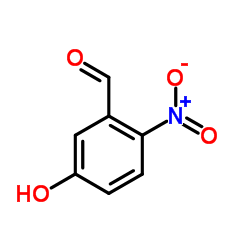 CAS#:42454-06-8
![N-cyclohexyl-N-methyl-4-[3-(2-carboxyvinyl)-4-nitrophenoxy]butyramide Structure](https://image.chemsrc.com/caspic/231/105763-50-6.png) CAS#:105763-50-6
CAS#:105763-50-6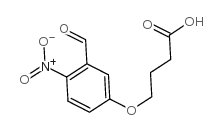 CAS#:94193-36-9
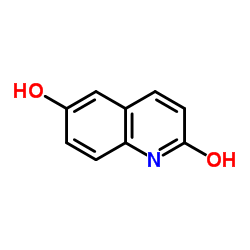 CAS#:19315-93-6
This table lists relevant public references with title, journal and publication metadata for this compound.
|
Different compartmentation of responses to brain natriuretic peptide and C-type natriuretic peptide in failing rat ventricle.
J. Pharmacol. Exp. Ther. 350(3) , 681-90, (2014) We previously found a negative inotropic (NIR) and positive lusitropic response (LR) to C-type natriuretic peptide (CNP) in the failing heart ventricle. In this study, we investigated and compared the... |
|
|
Adenylyl cyclases 5 and 6 underlie PIP3-dependent regulation.
FASEB J. 29 , 3458-71, (2015) Many different neurotransmitters and hormones control intracellular signaling by regulating the production of the second messenger cAMP. The function of the broadly expressed adenylyl cyclases (ACs) 5... |
|
|
Lymphatic vascular integrity is disrupted in type 2 diabetes due to impaired nitric oxide signalling.
Cardiovasc. Res. 107 , 89-97, (2015) Lymphatic vessel dysfunction is an emerging component of metabolic diseases and can lead to tissue lipid accumulation, dyslipidaemia, and oedema. While lymph leakage has been implicated in obesity and... |
This table contains target information, in‑vitro & in‑vivo assay data for this compound.
This table collects all English aliases, systematic names and CAS‑related synonyms of the compound.
| N-Cyclohexyl-N-methyl-4-[(2-oxo-1,2-dihydro-6-quinolinyl)oxy]butanamide |
| MFCD00673958 |
| N-Cyclohexyl-N-methyl-4-[(2-oxo-1,2-dihydroquinolin-6-yl)oxy]butanamide |
| N-cyclohexyl-N-methyl-4-[(2-oxo-1H-quinolin-6-yl)oxy]butanamide |
| N-cyclohexyl-4-[(2-hydroxyquinolin-6-yl)oxy]-N-methylbutanamide |
This section contains frequently‑asked‑questions about this compound, including basic parameters, properties, storage conditions and corresponding answers.
| Q: What are the upstream materials of Cilostamide? |
| A: Related upstream materials(CAS) of Cilostamide: 100-60-7;58899-33-5;42454-06-8;105763-50-6;94193-36-9;19315-93-6. |
| Q: What is the InChIKey of Cilostamide? |
| A: InChIKey of Cilostamide is UIAYVIIHMORPSJ-UHFFFAOYSA-N. |
| Q: What is the boiling point of Cilostamide? |
| A: Boiling point of Cilostamide is 594.3±50.0 °C at 760 mmHg. |
| Q: What is the polar surface area (PSA) of Cilostamide? |
| A: Polar surface area (PSA) of Cilostamide is 62.40000. |
| Q: What is the molecular formula of Cilostamide? |
| A: Molecular formula of Cilostamide is C20H26N2O3. |
| Q: What is the SMILES notation of Cilostamide? |
| A: SMILES notation of Cilostamide is CN(C(=O)CCCOc1ccc2[nH]c(=O)ccc2c1)C1CCCCC1. |
| Q: What are the storage conditions for Cilostamide? |
| A: Storage conditions for Cilostamide: -20℃. |
| Q: What is the CAS number of Cilostamide? |
| A: CAS number of Cilostamide is 68550-75-4. |
| Q: What is the LogP of Cilostamide? |
| A: LogP of Cilostamide is 2.70. |
| Q: What are the uses of Cilostamide? |
| A: Main uses of Cilostamide: Cilostamide is a selective and potent PDE3 inhibitor, with IC50s of 27 nM and 50 nM for PDE3A and PDE3B, respectively, and has antithrombotic and anti-intimal hyperplastic activity. |
This table lists manufacturers and suppliers of this compound, including vendor names and product supply reference information.
| Shanghai Nianxing Industrial Co., Ltd |