Lily aldehyde

Lily aldehyde structure
|
Common Name | Lily aldehyde | ||
|---|---|---|---|---|
| CAS Number | 80-54-6 | Molecular Weight | 204.308 | |
| Density | 0.9±0.1 g/cm3 | Boiling Point | 277.7±9.0 °C at 760 mmHg | |
| Molecular Formula | C14H20O | Melting Point | N/A | |
| MSDS | Chinese USA | Flash Point | 120.9±10.2 °C | |
| Symbol |


GHS07, GHS08, GHS09 |
Signal Word | Warning | |
This table lists Chinese names, IUPAC names and various aliases of this chemical substance.
| Name | 3-(4-(Tert-butyl)phenyl)-2-methylpropanal |
|---|---|
| Synonym | More Synonyms |
This table shows physicochemical parameters including melting point, boiling point, density, solubility and optical rotation. Missing data is marked as N/A.
| Density | 0.9±0.1 g/cm3 |
|---|---|
| Boiling Point | 277.7±9.0 °C at 760 mmHg |
| Molecular Formula | C14H20O |
| Molecular Weight | 204.308 |
| Flash Point | 120.9±10.2 °C |
| Exact Mass | 204.151413 |
| PSA | 17.07000 |
| LogP | 4.07 |
| Vapour Pressure | 0.0±0.6 mmHg at 25°C |
| Index of Refraction | 1.491 |
| InChIKey | SDQFDHOLCGWZPU-UHFFFAOYSA-N |
| SMILES | CC(C=O)Cc1ccc(C(C)(C)C)cc1 |
| Storage condition | 2-8°C |
This table provides MSDS information including hazard classification, first‑aid, fire‑fighting, spill handling, operation and storage instructions.
This table summarizes toxicological test data, acute & chronic toxicity and ecological hazard parameters for this chemical.
CHEMICAL IDENTIFICATION
HEALTH HAZARD DATAACUTE TOXICITY DATA
|
This table covers safety warnings, protective measures, incompatible substances and disposal guidelines for this compound.
| Symbol |
GHS07, GHS08, GHS09 |
|---|---|
| Signal Word | Warning |
| Hazard Statements | H302-H315-H317-H361-H411 |
| Precautionary Statements | P201-P273-P280-P308 + P313-P333 + P313-P391 |
| Personal Protective Equipment | Eyeshields;Faceshields;full-face respirator (US);Gloves;multi-purpose combination respirator cartridge (US);type ABEK (EN14387) respirator filter |
| Hazard Codes | Xn:Harmful |
| Risk Phrases | R22;R38;R51/53 |
| Safety Phrases | S60 |
| RIDADR | UN 3082 9/PG 3 |
| WGK Germany | 2 |
| RTECS | MW4895000 |
| Hazard Class | 9.0 |
| HS Code | 2912291000 |
This table presents publicly reported synthetic routes, reaction conditions, reactants and product information of the compound.
This table lists upstream starting materials and downstream derivative products related to this chemical.
| Precursor 7 | |
|---|---|
| DownStream 2 | |
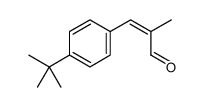 CAS#:13586-68-0
![diethyl[[3-[4-(1,1-dimethylethyl)phenyl]-2-methyl-1-propenyl]oxy]methylsilane Structure](https://image.chemsrc.com/caspic/068/84472-74-2.png) CAS#:84472-74-2
CAS#:84472-74-2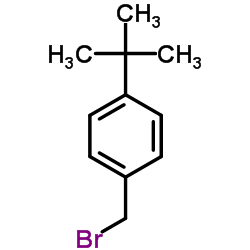 CAS#:18880-00-7
 CAS#:123-38-6
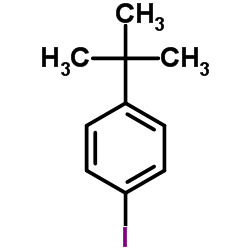 CAS#:35779-04-5
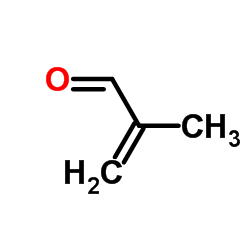 CAS#:78-85-3
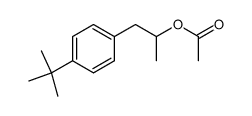 CAS#:84454-49-9
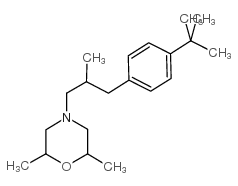 CAS#:67306-03-0
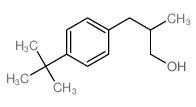 CAS#:56107-04-1
This table shows customs‑related data including HS‑code, tariff and regulatory conditions for import and export.
| HS Code | 2912291000 |
|---|---|
| Summary | 2912291000. VAT:17.0%. Tax rebate rate:9.0%. . MFN tariff:5.5%. General tariff:30.0% |
This table lists relevant public references with title, journal and publication metadata for this compound.
|
Oestrogenic activity of benzyl salicylate, benzyl benzoate and butylphenylmethylpropional (Lilial) in MCF7 human breast cancer cells in vitro.
J. Appl. Toxicol. 29(5) , 422-34, (2009) Benzyl salicylate, benzyl benzoate and butylphenylmethylpropional (Lilial) are added to bodycare cosmetics used around the human breast. We report here that all three compounds possess oestrogenic act... |
|
|
Odorants selectively activate distinct G protein subtypes in olfactory cilia.
J. Biol. Chem. 273(27) , 16669-77, (1998) Chemoelectrical signal transduction in olfactory neurons appears to involve intracellular reaction cascades mediated by heterotrimeric GTP-binding proteins. In this study attempts were made to identif... |
|
|
Blocking adenylyl cyclase inhibits olfactory generator currents induced by "IP(3)-odors".
J. Neurophysiol. 84(1) , 575-80, (2000) Vertebrate olfactory receptor neurons (ORNs) transduce odor stimuli into electrical signals by means of an adenylyl cyclase/cAMP second messenger cascade, but it remains widely debated whether this cA... |
This table contains target information, in‑vitro & in‑vivo assay data for this compound.
This table collects all English aliases, systematic names and CAS‑related synonyms of the compound.
| UNII-T7540GJV69 |
| 3-(4-tert-butylphenyl)-2-methylpropanal |
| 2-Methyl-3-[4-(2-methyl-2-propanyl)phenyl]propanal |
| EINECS 201-289-8 |
| MFCD00047655 |
| VHY1&1R DX1&1&1 |
| Lily aldehyde |
| Lilial |
This section contains frequently‑asked‑questions about this compound, including basic parameters, properties, storage conditions and corresponding answers.
| Q: What is the boiling point of 3-(4-(Tert-butyl)phenyl)-2-methylpropanal? |
| A: Boiling point of 3-(4-(Tert-butyl)phenyl)-2-methylpropanal is 277.7±9.0 °C at 760 mmHg. |
| Q: What is the English name of 3-(4-(Tert-butyl)phenyl)-2-methylpropanal? |
| A: The English name of 3-(4-(Tert-butyl)phenyl)-2-methylpropanal is 3-(4-(Tert-butyl)phenyl)-2-methylpropanal. |
| Q: What is the polar surface area (PSA) of 3-(4-(Tert-butyl)phenyl)-2-methylpropanal? |
| A: Polar surface area (PSA) of 3-(4-(Tert-butyl)phenyl)-2-methylpropanal is 17.07000. |
| Q: What is the LogP of 3-(4-(Tert-butyl)phenyl)-2-methylpropanal? |
| A: LogP of 3-(4-(Tert-butyl)phenyl)-2-methylpropanal is 4.07. |
| Q: What is the safety information for 3-(4-(Tert-butyl)phenyl)-2-methylpropanal? |
| A: Safety information for 3-(4-(Tert-butyl)phenyl)-2-methylpropanal: S60. |
| Q: What are the downstream products of 3-(4-(Tert-butyl)phenyl)-2-methylpropanal? |
| A: Related downstream products(CAS) of 3-(4-(Tert-butyl)phenyl)-2-methylpropanal: 67306-03-0;56107-04-1. |
| Q: What English synonyms does 3-(4-(Tert-butyl)phenyl)-2-methylpropanal have? |
| A: English synonyms of 3-(4-(Tert-butyl)phenyl)-2-methylpropanal: UNII-T7540GJV69, 3-(4-tert-butylphenyl)-2-methylpropanal, 2-Methyl-3-[4-(2-methyl-2-propanyl)phenyl]propanal, EINECS 201-289-8, MFCD00047655, VHY1&1R DX1&1&1, Lily aldehyde, Lilial. |
| Q: What is the CAS number of 3-(4-(Tert-butyl)phenyl)-2-methylpropanal? |
| A: CAS number of 3-(4-(Tert-butyl)phenyl)-2-methylpropanal is 80-54-6. |
| Q: What are the storage conditions for 3-(4-(Tert-butyl)phenyl)-2-methylpropanal? |
| A: Storage conditions for 3-(4-(Tert-butyl)phenyl)-2-methylpropanal: 2-8°C. |
| Q: What is the SMILES notation of 3-(4-(Tert-butyl)phenyl)-2-methylpropanal? |
| A: SMILES notation of 3-(4-(Tert-butyl)phenyl)-2-methylpropanal is CC(C=O)Cc1ccc(C(C)(C)C)cc1. |
This table lists manufacturers and suppliers of this compound, including vendor names and product supply reference information.
| Shanghai Nianxing Industrial Co., Ltd |
| Dayang Chem (Hangzhou) Co., Ltd. |
| Henan Tianfu Chemical Co., Ltd. |
| Zhongshan Xingrui Chemical Co. , Ltd. |
The content on this webpage is sourced from various professional data sources. If you have any questions or concerns regarding the content, please feel free to contact service1@chemsrc.com.
- Shanghai Nianxing Industrial Co., Ltd
- China
- Product Name: Lily aldehyde
- Price: Check
- Purity: 98.0%
- Delivery: 10 Day
- Contact: Yang
- Email: sales@echemcloud.com
- Dayang Chem (Hangzhou) Co., Ltd.
- China
- Product Name: Lily aldehyde
- Price: $Inquiry/100g $Inquiry/1kg $Inquiry/100kg $Inquiry/1000kg
- Purity: 98.0%
- Delivery: Inquiry
- Contact: Ms Wang
- Email: enquiry@dycnchem.com
- Henan Tianfu Chemical Co., Ltd.
- China
- Product Name: Lily aldehyde
- Price: $Inquiry/1kg $Inquiry/25kg $Inquiry/1000kg $Inquiry/10ton
- Purity: 99.0%
- Delivery: Inquiry
- Contact: Anson
- Email: info@tianfuchem.com
- Zhongshan Xingrui Chemical Co. , Ltd.
- China
- Product Name: Lily aldehyde
- Price: ¥Inquiry/25kg
- Purity: 99.0%
- Delivery: Inquiry
- Contact: Wang Jie

- Email: 3096638339@qq.com
Get all suppliers and price by the below link: