fenoprop
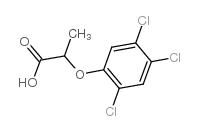
fenoprop structure
|
Common Name | fenoprop | ||
|---|---|---|---|---|
| CAS Number | 93-72-1 | Molecular Weight | 269.50900 | |
| Density | 1.2085(20ºC ) | Boiling Point | 378.4ºC at 760 mmHg | |
| Molecular Formula | C9H7Cl3O3 | Melting Point | 175-180 °C | |
| MSDS | Chinese USA | Flash Point | 11 °C | |
| Symbol |


GHS02, GHS06, GHS08, GHS09 |
Signal Word | Danger | |
This table lists Chinese names, IUPAC names and various aliases of this chemical substance.
| Name | fenoprop |
|---|---|
| Synonym | More Synonyms |
This table shows physicochemical parameters including melting point, boiling point, density, solubility and optical rotation. Missing data is marked as N/A.
| Density | 1.2085(20ºC ) |
|---|---|
| Boiling Point | 378.4ºC at 760 mmHg |
| Melting Point | 175-180 °C |
| Molecular Formula | C9H7Cl3O3 |
| Molecular Weight | 269.50900 |
| Flash Point | 11 °C |
| Exact Mass | 267.94600 |
| PSA | 46.53000 |
| LogP | 3.49870 |
| InChIKey | ZLSWBLPERHFHIS-UHFFFAOYSA-N |
| SMILES | CC(Oc1cc(Cl)c(Cl)cc1Cl)C(=O)O |
| Stability | Stablr. Incompatible with strong bases, strong oxidizing agents. |
This table provides MSDS information including hazard classification, first‑aid, fire‑fighting, spill handling, operation and storage instructions.
This table summarizes toxicological test data, acute & chronic toxicity and ecological hazard parameters for this chemical.
CHEMICAL IDENTIFICATION
HEALTH HAZARD DATAACUTE TOXICITY DATA
|
This table covers safety warnings, protective measures, incompatible substances and disposal guidelines for this compound.
| Symbol |
GHS02, GHS06, GHS08, GHS09 |
|---|---|
| Signal Word | Danger |
| Hazard Statements | H225-H301 + H311 + H331-H370-H411 |
| Precautionary Statements | P210-P260-P273-P280-P301 + P310-P311 |
| Personal Protective Equipment | Eyeshields;Faceshields;full-face respirator (US);Gloves;multi-purpose combination respirator cartridge (US) |
| Hazard Codes | Xn:Harmful;N:Dangerousfortheenvironment; |
| Risk Phrases | R22;R38;R50/53 |
| Safety Phrases | S37-S60-S61-S45-S36/37-S16-S7 |
| RIDADR | UN 3077 9/PG 3 |
| WGK Germany | 3 |
| RTECS | UF8225000 |
| Packaging Group | III |
| Hazard Class | 9 |
| HS Code | 2918990090 |
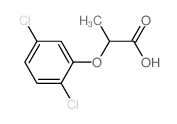
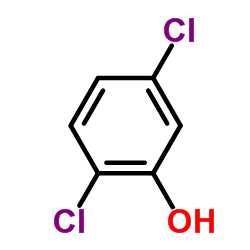
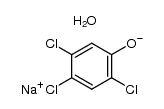
This table presents publicly reported synthetic routes, reaction conditions, reactants and product information of the compound.
|
~%
fenoprop CAS#:93-72-1 |
| Literature: Recueil des Travaux Chimiques des Pays-Bas, , vol. 74, p. 155,159 |
|
~%
fenoprop CAS#:93-72-1 |
| Literature: Recueil des Travaux Chimiques des Pays-Bas, , vol. 74, p. 155,159 |
|
~%
fenoprop CAS#:93-72-1 |
| Literature: Contributions from Boyce Thompson Institute, , vol. 14, p. 91,95, 96 Chem.Abstr., , p. 1473 |
This table shows customs‑related data including HS‑code, tariff and regulatory conditions for import and export.
| HS Code | 2918990090 |
|---|---|
| Summary | 2918990090. other carboxylic acids with additional oxygen function and their anhydrides, halides, peroxides and peroxyacids; their halogenated, sulphonated, nitrated or nitrosated derivatives. VAT:17.0%. Tax rebate rate:13.0%. . MFN tariff:6.5%. General tariff:30.0% |
This table lists relevant public references with title, journal and publication metadata for this compound.
|
Quantitative structure-activity relationship and complex network approach to monoamine oxidase A and B inhibitors.
J. Med. Chem. 51 , 6740-51, (2008) The work provides a new model for the prediction of the MAO-A and -B inhibitor activity by the use of combined complex networks and QSAR methodologies. On the basis of the obtained model, we prepared ... |
|
|
Phenoxy herbicides and fibrates potently inhibit the human chemosensory receptor subunit T1R3.
J. Med. Chem. 52 , 6931-5, (2009) We show that phenoxyauxin herbicides and lipid-lowering fibrates inhibit human but not rodent T1R3. T1R3 as a coreceptor in taste cells responds to sweet compounds and amino acids; in endocrine cells ... |
|
|
Automated dynamic liquid-liquid-liquid microextraction followed by high-performance liquid chromatography-ultraviolet detection for the determination of phenoxy acid herbicides in environmental waters.
J. Chromatogr. A. 1082(2) , 121-7, (2005) Automated dynamic liquid-liquid-liquid microextraction (D-LLLME) controlled by a programmable syringe pump and combined with HPLC-UV was investigated for the extraction and determination of 5 phenoxy ... |
This table contains target information, in‑vitro & in‑vivo assay data for this compound.
This table collects all English aliases, systematic names and CAS‑related synonyms of the compound.
| rac-(2R)-2-(2,4,5-trichlorophenoxy)propanoic acid |
| Kuran |
| MFCD00002646 |
| (RS)-2-(2,4,5-trichlorophenoxy)propionic acid |
| 2-(2,4,5-trichlorophenoxy)propanoic acid |
| EINECS 202-271-2 |
| Color-set |
| 2,4,5-TP |
| Sta-fast |
| Double strength |
| Fenoprop |
| Fenormone |
| Aqua-vex |
| 2,6-DIFLUOROPYRIDINE-3-BORONIC ACID HYDRATE |
| SILVEX |
| 2,4,5-trichlorophenoxypropionic acid |
| Propon |
This section contains frequently‑asked‑questions about this compound, including basic parameters, properties, storage conditions and corresponding answers.
| Q: What is the SMILES notation of fenoprop? |
| A: SMILES notation of fenoprop is CC(Oc1cc(Cl)c(Cl)cc1Cl)C(=O)O. |
| Q: What is the molecular weight of fenoprop? |
| A: Molecular weight of fenoprop is 269.50900. |
| Q: What is the boiling point of fenoprop? |
| A: Boiling point of fenoprop is 378.4ºC at 760 mmHg. |
| Q: What is the polar surface area (PSA) of fenoprop? |
| A: Polar surface area (PSA) of fenoprop is 46.53000. |
| Q: What is the CAS number of fenoprop? |
| A: CAS number of fenoprop is 93-72-1. |
| Q: What is the InChIKey of fenoprop? |
| A: InChIKey of fenoprop is ZLSWBLPERHFHIS-UHFFFAOYSA-N. |
| Q: What is the safety information for fenoprop? |
| A: Safety information for fenoprop: S37-S60-S61-S45-S36/37-S16-S7. |
| Q: What English synonyms does fenoprop have? |
| A: English synonyms of fenoprop: rac-(2R)-2-(2,4,5-trichlorophenoxy)propanoic acid, Kuran, MFCD00002646, (RS)-2-(2,4,5-trichlorophenoxy)propionic acid, 2-(2,4,5-trichlorophenoxy)propanoic acid, EINECS 202-271-2, Color-set, 2,4,5-TP, Sta-fast, Double strength, Fenoprop, Fenormone, Aqua-vex, 2,6-DIFLUOROPYRIDINE-3-BORONIC ACID HYDRATE, SILVEX, 2,4,5-trichlorophenoxypropionic acid, Propon. |
| Q: What is the LogP of fenoprop? |
| A: LogP of fenoprop is 3.49870. |
| Q: What is the molecular formula of fenoprop? |
| A: Molecular formula of fenoprop is C9H7Cl3O3. |
This table lists manufacturers and suppliers of this compound, including vendor names and product supply reference information.
| Shanghai Nianxing Industrial Co., Ltd |