ACETARSONE
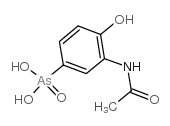
ACETARSONE structure
|
Common Name | ACETARSONE | ||
|---|---|---|---|---|
| CAS Number | 97-44-9 | Molecular Weight | 275.09000 | |
| Density | N/A | Boiling Point | 72.17°C | |
| Molecular Formula | C8H10AsNO5 | Melting Point | 220.5°C | |
| MSDS | N/A | Flash Point | N/A | |
Use of ACETARSONEAcetarsol (Stovarsol) is a potent and orally active anti-infective agent. Acetarsol shows anti-parasite activity. Acetarsol has the potential for the research of proctitis[1]. |
This table lists Chinese names, IUPAC names and various aliases of this chemical substance.
| Name | acetarsone |
|---|---|
| Synonym | More Synonyms |
This table contains bioactivity, target information and biological‑assay experimental data of this compound.
| Description | Acetarsol (Stovarsol) is a potent and orally active anti-infective agent. Acetarsol shows anti-parasite activity. Acetarsol has the potential for the research of proctitis[1]. |
|---|---|
| Related Catalog | |
| In Vivo | Acetarsol (20 mg/kg;p.o.;每天一次,持续 4 天) 在猪的毛囊炎中表现出抗感染活性[1]。 Animal Model: 2-month old piglets with Balantidium coli infected[1] Dosage: 20 mg/kg Administration: P.o.; once daily for 4 days Result: Showed 65% of piglets had clinically recovered, at the end of the treatment no diarrhoea was observed in any of the animals. |
| References |
This table shows physicochemical parameters including melting point, boiling point, density, solubility and optical rotation. Missing data is marked as N/A.
| Boiling Point | 72.17°C |
|---|---|
| Melting Point | 220.5°C |
| Molecular Formula | C8H10AsNO5 |
| Molecular Weight | 275.09000 |
| Exact Mass | 274.97700 |
| PSA | 106.86000 |
| Appearance of Characters | solid |
| InChIKey | ODFJOVXVLFUVNQ-UHFFFAOYSA-N |
| SMILES | CC(=O)Nc1cc([As](=O)(O)O)ccc1O |
This table provides MSDS information including hazard classification, first‑aid, fire‑fighting, spill handling, operation and storage instructions.
This table summarizes toxicological test data, acute & chronic toxicity and ecological hazard parameters for this chemical.
CHEMICAL IDENTIFICATION
HEALTH HAZARD DATAACUTE TOXICITY DATA
MUTATION DATA
|
This table covers safety warnings, protective measures, incompatible substances and disposal guidelines for this compound.
| Hazard Codes | T: Toxic;N: Dangerous for the environment; |
|---|---|
| Risk Phrases | R23/25 |
| Safety Phrases | S28;S45;S60;S61 |
| RIDADR | UN 3465 6.1/PG 2 |
| WGK Germany | 3 |
| RTECS | CF8400000 |
| Packaging Group | III |
| Hazard Class | 6.1(b) |
| HS Code | 2931900090 |
This table presents publicly reported synthetic routes, reaction conditions, reactants and product information of the compound.
|
~%
ACETARSONE CAS#:97-44-9 |
| Literature: Journal of the American Chemical Society, , vol. 43, p. 582,584 Journal of the American Chemical Society, , vol. 48, p. 1324 |
|
~%
ACETARSONE CAS#:97-44-9 |
| Literature: Journal of the American Chemical Society, , vol. 43, p. 582,584 |
|
~%
ACETARSONE CAS#:97-44-9 |
| Literature: Ann.Inst.Pasteur, vol. 37, p. 580 Chem. Zentralbl., , vol. 94, # III p. 1052 |
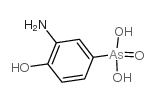
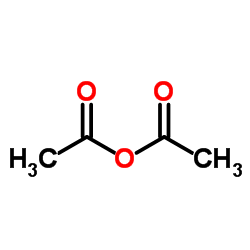
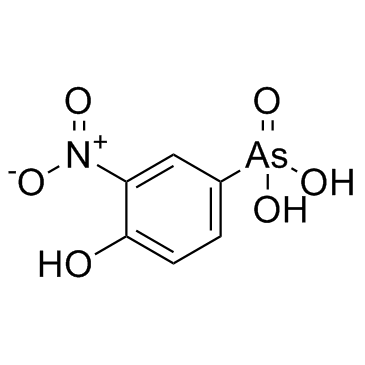
This table lists upstream starting materials and downstream derivative products related to this chemical.
| Precursor 3 | |
|---|---|
| DownStream 4 | |
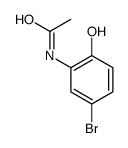 CAS#:107986-49-2
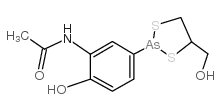 CAS#:119-96-0
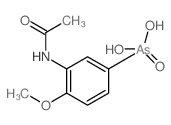 CAS#:6269-95-0
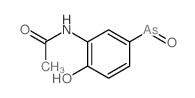 CAS#:5425-10-5
This table shows customs‑related data including HS‑code, tariff and regulatory conditions for import and export.
| HS Code | 2931900090 |
|---|---|
| Summary | 2931900090. other organo-inorganic compounds. VAT:17.0%. Tax rebate rate:13.0%. Supervision conditions:AB(certificate of inspection for goods inward,certificate of inspection for goods outward). MFN tariff:6.5%. General tariff:30.0% |
This table contains target information, in‑vitro & in‑vivo assay data for this compound.
|
Name: Primary qHTS assay for inhibitors of alpha-synuclein gene (SNCA) expression
Source: NCGC
External Id: SNCA-p-activity-luciferase
|
|
Name: Fluorescence-based cell-based primary high throughput screening assay to identify ago...
Source: The Scripps Research Institute Molecular Screening Center
Target: muscarinic acetylcholine receptor M1 [Homo sapiens]
External Id: CHRM1_AG_FLUO8_1536_1X%ACT PRUN
|
|
Name: Cytochrome P450 Family 1 Subfamily A Member 2 (CYP1A2) small molecule antagonists: lu...
Source: 824
External Id: CYP273
|
|
Name: Increase the activity of the Burkholderia fixLJ 2-component system
Source: ICCB-Longwood/NSRB Screening Facility, Harvard Medical School
Target: Burkholderia multivorans
External Id: HMS1625
|
|
Name: Fluorescence-based cell-based primary high throughput screening assay to identify pos...
Source: The Scripps Research Institute Molecular Screening Center
Target: muscarinic acetylcholine receptor M1 [Homo sapiens]
External Id: CHRM1_PAM_FLUO8_1536_1X%ACT PRUN
|
|
Name: qHTS Assay for Small Molecule Inhibitors of the Human hERG Channel Activity
Source: NCGC
External Id: HERG01
|
|
Name: qHTS for Inhibitors of TGF-b: Cytotox Counterscreen
Source: NCGC
Target: N/A
External Id: SMAD3201
|
|
Name: uHTS identification of cystic fibrosis induced NFkb Inhibitors in a fluoresence assay
Source: Burnham Center for Chemical Genomics
Target: cystic fibrosis transmembrane conductance regulator [Homo sapiens]
External Id: SBCCG-A764-CF-PAF-Primary-Assay
|
|
Name: Fluorescence-based cell-based primary high throughput screening assay to identify ant...
Source: The Scripps Research Institute Molecular Screening Center
Target: muscarinic acetylcholine receptor M1 [Homo sapiens]
External Id: CHRM1_ANT_FLUO8_1536_1X%INH PRUN
|
This table collects all English aliases, systematic names and CAS‑related synonyms of the compound.
| svc |
| Amassn |
| Oracid |
| amoebal |
| 190f |
| MFCD00019936 |
| amarsan |
| goyl |
| f190 |
| Arsonic acid |
| 4-hydroxy-3-acetylaminoarsanilic acid |
| EINECS 202-582-3 |
| (3-Acetylamino-4-hydroxy-phenyl)-arsonsaeure |
| amasan |
| 3-acetylamino-4-hydroxyphenylarsonic acid |
| 3-Acetamino-4-hydroxy-phenylarsonsaeure |
| mexyl |
This section contains frequently‑asked‑questions about this compound, including basic parameters, properties, storage conditions and corresponding answers.
| Q: What is the boiling point of acetarsone? |
| A: Boiling point of acetarsone is 72.17°C. |
| Q: What is the SMILES notation of acetarsone? |
| A: SMILES notation of acetarsone is CC(=O)Nc1cc([As](=O)(O)O)ccc1O. |
| Q: What are the uses of acetarsone? |
| A: Main uses of acetarsone: Acetarsol (Stovarsol) is a potent and orally active anti-infective agent. Acetarsol shows anti-parasite activity. Acetarsol has the potential for the research of proctitis[1]. |
| Q: What is the English name of acetarsone? |
| A: The English name of acetarsone is acetarsone. |
| Q: What is the physical appearance of acetarsone? |
| A: acetarsone appears as solid. |
| Q: What is the safety information for acetarsone? |
| A: Safety information for acetarsone: S28;S45;S60;S61. |
| Q: What is the InChIKey of acetarsone? |
| A: InChIKey of acetarsone is ODFJOVXVLFUVNQ-UHFFFAOYSA-N. |
| Q: What is the molecular weight of acetarsone? |
| A: Molecular weight of acetarsone is 275.09000. |
| Q: What is the polar surface area (PSA) of acetarsone? |
| A: Polar surface area (PSA) of acetarsone is 106.86000. |
| Q: What is the molecular formula of acetarsone? |
| A: Molecular formula of acetarsone is C8H10AsNO5. |
This table lists manufacturers and suppliers of this compound, including vendor names and product supply reference information.
| Shanghai Nianxing Industrial Co., Ltd |