Croatian Medical Journal 2012-06-01

The involvement of noradrenergic mechanisms in the suppressive effects of diazepam on the hypothalamic-pituitary-adrenal axis activity in female rats.

Dubravka Švob Štrac, Dorotea Muck-Šeler, Nela Pivac

Index: Croat. Med. J. 53(3) , 214-23, (2012)

Full Text: HTML

Abstract

To elucidate the involvement of noradrenergic system in the mechanism by which diazepam suppresses basal hypothalamic-pituitary-adrenal (HPA) axis activity.Plasma corticosterone and adrenocorticotropic hormone (ACTH) levels were determined in female rats treated with diazepam alone, as well as with diazepam in combination with clonidine (α(2)-adrenoreceptor agonist), yohimbine (α(2)-adrenoreceptor antagonist), alpha-methyl-p-tyrosine (α-MPT, an inhibitor of catecholamine synthesis), or reserpine (a catecholamine depleting drug) and yohimbine.Diazepam administered in a dose of 2.0 mg/kg suppressed basal HPA axis activity, ie, decreased plasma corticosterone and ACTH levels. Pretreatment with clonidine or yohimbine failed to affect basal plasma corticosterone and ACTH concentrations, but abolished diazepam-induced inhibition of the HPA axis activity. Pretreatment with α-MPT, or with a combination of reserpine and yohimbine, increased plasma corticosterone and ACTH levels and prevented diazepam-induced inhibition of the HPA axis activity.The results suggest that α(2)-adrenoreceptors activity, as well as intact presynaptic noradrenergic function, are required for the suppressive effect of diazepam on the HPA axis activity.

Related Compounds

Structure Name/CAS No. Articles
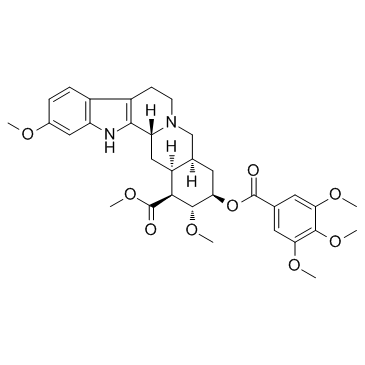
Reserpine Structure Reserpine
CAS:50-55-5
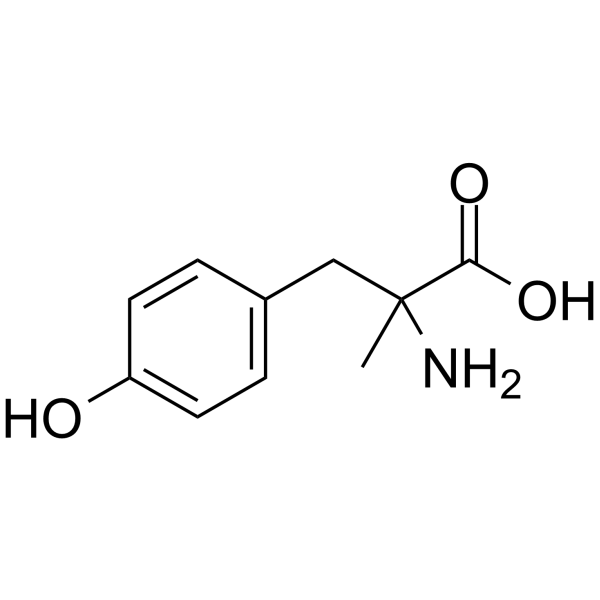
a-methyl-D-tyrosine Structure a-methyl-D-tyrosine
CAS:658-48-0
Metyrosine Structure Metyrosine
CAS:672-87-7