Deferoxamine (mesylate)

Deferoxamine (mesylate) structure
|
Common Name | Deferoxamine (mesylate) | ||
|---|---|---|---|---|
| CAS Number | 138-14-7 | Molecular Weight | 752.895 | |
| Density | N/A | Boiling Point | 966.9ºC at 760 mmHg | |
| Molecular Formula | C26H52N6O11S | Melting Point | 148-149° | |
| MSDS | Chinese USA | Flash Point | 538.5ºC | |
Use of Deferoxamine (mesylate)Deferoxamine mesylate is an iron chelator that binds free iron in a stable complex, preventing it from engaging in chemical reactions. |
| Name | desferrioxamine B mesylate |
|---|---|
| Synonym | More Synonyms |
| Description | Deferoxamine mesylate is an iron chelator that binds free iron in a stable complex, preventing it from engaging in chemical reactions. |
|---|---|
| Related Catalog | |
| In Vitro | Deferoxamine treatment significantly increases HIF-1α binding under all culture conditions, including hypoxic and high-glucose. The mechanism of deferoxamine is through improving HIF-1α biological function through scavenging oxygen free radicals[1]. Deferoxamine (5 μM) has significant effect on the tumor-associated stromal cells cellular multiplication, and cells die at day 7 after exposure to 50 μM and 100 μM deferoxamine. Deferoxamine (5 μM-100 μM) inhibits the proliferation of BMMSCs, and induces apoptosis of MSCs in a dose-dependent manner. Deferoxamine influences the expression of adhesion proteins on MSCs[3]. Deferoxamine (30, 60, 120 μM) shows lower expression of HIF-1α in a concentration dependent way in AdMSCs[4]. |
| In Vivo | Deferoxamine (100 mg/kg, i.p.) lowers the mortality rate of subarachnoid hemorrhage (SAH) rat. Deferoxamine (100 mg/kg, i.p.) attenuates Evan’s blue extravasation in cortex, ameliorates the tight junction detachment and preserves the integrity of the base membrane examined in electron microscope at day 3 after SAH. Deferoxamine attenuates degradation of BBB proteins after SAH and significantly reduces ferritin expression at day 3 in the cortex, and improves neurologic behavior and cognitive deficits after experimental[1]. Ten µL of 1 mM deferoxamine-treated wounds display significantly accelerated healing from day 7 onward and heal significantly faster than control-treated wounds in diabetic mice. Deferoxamine-treated wounds and dimethyloxalylglycine-treated wounds heal significantly faster than control-treated wounds in aged mice[2]. In deferoxamine (10 mg/mL)-treated TG mice, there is a decrease in both soluble and insoluble Aβ40 and Aβ42. Both pGSK3β and β-catenin are significantly increased by approximately 50% in the deferoxamine-treated mice[5]. |
| Cell Assay | Harvested murine tumor and bone marrow-derived MSCs are exposed to varying doses of deferoxamine. Cell viability is assessed by trypan blue exclusion assay. The viable cells are more than 98% before enrolled for experiments. A total of 1.5×10⁵ TAMSCs/well or 3×10⁵ BMMSCs/well are seeded in 6-well plates. Then MSCs are exposed to 5, 10, 25, 50, and 100 μM deferoxamine on the following day. After 7 days, the number of TAMSCs is counted. To assess the cytotoxicity of deferoxamine to primary bone marrow MSCs, 2×10⁶ bone marrow cells/well are seeded in 24-well plates. After 9 days, the number of survival cells is counted. To assess the cell cycle, TAMSCs are stained with propidium iodide, and cell cycle distribution is analyzed by flow cytometry. |
| Animal Admin | Mice are divided into three treatment groups of 17 each: (1) TG mice given IN Deferoxamine (TG-DFO), (2) TG mice given IN phosphate buffered saline (TG-PBS), and (3) WT mice given IN PBS (WT-PBS). At 30 weeks of age, mice are acclimated to handling and then treated intranasally every monday, wednesday, and friday, starting at 36 weeks of age. Mice are dosed for 18 weeks, until behavior tests at 54 weeks. Dosing continues during the 4 weeks of behavior to measure both chronic and acute effects. After behavior mice are dosed a final time, and 24 h later euthanized and tissues collected for biochemical analyses. These include soluble and insoluble amyloid as measured by ELISA and IHC, quantification of proteins with Western blot and oxidative markers. |
| References |
| Boiling Point | 966.9ºC at 760 mmHg |
|---|---|
| Melting Point | 148-149° |
| Molecular Formula | C26H52N6O11S |
| Molecular Weight | 752.895 |
| Flash Point | 538.5ºC |
| Exact Mass | 752.329590 |
| PSA | 268.59000 |
| LogP | 2.98900 |
| Vapour Pressure | 0mmHg at 25°C |
| InChIKey | IDDIJAWJANBQLJ-UHFFFAOYSA-N |
| SMILES | CC(=O)N(O)CCCCCNC(=O)CCC(=O)N(O)CCCCCNC(=O)CCC(=O)N(O)CCCCCN.CS(=O)(=O)O |
| Storage condition | −20°C |
| Water Solubility | H2O: 50 mg/mL |
CHEMICAL IDENTIFICATION
HEALTH HAZARD DATAACUTE TOXICITY DATA
|
| Personal Protective Equipment | Eyeshields;Gloves;type N95 (US);type P1 (EN143) respirator filter |
|---|---|
| Safety Phrases | 22-24/25 |
| RIDADR | NONH for all modes of transport |
| WGK Germany | 2 |
| RTECS | UG5310000 |
| Precursor 0 | |
|---|---|
| DownStream 2 | |
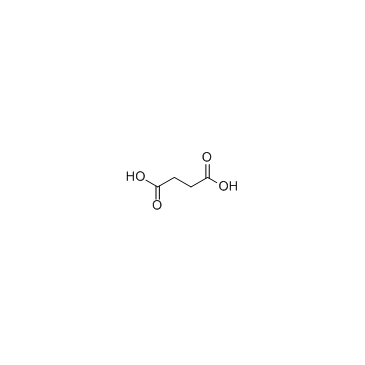 CAS#:110-15-6
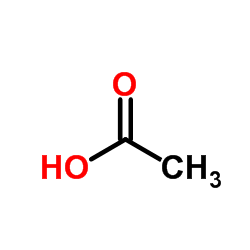 CAS#:64-19-7
|
Cryopreservation prevents iron-initiated highly unsaturated fatty acid loss during storage of human blood on chromatography paper at -20°C.
J. Nutr. 145(3) , 654-60, (2015) Fingertip prick whole blood collection on chromatography paper is amenable to high-throughput fatty acid (FA) profiling for large clinical and field studies. However, sample storage is problematic bec... |
|
|
Collagen density regulates xenobiotic and hypoxic response of mammary epithelial cells.
Environ. Toxicol. Pharmacol. 39(1) , 114-24, (2015) Breast density, where collagen I is the dominant component, is a significant breast cancer risk factor. Cell surface integrins interact with collagen, activate focal adhesion kinase (FAK), and downstr... |
|
|
Mechanism of hydroxyl radical generation from biochar suspensions: Implications to diethyl phthalate degradation.
Bioresour. Technol. 176 , 210-7, (2014) This paper investigated hydroxyl radical (OH) generation from biochar suspensions for diethyl phthalate (DEP) degradation in the presence of oxygen. Electron paramagnetic resonance (EPR) coupled with ... |
|
Name: Primary qHTS assay for inhibitors of alpha-synuclein gene (SNCA) expression
Source: NCGC
External Id: SNCA-p-activity-luciferase
|
|
Name: Fluorescence-based cell-based primary high throughput screening assay to identify ago...
Source: The Scripps Research Institute Molecular Screening Center
Target: muscarinic acetylcholine receptor M1 [Homo sapiens]
External Id: CHRM1_AG_FLUO8_1536_1X%ACT PRUN
|
|
Name: Cytochrome P450 Family 1 Subfamily A Member 2 (CYP1A2) small molecule antagonists: lu...
Source: 824
External Id: CYP273
|
|
Name: Increase the activity of the Burkholderia fixLJ 2-component system
Source: ICCB-Longwood/NSRB Screening Facility, Harvard Medical School
Target: Burkholderia multivorans
External Id: HMS1625
|
|
Name: Fluorescence-based cell-based primary high throughput screening assay to identify pos...
Source: The Scripps Research Institute Molecular Screening Center
Target: muscarinic acetylcholine receptor M1 [Homo sapiens]
External Id: CHRM1_PAM_FLUO8_1536_1X%ACT PRUN
|
|
Name: qHTS Assay for Small Molecule Inhibitors of the Human hERG Channel Activity
Source: NCGC
External Id: HERG01
|
|
Name: qHTS for Inhibitors of TGF-b: Cytotox Counterscreen
Source: NCGC
Target: N/A
External Id: SMAD3201
|
|
Name: Metal chelating activity assessed as Fe3+-compound complex formation at 5 to 1280 uM ...
Source: ChEMBL
Target: N/A
External Id: CHEMBL4132921
|
|
Name: uHTS identification of cystic fibrosis induced NFkb Inhibitors in a fluoresence assay
Source: Burnham Center for Chemical Genomics
Target: cystic fibrosis transmembrane conductance regulator [Homo sapiens]
External Id: SBCCG-A764-CF-PAF-Primary-Assay
|
|
Name: Fluorescence-based cell-based primary high throughput screening assay to identify ant...
Source: The Scripps Research Institute Molecular Screening Center
Target: muscarinic acetylcholine receptor M1 [Homo sapiens]
External Id: CHRM1_ANT_FLUO8_1536_1X%INH PRUN
|
| Desferal methanesulfonate |
| DEFEROXAMINE MESYLATE |
| Deferoxamine Methanesulfonate |
| N'-{5-[Acetyl(hydroxy)amino]pentyl}-N-[5-({4-[(5-aminopentyl)(hydroxy)amino]-4-oxobutanoyl}amino)pentyl]-N-hydroxysuccinamide methanesulfonate (1:2) |
| Deferoxamine mesylate salt |
| DESFERAL MESYLATE |
| EINECS 205-314-3 |
| Butanediamide, N-[5-(acetylhydroxyamino)pentyl]-N-[5-[[4-[(5-aminopentyl)hydroxyamino]-1,4-dioxobutyl]amino]pentyl]-N-hydroxy-, methanesulfonate (1:2) (salt) |
| MFCD00058605 |
| DFOM,Deferoxamine methanesulfonate salt,Desferrioxamine mesylate salt |
| Deferoxamine (mesylate) |