87805-34-3
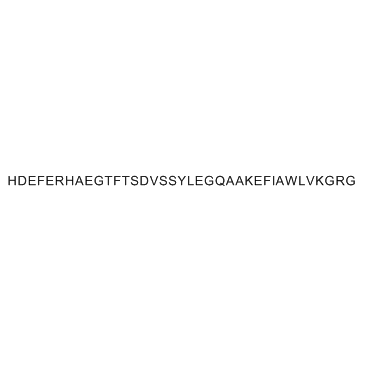
87805-34-3 structure
- Name: GLP-1 (1-37) (human, bovine, guinea pig, mouse, rat) trifluoroacetate salt
- Chemical Name: GLP-1 (1-37) amide
- CAS Number: 87805-34-3
- Molecular Formula: C186H275N51O59
- Molecular Weight: 4169.48
- Catalog: API Hormone and endocrine-regulating drugs Pancreatic hormones and other blood sugar regulating drugs
- Create Date: 2018-05-21 08:00:00
- Modify Date: 2026-07-07 21:40:23
-
Glucagon-like peptide 1 (1-37), human is a highly potent agonist of the GLP-1 receptor.
| Name | GLP-1 (1-37) amide |
|---|---|
| Synonyms |
ANTI-GLP1 (CENTER) antibody produced in rabbit
Glucagon-like peptide 1 (1-37), human GLP-1 //BP GLUCAGON-LIKE PTIDE 1 (HUMAN, BOVINE, GUINEA PIG, MOUSE, RAT) TRIFLUOROACETATE SALT HIS-ASP-GLU-PHE-GLU-G-HIS-ALA-GLU-GLY- THR-PHE-THR-SER-ASP-VAL-SER-SER-TYR-LEU-GLU-GLY-GLN-ALA-ALA-LYS-GLU-PHE-ILE-ALA-TRP-LEU-VAL-LYS-GLY-GY-GLY GATA-like protein 1 GLUCAGON-LIKE PTIDE I H-HIS-ASP-GLU-PHE-GLU-G-HIS-ALA-GLU-GLY-THR-PHE-THR-SER-ASP-VAL-SER-SER-TYR-LEU-GLU-GLY-GLN-ALA-ALA-LYS-GLU-PHE-ILE-ALA-TRP-LEU-VAL-LYS-GLY-G-GLY-OH GLP-1, 5mg/vial GLUCAGON-LIKE PTIDE I HUMAN Glucagon-like peptide 1 (1-37) (human, rat) Rat GLP-I GLP-1 (human) PRROGLUCAGON (HUMAN, BOVINE, GUINEA PIG, MOUSE, RAT) TRIFLUOROACETATE SALT GLP-1 (human, bovine, gp, mouse, rat) GLP-1 HIS-ASP-GLU-PHE-GLU-G-HIS-ALA-GLU-GLY-THR-PHE-THR-SER-ASP-VAL-SER-SER-TYR-LEU-GLU-GLY-GLN-ALA-ALA-LYS-GLU-PHE-ILE-ALA-TRP-LEU-VAL-LYS-GLY-G-GLY GLUCAGON-LIKE PTIDE 1 (HUMAN) Glucagon-like peptide 1 (1-37) PRROGLUCAGON Glucagon-liktide1 GLP-1 (human, rat), Glucagon-like ptide analog GLUCAGON-LIKE PTIDE-1, HUMAN GLP-1 (HUMAN, BOVINE, GUINEA PIG, MOUSE, RAT) Glucagon-like ptide 1 (human, rat) PROGLUCAGON (HUMAN, BOVINE, GUINEA PIG, MOUSE, RAT) TRIFLUOROACETATE SALT GLP-1, best quotation Prroglucagon (huMan, bovine, guinea pig, Mouse, rat), Proglucagon (huMan, bovine, guinea pig, Mouse, rat), Glucagon-Like Ptide 1 (huMan, bovine, guinea pig, Mouse, rat) C186H275N51O59 GLUCAGON-LIKE PTIDE 1 (HUMAN, BOVINE, GUINEA PIG, MOUSE, RAT) GLP-1 (huMan, bovine, guinea pig, Mouse, rat) Prroglucagon (huMan, bovine, guinea pig, Mouse, rat), Proglucagon (huMan, bovine, guinea pig, Mouse, rat), Glucagon-Like Ptide 1 (huMan, bovine, guinea pig, Mouse, rat) GLP-1 (HUMAN, BOVINE, GUINEA PIG, MOUSE, RAT) TRIFLUOROACETATE SALT |
| Description | Glucagon-like peptide 1 (1-37), human is a highly potent agonist of the GLP-1 receptor. |
|---|---|
| Related Catalog | |
| Target |
GLP-1 receptor[1] |
| In Vitro | Glucagon-like peptide-1 (GLP-1) is produced by the posttranslational processing of proglucagon and acts as a regulator of various homeostatic events. GLP-1(1-37) is more stable than GLP-1(7-37), with 94.7% of the initial amount of peptide left after a 4h exposure to mouse serum. GLP-1(1-37) is confirmed to be a highly potent agonist of the GLP-1 receptor (GLP-1R) by measuring the expression of the luciferase reporter gene expression in transiently transfected human embryonic kidney (HEK293) cells[1]. |
| In Vivo | GLP-1(1–37) decreased glycemic excursion in a dose-dependent. The administration of GLP-1(1–37) or GLP-1(7–37) markedly decrease blood glucose levels at 15 min and 30 min compared with the control group[1]. |
| Cell Assay | HEK293 cells (5×10⁴) are seeded in a 96-well plate and transiently cotransfected with the GLP-1R plasmid and the CRE-luciferase reporter plasmid. After a 48 h transfection, different concentrations of GLP-1(1–37) or GLP-1(7–37) are added, and the cells are incubated for 5 h. The cells are harvested for a luciferase assay using a luciferase assay[1]. |
| Animal Admin | Mice[1] The normal KM mice are fasted for 16 h before the administration (i.p.) of GLP-1 and glucose. GLP-1(1-37) (25 nmol/kg) with or without exendin(9-39) (250 nmol/kg) is given in combination with glucose (4 g/kg). GLP-1(7-37) (25 nmol/kg) with or without exendin(9-39) (250 nmol/kg) is also administrated in combination with glucose (4 g/kg). The control group is treated with saline (NaCl, 9 g/l) and glucose (4 g/kg). The IPGTT is carried out at 0, 15, 30 and 60 min after glucose and protein administration, and the blood glucose levels are measured as described above[1]. |
| References |
| Molecular Formula | C186H275N51O59 |
|---|---|
| Molecular Weight | 4169.48 |
| Storage condition | −20°C |
| Personal Protective Equipment | Eyeshields;Gloves;type N95 (US);type P1 (EN143) respirator filter |
|---|---|
| RIDADR | NONH for all modes of transport |
| WGK Germany | 3 |