1672662-14-4
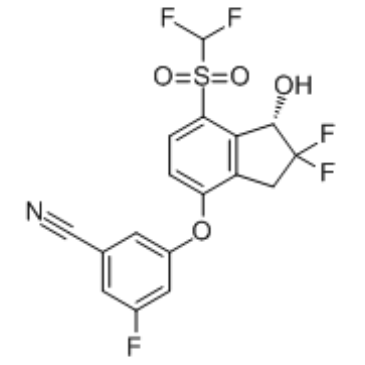
1672662-14-4 structure
- Name: PT2399
- Chemical Name: PT2399
- CAS Number: 1672662-14-4
- Molecular Formula: C17H10F5NO4S
- Molecular Weight: 419.32
- Catalog: Signaling Pathways Metabolic Enzyme/Protease HIF/HIF Prolyl-Hydroxylase
- Create Date: 2019-06-05 16:51:08
- Modify Date: 2026-07-01 18:55:19
-
PT2399 is an inhibitor of HIF2α[1].
| Name | PT2399 |
|---|---|
| Synonyms |
PT2339
PT2399, 10 mM in DMSO PT2399;PT 2399;PT-2399 Hypoxia-inducible factors,Inhibitor,PT2399,inhibit,HIF-PH,HIF/HIF Prolyl-Hydroxylase,HIFs,PT-2399,PT PT2399 ,S8351 (S)-3-((7-((difluoromethyl)sulfonyl)-2,2-difluoro-1-hydroxy-2,3-dihydro-1H-inden-4-yl)oxy)-5-fluorobenzonitrile 3-[(1S)-7-(Difluoromethylsulfonyl)-2,2-difluoro-1-hydroxy-indan-4-yl]oxy-5-fluoro-benzonitrile Benzonitrile, 3-[[(1S)-7-[(difluoromethyl)sulfonyl]-2,2-difluoro-2,3-dihydro-1-hydroxy-1H-inden-4-yl]oxy]-5-fluoro |
| Description | PT2399 is an inhibitor of HIF2α[1]. |
|---|---|
| Related Catalog | |
| Target |
HIF2α[1] |
| In Vitro | PT2399 inhibits HIF2α directly causes tumor regression[1]. PT2399 binds directly to the HIF2α PAS B domain, and cripples HIF2α’s ability to bind to Aryl hydrocarbon receptor nuclear translocator (ARNT)[1]. Cell Viability Assay[1] Cell Line: 786-O cells Concentration: 0 μM, 0.2 μM, 20 μM Incubation Time: 0-15 days Result: Caused off-target toxicity because it inhibited the proliferation of HIF2α-/-786-O cells at 20 μM, and inhibited 786-O cell soft agar growth at 0.2 μM-2 μM. |
| In Vivo | PT2399 (100 mg/kg; oral gavage; every 12 hours) is more active than Sunitinib and inhibits tumor growth in several Sunitinib-resistant tumors in renal cell carcinoma (RCC) bearing mice[2]. PT2399 inhibits tumor cell proliferation 3.5 fold in RCC bearing mice[2]. PT2399 reduces tumor cell density and increases fibrosis in RCC bearing mice[2]. Animal Model: Mice with RCC tumorgraft[2] Dosage: 100 mg/kg Administration: Oral gavage; every 12 hours Result: More active than sunitinib, and inhibited tumor growth in several sunitinib-resistant tumors. |
| References |
| Molecular Formula | C17H10F5NO4S |
|---|---|
| Molecular Weight | 419.32 |
| Storage condition | 2-8℃ |