123475-27-4
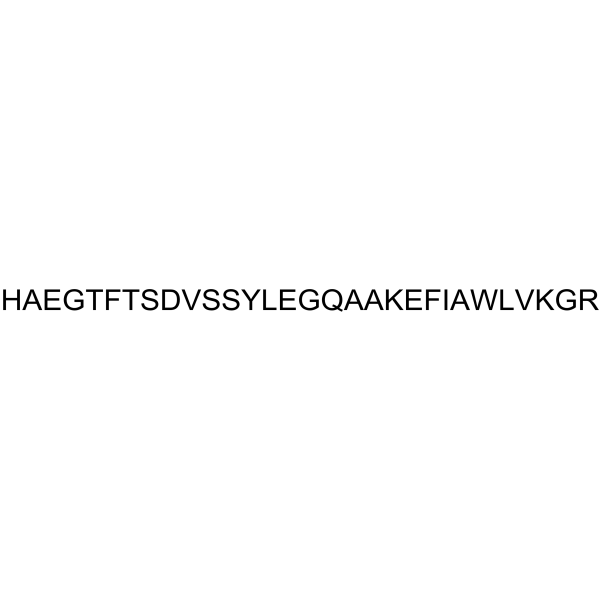
123475-27-4 structure
- Name: Beinaglutide
- Chemical Name: Beinaglutide
- CAS Number: 123475-27-4
- Molecular Formula: C149H225N39O46
- Molecular Weight: 3298.61
- Catalog: Research Areas Inflammation/Immunology
- Create Date: 2022-10-16 20:35:34
- Modify Date: 2026-07-01 18:29:14
-
Beinaglutide is a recombinant human GLP-1 (rhGLP-1) that shares almost 100% homology with human GLP-1 (7–36). Beinaglutide displays does-dependent effects in glycemic control, inhibiting food intake and gastric empty and promoting weight loss. Beinaglutide has the potential for the research of overweight/obesity and nonalcoholic steatohepatitis (NASH)[1][2].
| Name | Beinaglutide |
|---|
| Description | Beinaglutide is a recombinant human GLP-1 (rhGLP-1) that shares almost 100% homology with human GLP-1 (7–36). Beinaglutide displays does-dependent effects in glycemic control, inhibiting food intake and gastric empty and promoting weight loss. Beinaglutide has the potential for the research of overweight/obesity and nonalcoholic steatohepatitis (NASH)[1][2]. |
|---|---|
| Related Catalog | |
| In Vitro | Beinaglutide (100 nM; 48 h) increases the expression of phosphorylation of Akt in the adipocytes that were potentiated insulin-stimulated[2]. Western Blot Analysis[2] Cell Line: 3T3L-1 cells Concentration: 100 nM Incubation Time: 48 h Result: Increased the phosphorylation of Akt in the adipocytes that were potentiated insulin-stimulated. |
| In Vivo | Beinaglutide (0.6, 1.2, 2.4 mg/kg; s.c.; three times per day for 7 consecutive days) shows the ability of glycemic contro, inhibits food intake and weight loss in mouse[1]. Beinaglutide (150 µg/kg; s.c.; daily for 6 weeks) increases insulin sensitivity of adipocytes[2]. Animal Model: Wild-type male C57BL/6 mice and Male Lepob/Lepob (ob/ob) mice (ob/ob-NASH mouse model was induced by GAN diet)[1] Dosage: 0.6, 1.2, 2.4 mg/kg Administration: S.c.; three times per day for 7 consecutive days Result: Significantly reduced blood glucose with dosedependence in C57BL/6 and ob/ob mice, dose dependently inhibits food intake and gastric Emptying, and significantly reduced body weight, food intake with dose-dependence. Animal Model: Eight-week-old male C57BL/6 mice[2] Dosage: 150 µg/kg Administration: S.c.; daily for 6 weeks Result: Showed improved glucose tolerance and insulin sensitivity, decreased adipose tissue weight and adipocyte size and potentiated insulin sensitivity of adipocytes. |
| References |
| Molecular Formula | C149H225N39O46 |
|---|---|
| Molecular Weight | 3298.61 |