3766-81-2
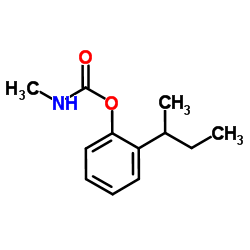
3766-81-2 structure
- Name: Fenobucarb
- Chemical Name: fenobucarb
- CAS Number: 3766-81-2
- Molecular Formula: C12H17NO2
- Molecular Weight: 207.269
- Catalog: Chemical pesticide Insecticide Carbamate insecticide
- Create Date: 2018-09-10 20:36:17
- Modify Date: 2026-07-08 08:51:33
-
Fenobucarb is an extensively used carbamate insecticide. Fenobucarb induces zebrafish developmental neurotoxicity through pathways involved in inflammation, oxidative stress, degeneration and apoptosis. Fenobucarb is a possible risk factor to cardiovascular and cerebrovascular systems in animals[1][2].
| Name | fenobucarb |
|---|---|
| Synonyms |
FENOBUCB
BASSA Osbac emulsion CVIL(R) Carvil methyl-cbamicacio-sec-butylphenylester Fenocarb 2-SEC-BUTYLPHENYL-N-METHYLCBAMATE (2-butan-2-ylphenyl) N-methylcarbamate methylcbamicacido-sec-butylphenylester Bassa 2-(1-methylpropyl)phenyl methylcarbamate Osbac 2-sek.Butylfenylester kyseliny methylkbaminove O-(sec-butyl)phenyl N-methylcarbamate 2-sec-butyl-phenyl N-methyl-carbamate 2-(butan-2-yl)phenyl methylcarbamate Methylcbamic acid o-sec-butylphenyl ester BAYCB FENOBUCB SOLUTION 100 NG/MYL, IN METHA NOL, PESTANAL Barizon Bayer 41367C (2-butan-2-ylphenyl) N-methylcbamate Phenol, 2-(1-methylpropyl)-, methylcarbamate 2-(1-methylpropyl)-phenomethylcbamate fenobucb solution Cbamic acid, methyl-, o-sec-butylphenyl ester HOPCIN(R) 2-sec-Butylphenyl methylcarbamate 2-butylphenyl methylcbamate fenobucb bayer41367c Baycarb Fenobucd fenobucb (bsi,iso) fenobcarb BPMC emulsion 2-(1-Methylpropyl)phenylmethylcbamate o-sec-butylphenylmethylcbamate 2-(Sec-butyl)phenyl methylcarbamate BAYCB (TM) (RS)-2-sec-butylphenyl methylcarbamate Bizon Phenol,2-(1-methylpropyl)-,methylcbamate FENEBUB EINECS 223-188-8 geocb50ec OSBAC(R) N-methylcbamic acid (2-sec-butylphenyl) ester o-sec-Butylphenyl methylcbamate rac-2-[(2R)-butan-2-yl]phenyl methylcarbamate 2-(1-Methylpropyl)phenyl methylcbamate Hopcin Cvil 2-sek.butylfenylesterkyselinymethylkbaminove Baycb (TM) [3-2] O-SEC-BUTYLPHENYL-N-METHYLCBAMATE bayer41637 2-SEC-BUTYLPHENYLETHYLCBAMATE Osbask emulsion BAYER 2-Sec-butylphenyl methylcbamate BASSA(R) BAYCB,M, NEAT FENOBUCB(BPMC) Phenol, 2-(1-methylpropyl)-, methylcbamate Fenobcb bpmc (jmaf,thailand) FENOBUCB PESTANAL (2-SEC.-BUTYL- PHENY 2-(1-Methylpropyl)phenol methylcbamate Bassa emulsion MFCD00053081 2-butylphenylmethylcbamate BPMC N-Methylcbamic acid 2-sec-butylphenyl bay41637 2-(1-methylpropyl)phenyl N-methylcarbamate OSBAC |
| Description | Fenobucarb is an extensively used carbamate insecticide. Fenobucarb induces zebrafish developmental neurotoxicity through pathways involved in inflammation, oxidative stress, degeneration and apoptosis. Fenobucarb is a possible risk factor to cardiovascular and cerebrovascular systems in animals[1][2]. |
|---|---|
| Related Catalog | |
| References |
| Density | 1.0±0.1 g/cm3 |
|---|---|
| Boiling Point | 282.5±23.0 °C at 760 mmHg |
| Molecular Formula | C12H17NO2 |
| Molecular Weight | 207.269 |
| Flash Point | 124.7±22.6 °C |
| Exact Mass | 207.125931 |
| PSA | 38.33000 |
| LogP | 3.04 |
| Vapour Pressure | 0.0±0.6 mmHg at 25°C |
| Index of Refraction | 1.505 |
CHEMICAL IDENTIFICATION
HEALTH HAZARD DATAACUTE TOXICITY DATA
|
| Symbol |


GHS07, GHS09 |
|---|---|
| Signal Word | Warning |
| Hazard Statements | H302-H410 |
| Precautionary Statements | P273-P501 |
| Personal Protective Equipment | dust mask type N95 (US);Eyeshields;Faceshields;Gloves |
| Hazard Codes | Xn: Harmful;N: Dangerous for the environment;T: Toxic;F: Flammable; |
| Risk Phrases | R22;R50/53 |
| Safety Phrases | S60-S61-S45-S24-S16-S7 |
| RIDADR | UN 2811 |
| RTECS | FB5425000 |
| Packaging Group | III |
| Hazard Class | 6.1(b) |
| HS Code | 2922499915 |


| HS Code | 2924199090 |
|---|---|
| Summary | 2924199090. other acyclic amides (including acyclic carbamates) and their derivatives; salts thereof. VAT:17.0%. Tax rebate rate:13.0%. . MFN tariff:6.5%. General tariff:30.0% |