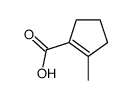
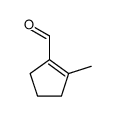
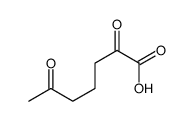
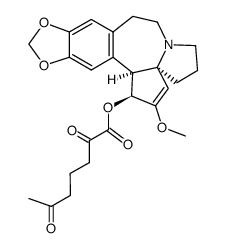
26833-87-4
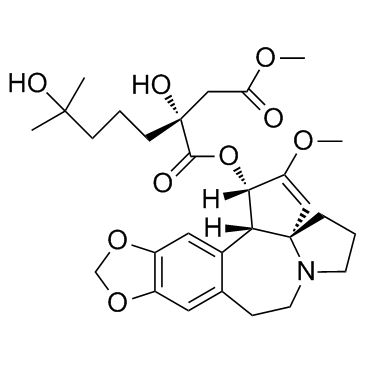
26833-87-4 structure
- Name: Homoharringtonine
- Chemical Name: omacetaxine mepesuccinate
- CAS Number: 26833-87-4
- Molecular Formula: C29H39NO9
- Molecular Weight: 545.621
- Catalog: API Antineoplastic agents Natural source antineoplastic agents
- Create Date: 2018-06-05 08:00:00
- Modify Date: 2026-06-30 07:04:28
-
Homoharringtonine (Omacetaxine mepesuccinate;HHT) is a cytotoxic alkaloid with antitumor properties which acts by inhibiting translation elongation.
| Name | omacetaxine mepesuccinate |
|---|---|
| Synonyms |
ACVRL1
Omacetaxine Mesuccinate (Homohringtonine) Homohringtonine //BP Recombinant Human ALK-1/ACVRL1 Protein, His Tag Synribo 1-((11bS,12S,14-13-Methoxy-2,3,5,6,11b,12-hexahydro-1H-[1,3]dioxolo[4',5':4,5]benzo[1,2-d]cyclopenta[b]pyrrolo[1,2-a]azin-12-yl) 4-methyl (R)-2-hydroxy-2-(4-hydroxy-4-methylpentyl)succinate Homobringtonie HMoharringtonine Ceflatonin Cytisine Impurity 8 CHALOTAXINE, 4-METHYL-2-HYDROXY-2-[4-HYDROXY-4-METHYLPENTYL] BUTANEDIOATE ESTER HOMOHRINGTONINE (2'R,3S,4S,5R)-(-)-Homohringtonine Rat ACVRL1 Protein, Fc & His Tag OMAPRO OMACETAXINE MESUCCINATE Chalotaxine, 4-methyl (2R)-2-hydroxy-2-(4-hydroxy-4-methylpentyl)butanedioate (ester) Human ACVRL1 Protein, His Tag Chalotaxine, 4-methyl2-hydroxy-2-(4-hydroxy Omacetaxine Mesuccinate OMACETAXINE MESUCCINATE; HHT Omacetaxine 26-4 Homohringtonine Anti-ACVRL1 (C-terminal) antibody produced in goat Chalotaxine, 3-[4-methyl (2R)-2-hydroxy-2-(4-hydroxy-4-methylpentyl)butanedioate] chalotaxine,4-methyl(2r)-2-hydroxy-2-(4-hydroxy-4-methylpentyl)butanedioa OMacetaxine (HoMohringtonine) Homobarringtonie Homohringtonine, Protein synthesis inhibitor HoMohringtonine (8CI) (12S)-12-Hydroxy-5,8,10-htadecanetricboxylic acid CGX 635 Homohringtonine (HHT) (2R)-2-hydroxy-2-(4-hydroxy-4-Methylpentyl)butanedioate HOMOHRINGTONINUM Omacetaxine mepesuccinate MFCD03410264 Myelostat (-)-homoharringtonine CHALOTAXINE 4-METHYL (2R)-2-HYDROXY-2-(4-HYDROXY-4-METHYLPENTYL)BUTANEDIOATE 4-methylpentyl)butanedioate(ester), [3(R)] 4-methyl-chalotaxin2-hydroxy-2-(4-hydroxy-4-methylpentyl)butanedioate(e HOMOHARRINGTONINUM homoharrigtonine HOMOHRINGTONINE(P) (2'R,3S,4S,5R)-(-)-hoMohringtonine, (-)-hoMohringtonine, hoMohringtonine, hoMohrigtonine, hringtonine, HHT, HoMohringtonine Homohringtonine from Taxus chinensis (Pilg.) Rehder HHT HMohringtonine ACVRLK1 Homohringtonine, 10 mM in DMSO HOMOHARRINGTONIN Chalotaxine (R)-2-(methoxycbonylmethyl)-2,6-dihydroxy-6-methylhtanoate SKR3 ANTI-ACVRL1 antibody produced in mouse Omacetaxine Homohringtonine 26-4 HOMOHRINGTONIN O-[(2R)-2,6-Dihydroxy-2-(2-methoxy-2-oxoethyl)-6-methylheptanoyl]cephalotaxine Omacetaxine chalotaxine 4-methyl 2-hydroxy-2-(4-hydroxy-4-methylpentyl)butanedioate ALK1 (144-end), active, GST tagged human Recombinant Mouse Acvrl1/ALK-1 Protein, His Tag Human ACVRL1 Protein, Fc Tag ORW2 TIANFU-CHEM Homohringtonine Homohringtonine - Bio-X HHT2 |
| Description | Homoharringtonine (Omacetaxine mepesuccinate;HHT) is a cytotoxic alkaloid with antitumor properties which acts by inhibiting translation elongation. |
|---|---|
| Related Catalog | |
| Target |
STAT3 |
| In Vitro | Homoharringtonine inhibits IL-6-induced STAT3 phosphorylation in a dose- and time-dependent manner. Homoharringtonine (HHT) inhibits cells growth, cell viability and colony formation, as well as induced cell apoptosis through mitochondria pathway. The cytotoxicity of Homoharringtonine on human NSCLC cell lines is investigated, A549 (wild type EGFR) and NCI-H1975 (H1975, mutant EGFR with L858R and T790M), Gefitinib is used as a control. By MTT assay, Homoharringtonine has moderate cytotoxicity to A549 with an IC50 of 3.7 μM and H1975 cells are more sensitive to Homoharringtonine with an IC50 of 0.7 μM. Homoharringtonine inhibits the cell proliferation and growth of A549 cells and H1975 cells in a time- and dose-dependent manner through MTT assay. By trypan blue exclusion assay, Homoharringtonine rapidly reduces viable A549 and H1975 cells in a dose- and time-dependent manner. Homoharringtonine significantly inhibits the clonogenic ability of A549 and H1975 cells[1]. |
| In Vivo | Homoharringtonine (10 mg/kg) efficiently represses tumor growth compared to vehicle control or Gefitinib (P<0.05). Additionally, Homoharringtonine (HHT) treatment does not reduce the mice body weight, which suggests that Homoharringtonine has no apparent side effect. All the mice are euthanized, the tumors are isolated and imaged and the tumor sample cells are harvested to extract protein for determination if Homoharringtonine inhibits STAT3 phosphorylation via western blot. The level of STAT3 phosphorylation and MCL1 from Homoharringtonine treatment group is significantly decreased compared to vehicle control or Gefitinib treatment. Meanwhile, consistant with the results in the above, AKT1/2/3 and ERK1/2 phosphorylation is not inhibited with Homoharringtonine treatment. To further examine the STAT3 phosphorylation in the xenograft tumor samples with different treatments, the tumor samples are frozen and cutted into 10 μm sections for fluorescent immunohistochemistry. Homoharringtonine treatment inhibits STAT3 phosphorylation compared to vehicle control or Gefitinib treatment[1]. |
| Cell Assay | Human NSCLC cell lines MCF-10A, A549 and H1975 cells are seeded into 96-well plate and precultured for 24 h, then treated with Homoharringtonine for 24 h or 48 h. Cell cytotoxicity is determined by MTT assay. The absorbance is measured at 570 nm by Varioskan Flash Multimode Reader, and the cell death rate is calculated. Cell viability is estimated by trypan blue dye exclusion assay. The cells which exclude the dye are viable. Place 0.5 mL of a suitable cell suspension (dilute cells in complete medium without serum to 1×10⁶ cells per mL) following adding 0.1 mL of 0.4% trypan blue dye and mixing thoroughly, and then incubate at room temperature for 3 min and load into a hemacytometer to count cells in three separate fields (nonviable, deep blue cells as well as viable, clear cells). The cell viability rate is calculated. After staining with Hoechst 33258 at 10 mg/mL for 10 min, cell death is observed by a fluorescence microscope[1]. |
| Animal Admin | Mice[1] Equal amounts of female and male nude immunodeficient mice (nu/nu), 6-8 weeks old, are injected subcutaneously with NSCLC H1975 cells (2.5×10⁶) suspended in 100 μL RPMI-1640 medium into the rightflank of each mouse. Treatments are started when the tumors reached a palpablesize. Mice are randomly divided into three groups (n=10) and treated with Homoharringtonine (10 mg/kg), Gefitinib (30 mg/kg) or vehicle control for 3 weeks. Vernier caliper measurements of the longest perpendicular tumor diameters are conducted along with the mice treatment to estimate the tumor volume, using the following formula: 4π/3×(width/2)2×(length/2), representing the 3-dimensional volume of an ellipse tumor tissue. Animals are sacrificed when tumors reached to 2 cm or if the mice appeared moribund to prevent unnecessary morbidity to the mice. At the time of the animals’ death, tumors are excised; cells are separatedand lyzed for western blot using anti-STAT3 antibody, anti-pSTAT3, anti-MCL1 and anti-GAPDH antibodies and immunohistochemistry. |
| References |
| Density | 1.3±0.1 g/cm3 |
|---|---|
| Boiling Point | 713.1±60.0 °C at 760 mmHg |
| Melting Point | 144-146ºC |
| Molecular Formula | C29H39NO9 |
| Molecular Weight | 545.621 |
| Flash Point | 385.1±32.9 °C |
| Exact Mass | 545.262512 |
| PSA | 134.99000 |
| LogP | 2.70 |
| Vapour Pressure | 0.0±2.4 mmHg at 25°C |
| Index of Refraction | 1.605 |
| Storage condition | 2-8°C |
| Water Solubility | DMSO: soluble20mg/mL, clear |
CHEMICAL IDENTIFICATION
HEALTH HAZARD DATAACUTE TOXICITY DATA
|
| Symbol |

GHS06 |
|---|---|
| Signal Word | Danger |
| Hazard Statements | H300 |
| Precautionary Statements | P264-P301 + P310 |
| Hazard Codes | T+: Very toxic;Xi: Irritant; |
| Risk Phrases | R26/27/28 |
| Safety Phrases | 36/37/39-45-27-26 |
| RIDADR | UN 1544 6 |
| WGK Germany | 3 |
| RTECS | FK0260000 |
| Packaging Group | II |
| Hazard Class | 6.1(a) |
| Precursor 8 | |
|---|---|
| DownStream 0 | |