4-Dimethylaminopyridine
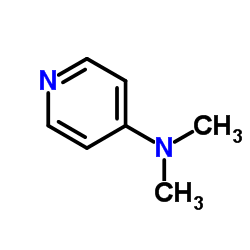
4-Dimethylaminopyridine structure
|
Common Name | 4-Dimethylaminopyridine | ||
|---|---|---|---|---|
| CAS Number | 1122-58-3 | Molecular Weight | 122.17 | |
| Density | 1.0±0.1 g/cm3 | Boiling Point | 162 ºC (50 mmHg) | |
| Molecular Formula | C7H10N2 | Melting Point | 108-113 ºC | |
| MSDS | Chinese USA | Flash Point | 110 ºC | |
| Symbol |

GHS06 |
Signal Word | Danger | |
Use of 4-DimethylaminopyridineN-(4-pyridyl)dimethylamine is a biochemical reagent that can be used as a biological material or organic compound for life science related research. |
This table lists Chinese names, IUPAC names and various aliases of this chemical substance.
| Name | 4-Dimethylaminopyridine |
|---|---|
| Synonym | More Synonyms |
This table contains bioactivity, target information and biological‑assay experimental data of this compound.
| Description | N-(4-pyridyl)dimethylamine is a biochemical reagent that can be used as a biological material or organic compound for life science related research. |
|---|---|
| Related Catalog |
This table shows physicochemical parameters including melting point, boiling point, density, solubility and optical rotation. Missing data is marked as N/A.
| Density | 1.0±0.1 g/cm3 |
|---|---|
| Boiling Point | 162 ºC (50 mmHg) |
| Melting Point | 108-113 ºC |
| Molecular Formula | C7H10N2 |
| Molecular Weight | 122.17 |
| Flash Point | 110 ºC |
| Exact Mass | 122.084396 |
| PSA | 16.13000 |
| LogP | 1.34 |
| Vapour Pressure | 0.4±0.4 mmHg at 25°C |
| Index of Refraction | 1.554 |
| InChIKey | VHYFNPMBLIVWCW-UHFFFAOYSA-N |
| SMILES | CN(C)c1ccncc1 |
| Storage condition | Store in dark! |
| Stability | Stable. Incompatible with acids, oxidizing agents. |
| Water Solubility | 76 g/L (25 ºC) |
This table provides MSDS information including hazard classification, first‑aid, fire‑fighting, spill handling, operation and storage instructions.
This table summarizes toxicological test data, acute & chronic toxicity and ecological hazard parameters for this chemical.
CHEMICAL IDENTIFICATION
HEALTH HAZARD DATAACUTE TOXICITY DATA
|
This table covers safety warnings, protective measures, incompatible substances and disposal guidelines for this compound.
| Symbol |
GHS06 |
|---|---|
| Signal Word | Danger |
| Hazard Statements | H301-H310-H315-H319-H335 |
| Precautionary Statements | Missing Phrase - N15.00950417-P262-P280-P302 + P352 + P310-P305 + P351 + P338-P361 + P364 |
| Personal Protective Equipment | Eyeshields;Faceshields;Gloves;type P2 (EN 143) respirator cartridges |
| Hazard Codes | T:Toxic |
| Risk Phrases | R24/25;R34 |
| Safety Phrases | S36/37/39-S45-S28A-S26-S28-S36/37-S53-S27-S22 |
| RIDADR | UN 2811 6.1/PG 2 |
| WGK Germany | 3 |
| RTECS | US8400000 |
| Packaging Group | II |
| Hazard Class | 8 |
| HS Code | 2933399090 |
This table presents publicly reported synthetic routes, reaction conditions, reactants and product information of the compound.
This table lists upstream starting materials and downstream derivative products related to this chemical.
| Precursor 10 | |
|---|---|
| DownStream 10 | |
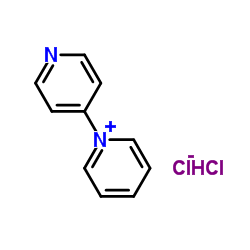 CAS#:5421-92-1
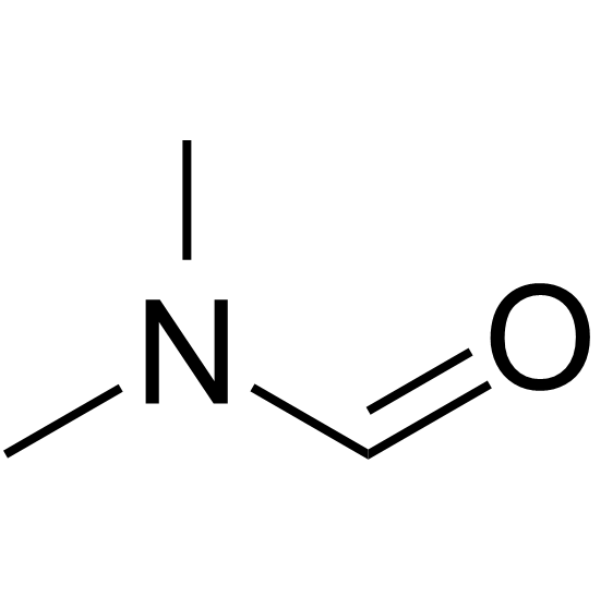 CAS#:68-12-2
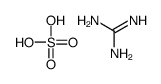 CAS#:646-34-4
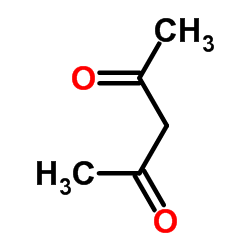 CAS#:123-54-6
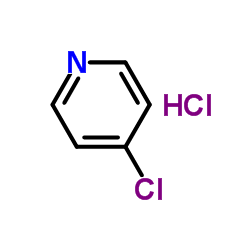 CAS#:7379-35-3
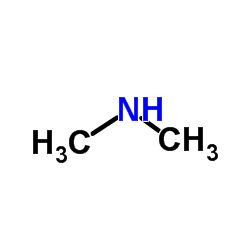 CAS#:124-40-3
 CAS#:3585-33-9
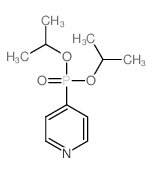 CAS#:58815-96-6
 CAS#:626-61-9
 CAS#:1005-31-8
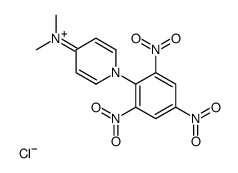 CAS#:111055-14-2
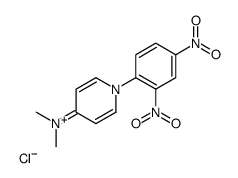 CAS#:110465-52-6
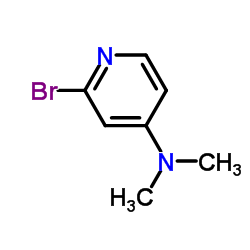 CAS#:396092-82-3
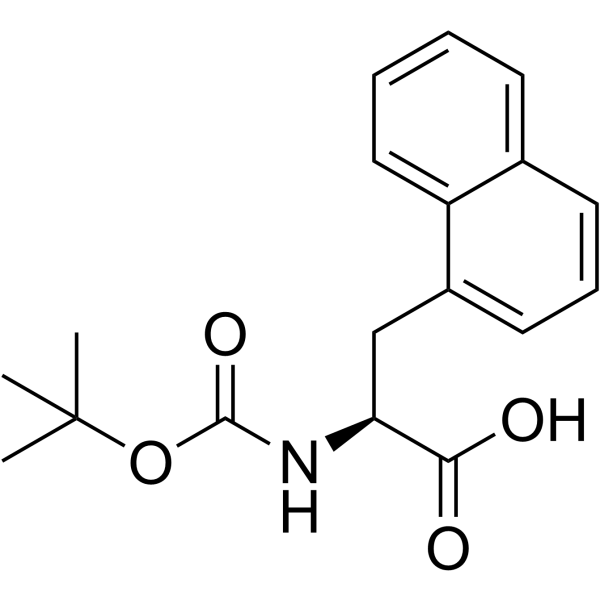 CAS#:55447-00-2
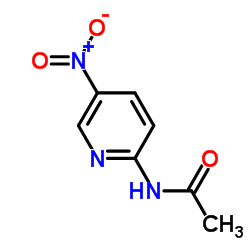 CAS#:5093-64-1
 CAS#:4214-57-7
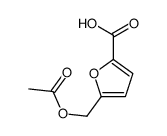 CAS#:90345-66-7
 CAS#:4663-97-2
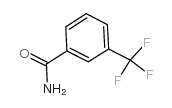 CAS#:1801-10-1
 CAS#:50533-97-6
This table shows customs‑related data including HS‑code, tariff and regulatory conditions for import and export.
| HS Code | 2933399090 |
|---|---|
| Summary | 2933399090. other compounds containing an unfused pyridine ring (whether or not hydrogenated) in the structure. VAT:17.0%. Tax rebate rate:13.0%. . MFN tariff:6.5%. General tariff:20.0% |
This table lists relevant public references with title, journal and publication metadata for this compound.
|
Injectable Peptide Decorated Functional Nanofibrous Hollow Microspheres to Direct Stem Cell Differentiation and Tissue Regeneration.
Adv. Funct. Mater. 25(3) , 350-360, (2015) Injectable microspheres are attractive stem cell carriers for minimally invasive procedures. For tissue regeneration, the microspheres need to present the critical cues to properly direct stem cell di... |
|
|
Xerogel-sequestered silanated organochalcogenide catalysts for bromination with hydrogen peroxide and sodium bromide.
Molecules 20 , 9616-39, (2015) While H2O2 is a powerful oxidant, decomposing into environmentally benign H2O and O2, a catalyst is often required for reactions with H2O2 to proceed at synthetically useful rates. Organotellurium and... |
|
|
Remarkably regioselective deacylation of cellulose esters using tetraalkylammonium salts of the strongly basic hydroxide ion.
Carbohydr. Polym. 111 , 25-32, (2014) Tetraalkylammonium hydroxides have been found to mediate regioselective deacylation of cellulose esters. This deacylation surprisingly shows substantial selectivity for the removal of the acyl groups ... |
This table collects all English aliases, systematic names and CAS‑related synonyms of the compound.
| 4-Dimethylaminopyrid |
| N4,N4-dimethylpyridin-4-amine |
| N-(4-Pyridyl)dimethylamine |
| 4-dimethylamino pyridine |
| 26DCLPY |
| 4-Dimethylaminopyridine |
| N,N-dimethylpyridin-4-amine |
| 5-22-09-00112 (Beilstein Handbook Reference) |
| MFCD00006244 |
| DMAP |
| DMAP solution |
| N,N-Dimethyl-4-pyridinamine |
| p-dimethylaminopyridine |
| EINECS 214-353-5 |
| 4-Dimethylami |
| dimethylaminopyridine |
| AURORA KA-6495 |
| 4-Dimethylaminepyridine |
| 4-(dimethylamino)pyridine |
| 4-(Dimethylamino)pyridine,N,N-Dimethylpyridin-4-amine,DMAP |
| 4-(N,N-dimethylamino)pyridine |
| UNII-PFP1R6P0S8 |
| N,N-Dimethylpyridin-4-amine DMAP |
This section contains frequently‑asked‑questions about this compound, including basic parameters, properties, storage conditions and corresponding answers.
| Q: How is the water solubility of 4-Dimethylaminopyridine? |
| A: Water solubility of 4-Dimethylaminopyridine: 76 g/L (25 ºC). |
| Q: What is the LogP of 4-Dimethylaminopyridine? |
| A: LogP of 4-Dimethylaminopyridine is 1.34. |
| Q: What is the boiling point of 4-Dimethylaminopyridine? |
| A: Boiling point of 4-Dimethylaminopyridine is 162 ºC (50 mmHg). |
| Q: What is the InChIKey of 4-Dimethylaminopyridine? |
| A: InChIKey of 4-Dimethylaminopyridine is VHYFNPMBLIVWCW-UHFFFAOYSA-N. |
| Q: What is the molecular formula of 4-Dimethylaminopyridine? |
| A: Molecular formula of 4-Dimethylaminopyridine is C7H10N2. |
| Q: What is the safety information for 4-Dimethylaminopyridine? |
| A: Safety information for 4-Dimethylaminopyridine: S36/37/39-S45-S28A-S26-S28-S36/37-S53-S27-S22. |
| Q: What is the CAS number of 4-Dimethylaminopyridine? |
| A: CAS number of 4-Dimethylaminopyridine is 1122-58-3. |
| Q: What are the uses of 4-Dimethylaminopyridine? |
| A: Main uses of 4-Dimethylaminopyridine: N-(4-pyridyl)dimethylamine is a biochemical reagent that can be used as a biological material or organic compound for life science related research. |
| Q: What is the melting point of 4-Dimethylaminopyridine? |
| A: Melting point of 4-Dimethylaminopyridine is 108-113 ºC. |
| Q: What are the downstream products of 4-Dimethylaminopyridine? |
| A: Related downstream products(CAS) of 4-Dimethylaminopyridine: 111055-14-2;110465-52-6;396092-82-3;55447-00-2;5093-64-1;4214-57-7;90345-66-7;4663-97-2;1801-10-1;50533-97-6. |
This table lists manufacturers and suppliers of this compound, including vendor names and product supply reference information.
| Shanghai Nianxing Industrial Co., Ltd |
| Dayang Chem (Hangzhou) Co., Ltd. |