AI3-22370
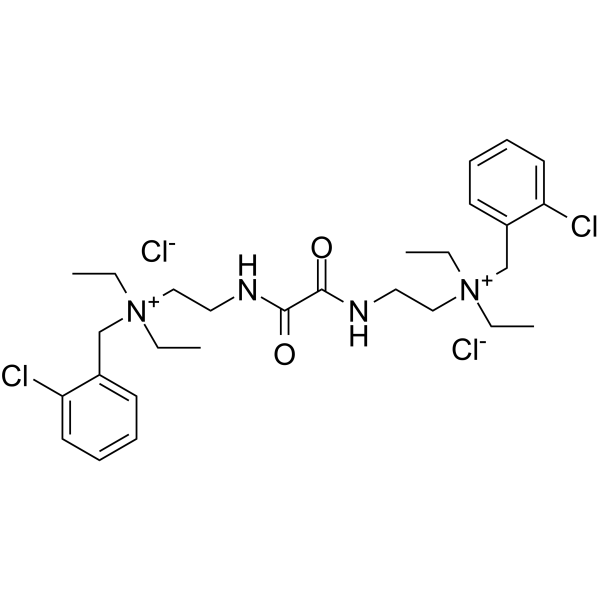
AI3-22370 structure
|
Common Name | AI3-22370 | ||
|---|---|---|---|---|
| CAS Number | 115-79-7 | Molecular Weight | 608.47100 | |
| Density | N/A | Boiling Point | N/A | |
| Molecular Formula | C28H42Cl4N4O2 | Melting Point | 196-199° | |
| MSDS | N/A | Flash Point | N/A | |
Use of AI3-22370Ambenonium (WIN 8077) chloride is an orally active and reversible inhibitor of Acetyicholinesterase (AChE) with high affinity. Ambenonium chloride inhibits human AChE with an IC50 value of 0.7 nM (hAChE)[1][2]. |
This table lists Chinese names, IUPAC names and various aliases of this chemical substance.
| Name | ambenonium chloride |
|---|---|
| Synonym | More Synonyms |
This table contains bioactivity, target information and biological‑assay experimental data of this compound.
| Description | Ambenonium (WIN 8077) chloride is an orally active and reversible inhibitor of Acetyicholinesterase (AChE) with high affinity. Ambenonium chloride inhibits human AChE with an IC50 value of 0.7 nM (hAChE)[1][2]. |
|---|---|
| Related Catalog | |
| Target |
Acetylcholinesterase:0.7 nM (IC50) Acetylcholinesterase:0.12 nM (Ki) Butyrylcholinesterase:7 μM (IC50) |
| In Vitro | Ambenonium chloride inhibits Acetyicholinesterase (AChE) in a rapidly reversible method, and shows strong inhibition with inhibition constant Ki of 0.12 nM against hAChE[1]. Ambenonium chloride shows inhibitory effect towards BChE with an IC50 value of 7 μM (hBChE)[2]. |
| In Vivo | Ambenonium chloride (6 mg/kg; p.o.; daily; 30-60 d) results an adverse effect on neuromuscular transmission in long-term administration, and induces hypersensitivity to stimulation in myasthenia gravis mice modle[3]. Ambenonium chloride (6 mg/kg; p.o.; daily; 14 d) decreases the number of AChR in motorend-plates[3]. Animal Model: Female Sprague Dawley rats (weight 250 g) with myasthenia gravis[3] Dosage: 6 mg/kg Administration: Oral gavage; daily; 14, 30, 60, 90, 360 days (Stop administration 24 h in advance) Result: Resulted general activity decreasing and hypersensity to stimulation in rats during day 30-60, but these behaviors disappeared on day 90. Induced degeneration and simplification of the postsynaptic folds, widening of the synaptic clefts, increased number of the postsynaptic vesicles, and reduction in the number of the AChR in the postsynaptic membrane on days 360. |
| References |
This table shows physicochemical parameters including melting point, boiling point, density, solubility and optical rotation. Missing data is marked as N/A.
| Melting Point | 196-199° |
|---|---|
| Molecular Formula | C28H42Cl4N4O2 |
| Molecular Weight | 608.47100 |
| Exact Mass | 606.20600 |
| PSA | 58.20000 |
| InChIKey | DXUUXWKFVDVHIK-UHFFFAOYSA-N |
| SMILES | CC[N+](CC)(CCNC(=O)C(=O)NCC[N+](CC)(CC)Cc1ccccc1Cl)Cc1ccccc1Cl.[Cl-].[Cl-] |
This table summarizes toxicological test data, acute & chronic toxicity and ecological hazard parameters for this chemical.
CHEMICAL IDENTIFICATION
HEALTH HAZARD DATAACUTE TOXICITY DATA
|
This table covers safety warnings, protective measures, incompatible substances and disposal guidelines for this compound.
| Hazard Codes | T+ |
|---|---|
| Risk Phrases | R28 |
| Safety Phrases | S28;S45;S36/S37 |
| RIDADR | UN 2811 6.1/PG 2 |
This table contains target information, in‑vitro & in‑vivo assay data for this compound.
This table collects all English aliases, systematic names and CAS‑related synonyms of the compound.
| Ambestigmin |
| EINECS 204-107-5 |
| Mytelase |
| Ambenonium Dichloride |
| MFCD00153762 |
This section contains frequently‑asked‑questions about this compound, including basic parameters, properties, storage conditions and corresponding answers.
| Q: What is the melting point of ambenonium chloride? |
| A: Melting point of ambenonium chloride is 196-199°. |
| Q: What is the polar surface area (PSA) of ambenonium chloride? |
| A: Polar surface area (PSA) of ambenonium chloride is 58.20000. |
| Q: What is the InChIKey of ambenonium chloride? |
| A: InChIKey of ambenonium chloride is DXUUXWKFVDVHIK-UHFFFAOYSA-N. |
| Q: What is the molecular weight of ambenonium chloride? |
| A: Molecular weight of ambenonium chloride is 608.47100. |
| Q: What is the English name of ambenonium chloride? |
| A: The English name of ambenonium chloride is ambenonium chloride. |
| Q: What is the SMILES notation of ambenonium chloride? |
| A: SMILES notation of ambenonium chloride is CC[N+](CC)(CCNC(=O)C(=O)NCC[N+](CC)(CC)Cc1ccccc1Cl)Cc1ccccc1Cl.[Cl-].[Cl-]. |
| Q: What English synonyms does ambenonium chloride have? |
| A: English synonyms of ambenonium chloride: Ambestigmin, EINECS 204-107-5, Mytelase, Ambenonium Dichloride, MFCD00153762. |
| Q: What is the molecular formula of ambenonium chloride? |
| A: Molecular formula of ambenonium chloride is C28H42Cl4N4O2. |
| Q: What are the uses of ambenonium chloride? |
| A: Main uses of ambenonium chloride: Ambenonium (WIN 8077) chloride is an orally active and reversible inhibitor of Acetyicholinesterase (AChE) with high affinity. Ambenonium chloride inhibits human AChE with an IC50 value of 0.7 nM (hAChE)[1][2]. |
| Q: What is the CAS number of ambenonium chloride? |
| A: CAS number of ambenonium chloride is 115-79-7. |
This table lists manufacturers and suppliers of this compound, including vendor names and product supply reference information.
| Shanghai Nianxing Industrial Co., Ltd |
| Dayang Chem (Hangzhou) Co., Ltd. |