Hexyl acetate
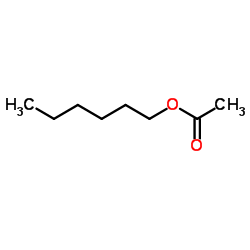
Hexyl acetate structure
|
Common Name | Hexyl acetate | ||
|---|---|---|---|---|
| CAS Number | 142-92-7 | Molecular Weight | 144.211 | |
| Density | 0.9±0.1 g/cm3 | Boiling Point | 171.5±3.0 °C at 760 mmHg | |
| Molecular Formula | C8H16O2 | Melting Point | −80 °C(lit.) | |
| MSDS | Chinese USA | Flash Point | 37.2±0.0 °C | |
| Symbol |

GHS02 |
Signal Word | Warning | |
This table lists Chinese names, IUPAC names and various aliases of this chemical substance.
| Name | hexyl acetate |
|---|---|
| Synonym | More Synonyms |
This table shows physicochemical parameters including melting point, boiling point, density, solubility and optical rotation. Missing data is marked as N/A.
| Density | 0.9±0.1 g/cm3 |
|---|---|
| Boiling Point | 171.5±3.0 °C at 760 mmHg |
| Melting Point | −80 °C(lit.) |
| Molecular Formula | C8H16O2 |
| Molecular Weight | 144.211 |
| Flash Point | 37.2±0.0 °C |
| Exact Mass | 144.115036 |
| PSA | 26.30000 |
| LogP | 2.83 |
| Vapour Pressure | 1.4±0.3 mmHg at 25°C |
| Index of Refraction | 1.413 |
| InChIKey | AOGQPLXWSUTHQB-UHFFFAOYSA-N |
| SMILES | CCCCCCOC(C)=O |
| Water Solubility | immiscible |
This table provides MSDS information including hazard classification, first‑aid, fire‑fighting, spill handling, operation and storage instructions.
This table summarizes toxicological test data, acute & chronic toxicity and ecological hazard parameters for this chemical.
CHEMICAL IDENTIFICATION
HEALTH HAZARD DATAACUTE TOXICITY DATA
|
This table covers safety warnings, protective measures, incompatible substances and disposal guidelines for this compound.
| Symbol |
GHS02 |
|---|---|
| Signal Word | Warning |
| Hazard Statements | H226 |
| Personal Protective Equipment | Eyeshields;Faceshields;full-face respirator (US);Gloves;multi-purpose combination respirator cartridge (US);type ABEK (EN14387) respirator filter |
| Hazard Codes | F+ |
| Risk Phrases | R10 |
| Safety Phrases | S16 |
| RIDADR | UN 3272 3/PG 3 |
| WGK Germany | 1 |
| RTECS | AI0875000 |
| Packaging Group | III |
| Hazard Class | 3 |
| HS Code | 2915390090 |
This table presents publicly reported synthetic routes, reaction conditions, reactants and product information of the compound.
This table lists upstream starting materials and downstream derivative products related to this chemical.
| Precursor 10 | |
|---|---|
| DownStream 10 | |
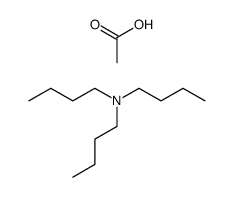 CAS#:7204-64-0
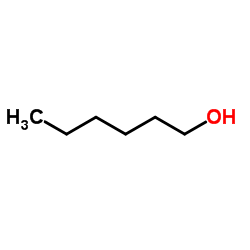 CAS#:111-27-3
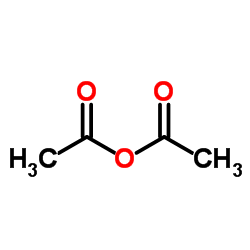 CAS#:108-24-7
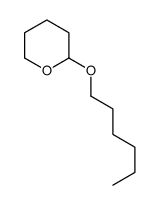 CAS#:1927-63-5
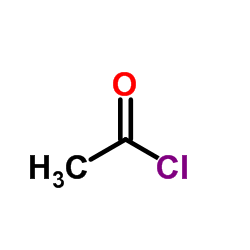 CAS#:75-36-5
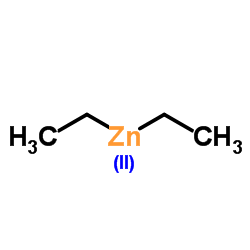 CAS#:557-20-0
 CAS#:66-25-1
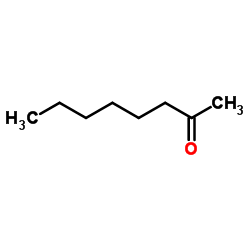 CAS#:111-13-7
 CAS#:111-25-1
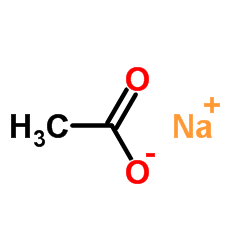 CAS#:127-09-3
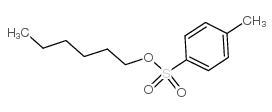 CAS#:3839-35-8
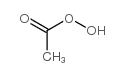 CAS#:79-21-0
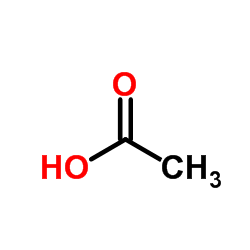 CAS#:64-19-7
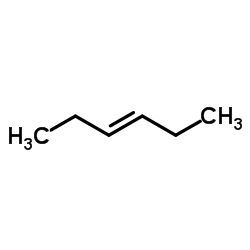 CAS#:592-41-6
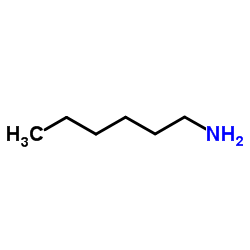 CAS#:111-26-2
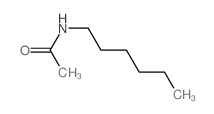 CAS#:7501-79-3
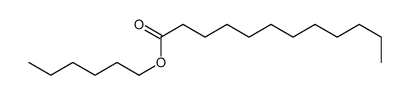 CAS#:34316-64-8
 CAS#:77304-63-3
This table shows customs‑related data including HS‑code, tariff and regulatory conditions for import and export.
| HS Code | 2915390090 |
|---|---|
| Summary | 2915390090. esters of acetic acid. VAT:17.0%. Tax rebate rate:13.0%. Supervision conditions:AB(certificate of inspection for goods inward,certificate of inspection for goods outward). MFN tariff:5.5%. General tariff:30.0% |
This table lists relevant public references with title, journal and publication metadata for this compound.
|
How do esters and dimethyl sulphide concentrations affect fruity aroma perception of red wine? Demonstration by dynamic sensory profile evaluation.
Food Chem. 194 , 196-200, (2015) Our study focused on variations in wine aroma perception and molecular composition during tasting over a period of 30min. In parallel, dynamic analytical and sensory methods were applied to study chan... |
|
|
Identification of olfactory receptor neurons in Uraba lugens (Lepidoptera: Nolidae) and its implications for host range.
J. Insect Physiol. 78 , 33-46, (2015) Phytophagous insects detect volatile compounds produced by host and non-host plants, using species-specific sets of olfactory receptor neurons (ORNs). To investigate the relationship between the range... |
|
|
Volatile Compounds from Grape Skin, Juice and Wine from Five Interspecific Hybrid Grape Cultivars Grown in Québec (Canada) for Wine Production.
Molecules 20 , 10980-1016, (2015) Developed from crosses between Vitis vinifera and North American Vitis species, interspecific hybrid grape varieties are becoming economically significant in northern areas, where they are now extensi... |
This table contains target information, in‑vitro & in‑vivo assay data for this compound.
This table collects all English aliases, systematic names and CAS‑related synonyms of the compound.
| Acetic acid hexylester |
| n-Hexyl ethanoate |
| Acodazol |
| Acodazolum [Latin] |
| ACETIC ACID HEXYL ESTER |
| n-hexyl acetate |
| N-methyl-N-[4-(7-methyl-1H-imidazo[4,5-f]quinolin-9-ylamino)-phenyl]-acetamide |
| AcO-n-hexyl,hexyl ester |
| EINECS 205-572-7 |
| n-Hexylacetate |
| Acodazole [INN] |
| MFCD00009524 |
| acodazole hydrochloride |
| Acetic acid, hexyl ester |
| Acetic acid, n-hexyl ester |
| Acetic acid n-hexyl ester |
| Capryl acetate |
| hexyl acetic acid ester |
| HEXYL ETHANOATE |
| Acodazolum |
| ACODAZOLE |
| Acodazol [Spanish] |
| 1-Hexyl acetate |
| Hexyl acetate |
This section contains frequently‑asked‑questions about this compound, including basic parameters, properties, storage conditions and corresponding answers.
| Q: How is the water solubility of hexyl acetate? |
| A: Water solubility of hexyl acetate: immiscible. |
| Q: What is the boiling point of hexyl acetate? |
| A: Boiling point of hexyl acetate is 171.5±3.0 °C at 760 mmHg. |
| Q: What is the CAS number of hexyl acetate? |
| A: CAS number of hexyl acetate is 142-92-7. |
| Q: What is the English name of hexyl acetate? |
| A: The English name of hexyl acetate is hexyl acetate. |
| Q: What is the polar surface area (PSA) of hexyl acetate? |
| A: Polar surface area (PSA) of hexyl acetate is 26.30000. |
| Q: What are the upstream materials of hexyl acetate? |
| A: Related upstream materials(CAS) of hexyl acetate: 7204-64-0;111-27-3;108-24-7;1927-63-5;75-36-5;557-20-0;66-25-1;111-13-7;111-25-1;127-09-3. |
| Q: What is the molecular formula of hexyl acetate? |
| A: Molecular formula of hexyl acetate is C8H16O2. |
| Q: What is the SMILES notation of hexyl acetate? |
| A: SMILES notation of hexyl acetate is CCCCCCOC(C)=O. |
| Q: What is the molecular weight of hexyl acetate? |
| A: Molecular weight of hexyl acetate is 144.211. |
| Q: What is the melting point of hexyl acetate? |
| A: Melting point of hexyl acetate is −80 °C(lit.). |
This table lists manufacturers and suppliers of this compound, including vendor names and product supply reference information.
| Shanghai Nianxing Industrial Co., Ltd |
| Dayang Chem (Hangzhou) Co., Ltd. |
| Henan Tianfu Chemical Co., Ltd. |