2-Ethylcaproic acid
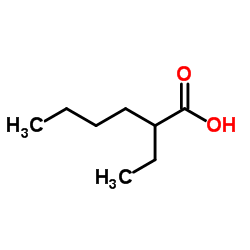
2-Ethylcaproic acid structure
|
Common Name | 2-Ethylcaproic acid | ||
|---|---|---|---|---|
| CAS Number | 149-57-5 | Molecular Weight | 144.211 | |
| Density | 0.9±0.1 g/cm3 | Boiling Point | 228.0±0.0 °C at 760 mmHg | |
| Molecular Formula | C8H16O2 | Melting Point | -59 °C | |
| MSDS | Chinese USA | Flash Point | 116.6±6.9 °C | |
| Symbol |

GHS08 |
Signal Word | Warning | |
| Name | 2-Ethylhexanoic acid |
|---|---|
| Synonym | More Synonyms |
| Density | 0.9±0.1 g/cm3 |
|---|---|
| Boiling Point | 228.0±0.0 °C at 760 mmHg |
| Melting Point | -59 °C |
| Molecular Formula | C8H16O2 |
| Molecular Weight | 144.211 |
| Flash Point | 116.6±6.9 °C |
| Exact Mass | 144.115036 |
| PSA | 37.30000 |
| LogP | 2.72 |
| Vapour density | 4.98 (vs air) |
| Vapour Pressure | 0.0±0.9 mmHg at 25°C |
| Index of Refraction | 1.435 |
| InChIKey | OBETXYAYXDNJHR-UHFFFAOYSA-N |
| SMILES | CCCCC(CC)C(=O)O |
| Stability | Stable. Combustible. Incompatible with strong oxidizing agents, reducing agents, bases. |
| Water Solubility | 2 g/L (20 ºC) |
CHEMICAL IDENTIFICATION
HEALTH HAZARD DATAACUTE TOXICITY DATA
MUTATION DATA
|
| Symbol |
GHS08 |
|---|---|
| Signal Word | Warning |
| Hazard Statements | H361d |
| Precautionary Statements | P280 |
| Personal Protective Equipment | Eyeshields;Faceshields;full-face respirator (US);Gloves;multi-purpose combination respirator cartridge (US);type ABEK (EN14387) respirator filter |
| Hazard Codes | Xn:Harmful |
| Risk Phrases | R63 |
| Safety Phrases | S36/37 |
| RIDADR | UN 3265 8/PG 2 |
| WGK Germany | 1 |
| RTECS | MO7700000 |
| Packaging Group | II |
| Hazard Class | 6.1 |
| HS Code | 29159080 |
| Precursor 8 | |
|---|---|
| DownStream 10 | |
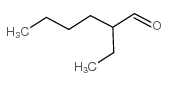 CAS#:123-05-7
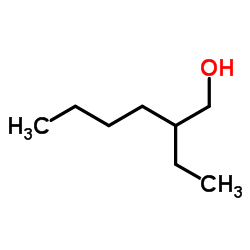 CAS#:104-76-7
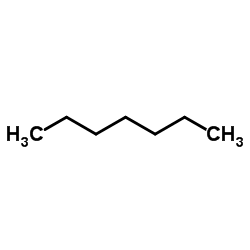 CAS#:142-82-5
 CAS#:201230-82-2
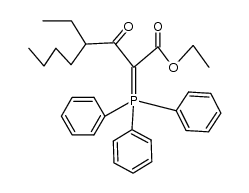 CAS#:62251-85-8
 CAS#:187737-37-7
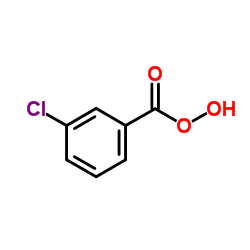 CAS#:937-14-4
 CAS#:73590-85-9
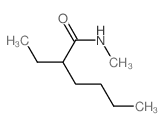 CAS#:1114-75-6
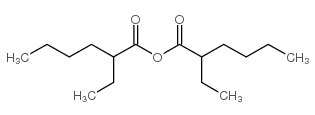 CAS#:36765-89-6
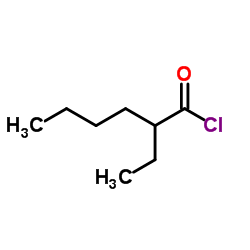 CAS#:760-67-8
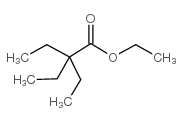 CAS#:34666-17-6
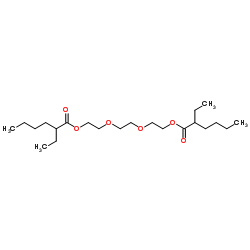 CAS#:94-28-0
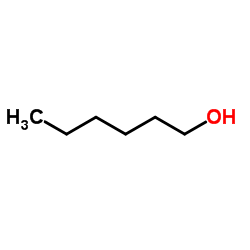 CAS#:111-27-3
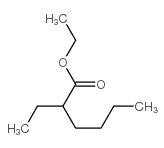 CAS#:2983-37-1
 CAS#:592-78-9
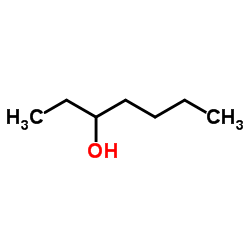 CAS#:589-82-2
 CAS#:592-77-8
| HS Code | 2915900090 |
|---|---|
| Summary | 2915900090 other saturated acyclic monocarboxylic acids and their anhydrides, halides, peroxides and peroxyacids; their halogenated, sulphonated, nitrated or nitrosated derivatives VAT:17.0% Tax rebate rate:9.0% Supervision conditions:AB(certificate of inspection for goods inward,certificate of inspection for goods outward) MFN tariff:5.5% General tariff:30.0% |
|
Carbonic anhydrase inhibitors. Inhibition of the β-class enzymes from the fungal pathogens Candida albicans and Cryptococcus neoformans with branched aliphatic/aromatic carboxylates and their derivatives.
Bioorg. Med. Chem. Lett. 21 , 2521-6, (2011) The inhibition of the β-carbonic anhydrases (CAs, EC 4.2.1.1) from the pathogenic fungi Cryptococcus neoformans (Can2) and Candida albicans (Nce103) with a series of 25 branched aliphatic and aromatic... |
|
|
Structural variation governs substrate specificity for organic anion transporter (OAT) homologs. Potential remote sensing by OAT family members.
J. Biol. Chem. 282 , 23841-53, (2007) Organic anion transporters (OATs, SLC22) interact with a remarkably diverse array of endogenous and exogenous organic anions. However, little is known about the structural features that determine thei... |
|
|
Enabling unassisted solar water splitting by iron oxide and silicon.
Nat. Commun. 6 , 7447, (2015) Photoelectrochemical (PEC) water splitting promises a solution to the problem of large-scale solar energy storage. However, its development has been impeded by the poor performance of photoanodes, par... |
|
Name: Luminescence-based cell-based primary high throughput screening assay to identify ago...
Source: The Scripps Research Institute Molecular Screening Center
Target: mu-type opioid receptor isoform MOR-1 [Homo sapiens]
External Id: OPRM1-OPRD1_AG_LUMI_1536_1X%ACT PRUN
|
|
Name: Fluorescence-based cell-based primary high throughput screening assay to identify ago...
Source: The Scripps Research Institute Molecular Screening Center
Target: muscarinic acetylcholine receptor M1 [Homo sapiens]
External Id: CHRM1_AG_FLUO8_1536_1X%ACT PRUN
|
|
Name: Cytochrome P450 Family 1 Subfamily A Member 2 (CYP1A2) small molecule antagonists: lu...
Source: 824
External Id: CYP273
|
|
Name: Fluorescence-based cell-based primary high throughput screening assay to identify pos...
Source: The Scripps Research Institute Molecular Screening Center
Target: muscarinic acetylcholine receptor M1 [Homo sapiens]
External Id: CHRM1_PAM_FLUO8_1536_1X%ACT PRUN
|
|
Name: Fluorescence polarization-based biochemical high throughput primary assay to identify...
Source: The Scripps Research Institute Molecular Screening Center
Target: RecName: Full=Sialate O-acetylesterase; AltName: Full=H-Lse; AltName: Full=Sialic acid-specific 9-O-acetylesterase; Flags: Precursor [Homo sapiens]
External Id: SIAE_INH_FP_1536_1X%INH PRUN
|
|
Name: p53 small molecule agonists, cell-based qHTS assay: qHTS cell viability counter scree...
Source: 824
Target: N/A
External Id: P53600
|
|
Name: p53 small molecule agonists, cell-based qHTS assay with rat liver microsomes: qHTS ce...
Source: 824
Target: N/A
External Id: P53MS958
|
|
Name: p53 small molecule agonists, cell-based qHTS assay with rat liver microsomes: Summary
Source: 824
External Id: P53MS482
|
|
Name: p53 small molecule agonists, cell-based qHTS assay with human liver microsomes
Source: 824
Target: tumor suppressor p53 [Homo sapiens]
External Id: P53MS233
|
| Octanoic Acid |
| 2-ethyl-1-hexanoic acid |
| 2-ETHYLHEXOIC ACID |
| 2-ethyl-hexansyra |
| QVY4&2 |
| Ethylhexanoic acid |
| CARBOXYLIC ACID C8 |
| EINECS 205-743-6 |
| 2-Ethylcaproic acid |
| 2-ethylhexanoic |
| 2-Ethylhexanoic acid |
| 2-ethyl-hexanoic acid |
| MFCD00002675 |
| Neodymoctic acid |
| Ethylhexoic acid |
The content on this webpage is sourced from various professional data sources. If you have any questions or concerns regarding the content, please feel free to contact service1@chemsrc.com.
- Shanghai Nianxing Industrial Co., Ltd
- China
- Product Name: 2-Ethylcaproic acid
- Price: Check
- Purity: 98.0%
- Delivery: 10 Day
- Contact: Yang
- Email: sales@echemcloud.com
- Dayang Chem (Hangzhou) Co., Ltd.
- China
- Product Name: 2-Ethylhexanoic acid
- Price: $Inquiry/100g $Inquiry/1kg $Inquiry/100kg $Inquiry/1000kg
- Purity: 98.0%
- Delivery: Inquiry
- Contact: Ms Wang
- Email: enquiry@dycnchem.com
- Henan Tianfu Chemical Co., Ltd.
- China
- Product Name: 2-Ethylhexanoic acid
- Price: $Inquiry/1kg $Inquiry/25kg $Inquiry/1000kg $Inquiry/10ton
- Purity: 99.0%
- Delivery: Inquiry
- Contact: Anson
- Email: info@tianfuchem.com
- Zhongshan Xingrui Chemical Co. , Ltd.
- China
- Product Name: 2-Ethylcaproic acid
- Price: ¥Inquiry/25kg
- Purity: 99.0%
- Delivery: Inquiry
- Contact: Wang Jie

- Email: 3096638339@qq.com
Get all suppliers and price by the below link: