UNII:GE16EV367Q
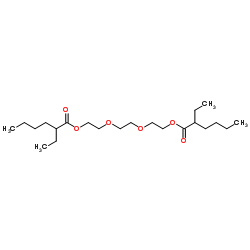
UNII:GE16EV367Q structure
|
Common Name | UNII:GE16EV367Q | ||
|---|---|---|---|---|
| CAS Number | 94-28-0 | Molecular Weight | 402.565 | |
| Density | 1.0±0.1 g/cm3 | Boiling Point | 463.5±25.0 °C at 760 mmHg | |
| Molecular Formula | C22H42O6 | Melting Point | −50 °C(lit.) | |
| MSDS | N/A | Flash Point | 194.6±23.2 °C | |
This table lists Chinese names, IUPAC names and various aliases of this chemical substance.
| Name | 2-[2-[2-(2-ethylhexanoyloxy)ethoxy]ethoxy]ethyl 2-ethylhexanoate |
|---|---|
| Synonym | More Synonyms |
This table shows physicochemical parameters including melting point, boiling point, density, solubility and optical rotation. Missing data is marked as N/A.
| Density | 1.0±0.1 g/cm3 |
|---|---|
| Boiling Point | 463.5±25.0 °C at 760 mmHg |
| Melting Point | −50 °C(lit.) |
| Molecular Formula | C22H42O6 |
| Molecular Weight | 402.565 |
| Flash Point | 194.6±23.2 °C |
| Exact Mass | 402.298126 |
| PSA | 71.06000 |
| LogP | 5.57 |
| Vapour Pressure | 0.0±1.1 mmHg at 25°C |
| Index of Refraction | 1.451 |
| InChIKey | FRQDZJMEHSJOPU-UHFFFAOYSA-N |
| SMILES | CCCCC(CC)C(=O)OCCOCCOCCOC(=O)C(CC)CCCC |
This table provides MSDS information including hazard classification, first‑aid, fire‑fighting, spill handling, operation and storage instructions.
Synonym: SECTION 2 - COMPOSITION, INFORMATION ON INGREDIENTS
Risk Phrases: None Listed. SECTION 3 - HAZARDS IDENTIFICATION EMERGENCY OVERVIEW Not available. Potential Health Effects Eye: May cause eye irritation. Skin:
May cause skin irritation. Ingestion: May cause gastrointestinal irritation with nausea, vomiting and diarrhea. Inhalation: May cause respiratory tract irritation. Chronic: Not available. SECTION 4 - FIRST AID MEASURES Eyes: Flush eyes with plenty of water for at least 15 minutes, occasionally lifting the upper and lower eyelids. Get medical aid immediately. Skin: Get medical aid. Flush skin with plenty of water for at least 15 minutes while removing contaminated clothing and shoes. Wash clothing before reuse. Ingestion: If victim is conscious and alert, give 2-4 cupfuls of milk or water. Never give anything by mouth to an unconscious person. Get medical aid immediately. Inhalation: Get medical aid immediately. Remove from exposure and move to fresh air immediately. If not breathing, give artificial respiration. If breathing is difficult, give oxygen. Notes to Physician: SECTION 5 - FIRE FIGHTING MEASURES General Information: As in any fire, wear a self-contained breathing apparatus in pressure-demand, MSHA/NIOSH (approved or equivalent), and full protective gear. During a fire, irritating and highly toxic gases may be generated by thermal decomposition or combustion. Extinguishing Media: Use agent most appropriate to extinguish fire. Use water spray, dry chemical, carbon dioxide, or appropriate foam. SECTION 6 - ACCIDENTAL RELEASE MEASURES General Information: Use proper personal protective equipment as indicated in Section 8. Spills/Leaks: Absorb spill with inert material (e.g. vermiculite, sand or earth), then place in suitable container. Clean up spills immediately, observing precautions in the Protective Equipment section. Provide ventilation. SECTION 7 - HANDLING and STORAGE Handling: Wash thoroughly after handling. Remove contaminated clothing and wash before reuse. Use only in a well-ventilated area. Avoid contact with eyes, skin, and clothing. Avoid ingestion and inhalation. Storage: Keep container closed when not in use. Store in a cool, dry, well-ventilated area away from incompatible substances. SECTION 8 - EXPOSURE CONTROLS, PERSONAL PROTECTION Engineering Controls: Use adequate ventilation to keep airborne concentrations low. Exposure Limits CAS# 94-28-0: Personal Protective Equipment Eyes: Wear appropriate protective eyeglasses or chemical safety goggles as described by OSHA's eye and face protection regulations in 29 CFR 1910.133 or European Standard EN166. Skin: Wear appropriate protective gloves to prevent skin exposure. Clothing: Wear appropriate protective clothing to prevent skin exposure. Respirators: Follow the OSHA respirator regulations found in 29 CFR 1910.134 or European Standard EN 149. Use a NIOSH/MSHA or European Standard EN 149 approved respirator if exposure limits are exceeded or if irritation or other symptoms are experienced. SECTION 9 - PHYSICAL AND CHEMICAL PROPERTIES Physical State: Liquid Color: colorless Odor: Not available. pH: Not available. Vapor Pressure: Not available. Viscosity: Not available. Boiling Point: 219 deg C @ 5.00mm Hg Freezing/Melting Point: -50 deg C Autoignition Temperature: 725 deg F ( 385.00 deg C) Flash Point: 390 deg F ( 198.89 deg C) Explosion Limits, lower: 0.46 volume % Explosion Limits, upper: Not available. Decomposition Temperature: Solubility in water: Negligible. Specific Gravity/Density: .9670g/cm3 Molecular Formula: C22H42O6 Molecular Weight: 402.57 SECTION 10 - STABILITY AND REACTIVITY Chemical Stability: Stable under normal temperatures and pressures. Conditions to Avoid: Incompatible materials, strong oxidants. Incompatibilities with Other Materials: Strong oxidizing agents. Hazardous Decomposition Products: Irritating and toxic fumes and gases. Hazardous Polymerization: Will not occur. SECTION 11 - TOXICOLOGICAL INFORMATION RTECS#: CAS# 94-28-0: MO7725000 LD50/LC50: CAS# 94-28-0: Dermal, guinea pig: LD50 = >20 mL/kg; Oral, mouse: LD50 = >3200 mg/kg; Oral, rat: LD50 = 31 gm/kg; Skin, rabbit: LD50 = 14100 uL/kg. Carcinogenicity: Triethylene glycol bis(2-ethylhexanoate) - Not listed by ACGIH, IARC, or NTP. Other: See actual entry in RTECS for complete information. SECTION 12 - ECOLOGICAL INFORMATION Ecotoxicity: Fish: Fathead Minnow: > 100 microliters/l; 96 hr. SECTION 13 - DISPOSAL CONSIDERATIONS Dispose of in a manner consistent with federal, state, and local regulations. SECTION 14 - TRANSPORT INFORMATION IATA Not regulated as a hazardous material. IMO Not regulated as a hazardous material. RID/ADR Not regulated as a hazardous material. SECTION 15 - REGULATORY INFORMATION European/International Regulations European Labeling in Accordance with EC Directives Hazard Symbols: Not available. Risk Phrases: Safety Phrases: S 24/25 Avoid contact with skin and eyes. WGK (Water Danger/Protection) CAS# 94-28-0: 1 Canada CAS# 94-28-0 is listed on Canada's DSL List. CAS# 94-28-0 is not listed on Canada's Ingredient Disclosure List. US FEDERAL TSCA CAS# 94-28-0 is listed on the TSCA inventory. SECTION 16 - ADDITIONAL INFORMATION MSDS Creation Date: 6/02/1998 Revision #3 Date: 2/04/2004 The information above is believed to be accurate and represents the best information currently available to us. However, we make no warranty of merchantability or any other warranty, express or implied, with respect to such information, and we assume no liability resulting from its use. Users should make their own investigations to determine the suitability of the information for their particular purposes. In no way shall the company be liable for any claims, losses, or damages of any third party or for lost profits or any special, indirect, incidental, consequential or exemplary damages, howsoever arising, even if the company has been advised of the possibility of such damages. SECTION 16 - ADDITIONAL INFORMATION N/A |
This table summarizes toxicological test data, acute & chronic toxicity and ecological hazard parameters for this chemical.
CHEMICAL IDENTIFICATION
HEALTH HAZARD DATAACUTE TOXICITY DATA
|
This table covers safety warnings, protective measures, incompatible substances and disposal guidelines for this compound.
| Hazard Codes | Xn,Xi |
|---|---|
| Risk Phrases | R36/37/38:Irritating to eyes, respiratory system and skin . R22:Harmful if swallowed. |
| Safety Phrases | 24/25 |
| WGK Germany | - |
| RTECS | MO7725000 |
| HS Code | 2918990090 |
This table presents publicly reported synthetic routes, reaction conditions, reactants and product information of the compound.
|
~%
UNII:GE16EV367Q CAS#:94-28-0 |
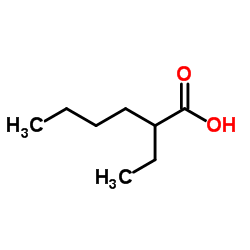
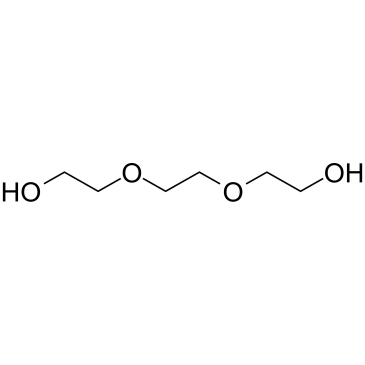
| Literature: US2011/87044 A1, ; Page/Page column 5; 6 ; |
This table shows customs‑related data including HS‑code, tariff and regulatory conditions for import and export.
| HS Code | 2918990090 |
|---|---|
| Summary | 2918990090. other carboxylic acids with additional oxygen function and their anhydrides, halides, peroxides and peroxyacids; their halogenated, sulphonated, nitrated or nitrosated derivatives. VAT:17.0%. Tax rebate rate:13.0%. . MFN tariff:6.5%. General tariff:30.0% |
This table contains target information, in‑vitro & in‑vivo assay data for this compound.
This table collects all English aliases, systematic names and CAS‑related synonyms of the compound.
| Hexanoic acid, 2-ethyl-, 1,2-ethanediylbis(oxy-2,1-ethanediyl) ester |
| Flexol 3GO |
| 1,2-Ethanediylbis(oxy-2,1-ethanediyl) bis(2-ethylhexanoate) |
| Ethane-1,2-diylbis(oxyethane-2,1-diyl) bis(2-ethylhexanoate) |
| EINECS 202-319-2 |
| triethylene glycol di-2-ethylhexanoate |
| MFCD00072285 |
| 2-ethyl-hexanoic acid |
| UNII:GE16EV367Q |
| Flexol plasticizer 3GO |
This section contains frequently‑asked‑questions about this compound, including basic parameters, properties, storage conditions and corresponding answers.
| Q: What is the SMILES notation of 2-[2-[2-(2-ethylhexanoyloxy)ethoxy]ethoxy]ethyl 2-ethylhexanoate? |
| A: SMILES notation of 2-[2-[2-(2-ethylhexanoyloxy)ethoxy]ethoxy]ethyl 2-ethylhexanoate is CCCCC(CC)C(=O)OCCOCCOCCOC(=O)C(CC)CCCC. |
| Q: What is the English name of 2-[2-[2-(2-ethylhexanoyloxy)ethoxy]ethoxy]ethyl 2-ethylhexanoate? |
| A: The English name of 2-[2-[2-(2-ethylhexanoyloxy)ethoxy]ethoxy]ethyl 2-ethylhexanoate is 2-[2-[2-(2-ethylhexanoyloxy)ethoxy]ethoxy]ethyl 2-ethylhexanoate. |
| Q: What is the molecular weight of 2-[2-[2-(2-ethylhexanoyloxy)ethoxy]ethoxy]ethyl 2-ethylhexanoate? |
| A: Molecular weight of 2-[2-[2-(2-ethylhexanoyloxy)ethoxy]ethoxy]ethyl 2-ethylhexanoate is 402.565. |
| Q: What is the CAS number of 2-[2-[2-(2-ethylhexanoyloxy)ethoxy]ethoxy]ethyl 2-ethylhexanoate? |
| A: CAS number of 2-[2-[2-(2-ethylhexanoyloxy)ethoxy]ethoxy]ethyl 2-ethylhexanoate is 94-28-0. |
| Q: What is the melting point of 2-[2-[2-(2-ethylhexanoyloxy)ethoxy]ethoxy]ethyl 2-ethylhexanoate? |
| A: Melting point of 2-[2-[2-(2-ethylhexanoyloxy)ethoxy]ethoxy]ethyl 2-ethylhexanoate is −50 °C(lit.). |
| Q: What is the molecular formula of 2-[2-[2-(2-ethylhexanoyloxy)ethoxy]ethoxy]ethyl 2-ethylhexanoate? |
| A: Molecular formula of 2-[2-[2-(2-ethylhexanoyloxy)ethoxy]ethoxy]ethyl 2-ethylhexanoate is C22H42O6. |
| Q: What is the LogP of 2-[2-[2-(2-ethylhexanoyloxy)ethoxy]ethoxy]ethyl 2-ethylhexanoate? |
| A: LogP of 2-[2-[2-(2-ethylhexanoyloxy)ethoxy]ethoxy]ethyl 2-ethylhexanoate is 5.57. |
| Q: What is the boiling point of 2-[2-[2-(2-ethylhexanoyloxy)ethoxy]ethoxy]ethyl 2-ethylhexanoate? |
| A: Boiling point of 2-[2-[2-(2-ethylhexanoyloxy)ethoxy]ethoxy]ethyl 2-ethylhexanoate is 463.5±25.0 °C at 760 mmHg. |
| Q: What is the safety information for 2-[2-[2-(2-ethylhexanoyloxy)ethoxy]ethoxy]ethyl 2-ethylhexanoate? |
| A: Safety information for 2-[2-[2-(2-ethylhexanoyloxy)ethoxy]ethoxy]ethyl 2-ethylhexanoate: 24/25. |
| Q: What English synonyms does 2-[2-[2-(2-ethylhexanoyloxy)ethoxy]ethoxy]ethyl 2-ethylhexanoate have? |
| A: English synonyms of 2-[2-[2-(2-ethylhexanoyloxy)ethoxy]ethoxy]ethyl 2-ethylhexanoate: Hexanoic acid, 2-ethyl-, 1,2-ethanediylbis(oxy-2,1-ethanediyl) ester, Flexol 3GO, 1,2-Ethanediylbis(oxy-2,1-ethanediyl) bis(2-ethylhexanoate), Ethane-1,2-diylbis(oxyethane-2,1-diyl) bis(2-ethylhexanoate), EINECS 202-319-2, triethylene glycol di-2-ethylhexanoate, MFCD00072285, 2-ethyl-hexanoic acid, UNII:GE16EV367Q, Flexol plasticizer 3GO. |
This table lists manufacturers and suppliers of this compound, including vendor names and product supply reference information.
| Shanghai Nianxing Industrial Co., Ltd |
| Dayang Chem (Hangzhou) Co., Ltd. |
| Henan Tianfu Chemical Co., Ltd. |