Tetrahydrobiopterin
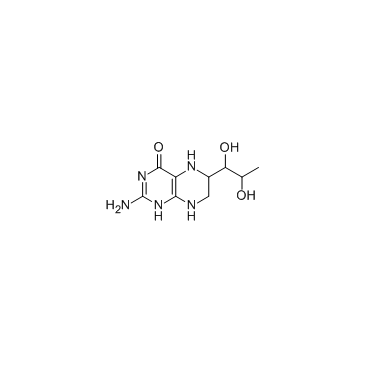
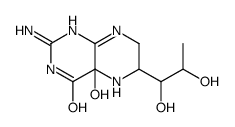
Tetrahydrobiopterin structure
|
Common Name | Tetrahydrobiopterin | ||
|---|---|---|---|---|
| CAS Number | 17528-72-2 | Molecular Weight | 241.25 | |
| Density | 1.89g/cm3 | Boiling Point | 506.6ºC at 760mmHg | |
| Molecular Formula | C9H15N5O3 | Melting Point | N/A | |
| MSDS | N/A | Flash Point | 260.2ºC | |
Use of TetrahydrobiopterinTetrahydrobiopterin is a cofactor of the aromatic amino acid hydroxylases enzymes and also acts as an essential cofactor for all nitric oxide synthase (NOS) isoforms. |
This table lists Chinese names, IUPAC names and various aliases of this chemical substance.
| Name | 5,6,7,8-tetrahydrobiopterin |
|---|---|
| Synonym | More Synonyms |
This table contains bioactivity, target information and biological‑assay experimental data of this compound.
| Description | Tetrahydrobiopterin is a cofactor of the aromatic amino acid hydroxylases enzymes and also acts as an essential cofactor for all nitric oxide synthase (NOS) isoforms. |
|---|---|
| Related Catalog | |
| Target |
Human Endogenous Metabolite |
| In Vitro | MicMicroglial cell cultures under hyperoxia are supplemented or not with an effective dose of Tetrahydrobiopterin (BH4) (100 μM). Exposure of microglial cells to hyperoxia-induced oxidative stress for 24 h reveals a robust increase in TSP-1 mRNA expression and protein compare to normoxia (21% O2). Tetrahydrobiopterin supplementation significantly prevents hyperoxia-induced microglial activation by diminishing Iba-1 and TSP-1 expression and prevents microvascular injury in choroidal explants[1]. |
| In Vivo | To assess the levels of Tetrahydrobiopterin in the retina, three to five pools of retinas are collected from WT and hph-1mice at postnatal age 7, 14, and 22 and evaluated by LC-MS/MS. LC-MS/MS analysis confirm a significant decrease by approximately 90% in the concentration levels of Tetrahydrobiopterin in retinal tissue from hph-1 mice (0.0009±0.0006; p<0.0001, 0.01±0.001; p<0.0001 and 2.45±0.40; p<0.005) compare to the WT group (0.014±0.001, 0.092±0.01, and 23.13±6.44) at P7, P14, and P22, respectively[1]. |
| Kinase Assay | Microglia cell line (SIM-A9) is used and cultured. Briefly, microglial cells (800, 000 cells per well) are cultured in 6-well plates with DMEM/F12 (1:1) supplementing with 10% fetal bovine serum (FBS), 5% of horse serum (HS), and 1% penicillin/streptomycin. After 24 h, the cells are starved with DMEM/F12 (1:1) free of FBS and HS for 6 h. Then, microglial cells cultures in presence or absence of 100 μM of Tetrahydrobiopterin are exposed to hyperoxia (75% oxygen and 25% nitrogen) in a modular incubator chamber and maintained in a humidified CO2 incubator at 37 °C for 24 h. Microglial cells in matching controls are incubated at 37 °C in an incubator with 95% air and 5% CO2 and collected at the same time point. Cell lysates are quickly processed for RNA. The conditioning media is stored at -80 and later used in choroidal explant assay[1]. |
| Animal Admin | Mice pups are exposed with their mothers in a 75% oxygen environment from postnatal day 7 to P9 using oxycycler to induce retinal vaso-obliteration (VO). Animals are anesthetized and injected intravitreally at P7 with 100 μM of Tetrahydrobiopterin or vehicle (sterile PBS 1×) using a syringe equipped with 50-gauge glass capillary. At P9, mice pups are sacrificed and retinas are dissected and stained overnight at 4 °C with fluorescein-labeled Griffonia Simplicifolia Lectin 1 (GSL 1), isolectin B4 (1:100) with 1 mM CaCl2 in PBS. Quantification of VO is assessed using the computer software[1]. |
| References |
This table shows physicochemical parameters including melting point, boiling point, density, solubility and optical rotation. Missing data is marked as N/A.
| Density | 1.89g/cm3 |
|---|---|
| Boiling Point | 506.6ºC at 760mmHg |
| Molecular Formula | C9H15N5O3 |
| Molecular Weight | 241.25 |
| Flash Point | 260.2ºC |
| PSA | 136.29000 |
| LogP | 0.76100 |
| Storage condition | 2-8℃ |
This table summarizes toxicological test data, acute & chronic toxicity and ecological hazard parameters for this chemical.
CHEMICAL IDENTIFICATION
HEALTH HAZARD DATAACUTE TOXICITY DATA
|
This table presents publicly reported synthetic routes, reaction conditions, reactants and product information of the compound.
|
~%
Tetrahydrobiopterin CAS#:17528-72-2 |
| Literature: Analytical Chemistry, , vol. 55, p. 1458 - 1462 |
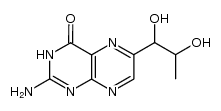
This table lists upstream starting materials and downstream derivative products related to this chemical.
| Precursor 1 | |
|---|---|
| DownStream 3 | |
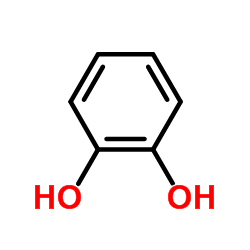 CAS#:120-80-9
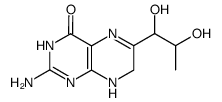 CAS#:7644-44-2
 CAS#:70110-58-6
This table contains target information, in‑vitro & in‑vivo assay data for this compound.
|
Name: A screen for small molecules that modulate mitochondrial supercomplex formation
Source: ICCB-Longwood/NSRB Screening Facility, Harvard Medical School
Target: N/A
External Id: HMS1482
|
|
Name: Stabilization of p53 in human papillomavirus-positive cells
Source: ICCB-Longwood/NSRB Screening Facility, Harvard Medical School
Target: Cellular tumor antigen p53
External Id: HMS1485
|
This table collects all English aliases, systematic names and CAS‑related synonyms of the compound.
| 6R-BH4 |
| 1,2-Propanediol, 1-(2-amino-5,6,7,8-tetrahydro-4-hydroxy-6-pteridinyl)-, hydrochloride (1:2) |
| TETRAHYDRO-L-BIOPTERIN,DIHYDROCHLORIDE |
| 2-Amino-6-(1,2-dihydroxypropyl)-5,6,7,8-tetrahydro-4(1H)-pteridinone dihydrochloride |
| THB,2HCL |
| (6R)-BH4 2HCL |
| Tetrahydrobiopterin dihydrochloride |
| (6R)-5,6,7,8-TETRAHYDRO-BIOPTERIN DIHYDROCHLORIDE |
| (6R)-5,6,7,8-TETRAHYDRO-L-BIOPTERIN DIHYDROCHLORIDE |
| bh4 |
| Tetrahydrobiopterin |
This section contains frequently‑asked‑questions about this compound, including basic parameters, properties, storage conditions and corresponding answers.
| Q: What is the CAS number of 5,6,7,8-tetrahydrobiopterin? |
| A: CAS number of 5,6,7,8-tetrahydrobiopterin is 17528-72-2. |
| Q: What is the polar surface area (PSA) of 5,6,7,8-tetrahydrobiopterin? |
| A: Polar surface area (PSA) of 5,6,7,8-tetrahydrobiopterin is 136.29000. |
| Q: What are the storage conditions for 5,6,7,8-tetrahydrobiopterin? |
| A: Storage conditions for 5,6,7,8-tetrahydrobiopterin: 2-8℃. |
| Q: What is the boiling point of 5,6,7,8-tetrahydrobiopterin? |
| A: Boiling point of 5,6,7,8-tetrahydrobiopterin is 506.6ºC at 760mmHg. |
| Q: What is the molecular weight of 5,6,7,8-tetrahydrobiopterin? |
| A: Molecular weight of 5,6,7,8-tetrahydrobiopterin is 241.25. |
| Q: What is the LogP of 5,6,7,8-tetrahydrobiopterin? |
| A: LogP of 5,6,7,8-tetrahydrobiopterin is 0.76100. |
| Q: What English synonyms does 5,6,7,8-tetrahydrobiopterin have? |
| A: English synonyms of 5,6,7,8-tetrahydrobiopterin: 6R-BH4, 1,2-Propanediol, 1-(2-amino-5,6,7,8-tetrahydro-4-hydroxy-6-pteridinyl)-, hydrochloride (1:2), TETRAHYDRO-L-BIOPTERIN,DIHYDROCHLORIDE, 2-Amino-6-(1,2-dihydroxypropyl)-5,6,7,8-tetrahydro-4(1H)-pteridinone dihydrochloride, THB,2HCL, (6R)-BH4 2HCL, Tetrahydrobiopterin dihydrochloride, (6R)-5,6,7,8-TETRAHYDRO-BIOPTERIN DIHYDROCHLORIDE, (6R)-5,6,7,8-TETRAHYDRO-L-BIOPTERIN DIHYDROCHLORIDE, bh4, Tetrahydrobiopterin. |
| Q: What is the molecular formula of 5,6,7,8-tetrahydrobiopterin? |
| A: Molecular formula of 5,6,7,8-tetrahydrobiopterin is C9H15N5O3. |
| Q: What are the upstream materials of 5,6,7,8-tetrahydrobiopterin? |
| A: Related upstream materials(CAS) of 5,6,7,8-tetrahydrobiopterin: 304-95-0. |
| Q: What is the English name of 5,6,7,8-tetrahydrobiopterin? |
| A: The English name of 5,6,7,8-tetrahydrobiopterin is 5,6,7,8-tetrahydrobiopterin. |
This table lists manufacturers and suppliers of this compound, including vendor names and product supply reference information.
| Shanghai Nianxing Industrial Co., Ltd |
| Dayang Chem (Hangzhou) Co., Ltd. |
| Henan Tianfu Chemical Co., Ltd. |