4-(Trifluoromethyl)benzamide
Modify Date: 2026-07-04 20:09:57
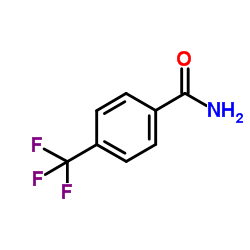
4-(Trifluoromethyl)benzamide structure
|
Common Name | 4-(Trifluoromethyl)benzamide | ||
|---|---|---|---|---|
| CAS Number | 1891-90-3 | Molecular Weight | 189.135 | |
| Density | 1.3±0.1 g/cm3 | Boiling Point | 254.2±40.0 °C at 760 mmHg | |
| Molecular Formula | C8H6F3NO | Melting Point | 184-186 °C(lit.) | |
| MSDS | N/A | Flash Point | 107.5±27.3 °C | |
| Name | 4-(Trifluoromethyl)benzamide |
|---|---|
| Synonym | More Synonyms |
| Density | 1.3±0.1 g/cm3 |
|---|---|
| Boiling Point | 254.2±40.0 °C at 760 mmHg |
| Melting Point | 184-186 °C(lit.) |
| Molecular Formula | C8H6F3NO |
| Molecular Weight | 189.135 |
| Flash Point | 107.5±27.3 °C |
| Exact Mass | 189.040146 |
| PSA | 43.09000 |
| LogP | 1.71 |
| Vapour Pressure | 0.0±0.5 mmHg at 25°C |
| Index of Refraction | 1.479 |
| InChIKey | WEJHBEDHLLBJFW-UHFFFAOYSA-N |
| SMILES | NC(=O)c1ccc(C(F)(F)F)cc1 |
Synonym: Section 2 - COMPOSITION, INFORMATION ON INGREDIENTS
Risk Phrases: 36/37/38 Section 3 - HAZARDS IDENTIFICATION EMERGENCY OVERVIEW
Irritating to eyes, respiratory system and skin.The toxicological properties of this material have not been fully investigated. Potential Health Effects Eye: Causes eye irritation. Skin: Causes skin irritation. Ingestion: May cause gastrointestinal irritation with nausea, vomiting and diarrhea. Inhalation: Causes respiratory tract irritation. Chronic: No information found. Section 4 - FIRST AID MEASURES Eyes: Flush eyes with plenty of water for at least 15 minutes, occasionally lifting the upper and lower eyelids. Get medical aid. Skin: Get medical aid. Flush skin with plenty of water for at least 15 minutes while removing contaminated clothing and shoes. Wash clothing before reuse. Ingestion: Never give anything by mouth to an unconscious person. Get medical aid. Do NOT induce vomiting. If conscious and alert, rinse mouth and drink 2-4 cupfuls of milk or water. Inhalation: Remove from exposure and move to fresh air immediately. If not breathing, give artificial respiration. If breathing is difficult, give oxygen. Get medical aid. Notes to Physician: Treat symptomatically and supportively. Section 5 - FIRE FIGHTING MEASURES General Information: As in any fire, wear a self-contained breathing apparatus in pressure-demand, MSHA/NIOSH (approved or equivalent), and full protective gear. During a fire, irritating and highly toxic gases may be generated by thermal decomposition or combustion. Extinguishing Media: Use extinguishing media most appropriate for the surrounding fire. Use water spray, dry chemical, carbon dioxide, or appropriate foam. Section 6 - ACCIDENTAL RELEASE MEASURES General Information: Use proper personal protective equipment as indicated in Section 8. Spills/Leaks: Vacuum or sweep up material and place into a suitable disposal container. Clean up spills immediately, observing precautions in the Protective Equipment section. Avoid generating dusty conditions. Provide ventilation. Section 7 - HANDLING and STORAGE Handling: Minimize dust generation and accumulation. Avoid contact with eyes, skin, and clothing. Keep container tightly closed. Avoid ingestion and inhalation. Use with adequate ventilation. Wash clothing before reuse. Storage: Keep container closed when not in use. Store in a tightly closed container. Store in a cool, dry, well-ventilated area away from incompatible substances. Section 8 - EXPOSURE CONTROLS, PERSONAL PROTECTION Engineering Controls: Facilities storing or utilizing this material should be equipped with an eyewash facility and a safety shower. Use adequate ventilation to keep airborne concentrations low. Exposure Limits CAS# 1891-90-3: Personal Protective Equipment Eyes: Wear appropriate protective eyeglasses or chemical safety goggles as described by OSHA's eye and face protection regulations in 29 CFR 1910.133 or European Standard EN166. Skin: Wear appropriate protective gloves to prevent skin exposure. Clothing: Wear appropriate protective clothing to prevent skin exposure. Respirators: A respiratory protection program that meets OSHA's 29 CFR 1910.134 and ANSI Z88.2 requirements or European Standard EN 149 must be followed whenever workplace conditions warrant respirator use. Section 9 - PHYSICAL AND CHEMICAL PROPERTIES Physical State: Crystalline powder Color: white Odor: Not available. pH: Not available. Vapor Pressure: Not available. Viscosity: Not available. Boiling Point: Not available. Freezing/Melting Point: 184 - 186 deg C Autoignition Temperature: Not available. Flash Point: Not available. Explosion Limits, lower: Not available. Explosion Limits, upper: Not available. Decomposition Temperature: Solubility in water: Specific Gravity/Density: Molecular Formula: C8H6F3NO Molecular Weight: 189.14 Section 10 - STABILITY AND REACTIVITY Chemical Stability: Stable under normal temperatures and pressures. Conditions to Avoid: Incompatible materials, dust generation, excess heat. Incompatibilities with Other Materials: Strong oxidizing agents. Hazardous Decomposition Products: Carbon monoxide, oxides of nitrogen, carbon dioxide, hydrogen fluoride gas. Hazardous Polymerization: Has not been reported Section 11 - TOXICOLOGICAL INFORMATION RTECS#: CAS# 1891-90-3 unlisted. LD50/LC50: Not available. Carcinogenicity: 4-(Trifluoromethyl)benzamide - Not listed by ACGIH, IARC, or NTP. Section 12 - ECOLOGICAL INFORMATION Section 13 - DISPOSAL CONSIDERATIONS Dispose of in a manner consistent with federal, state, and local regulations. Section 14 - TRANSPORT INFORMATION IATA Not regulated as a hazardous material. IMO Not regulated as a hazardous material. RID/ADR Not regulated as a hazardous material. Section 15 - REGULATORY INFORMATION European/International Regulations European Labeling in Accordance with EC Directives Hazard Symbols: XI Risk Phrases: R 36/37/38 Irritating to eyes, respiratory system and skin. Safety Phrases: S 26 In case of contact with eyes, rinse immediately with plenty of water and seek medical advice. S 37/39 Wear suitable gloves and eye/face protection. WGK (Water Danger/Protection) CAS# 1891-90-3: No information available. Canada None of the chemicals in this product are listed on the DSL/NDSL list. CAS# 1891-90-3 is not listed on Canada's Ingredient Disclosure List. US FEDERAL TSCA CAS# 1891-90-3 is not listed on the TSCA inventory. It is for research and development use only. SECTION 16 - ADDITIONAL INFORMATION N/A |
| Hazard Codes | Xi:Irritant; |
|---|---|
| Risk Phrases | R36/37/38 |
| Safety Phrases | S26-S36-S37/39 |
| WGK Germany | 3 |
| HS Code | 2924299090 |
| Precursor 10 | |
|---|---|
| DownStream 9 | |
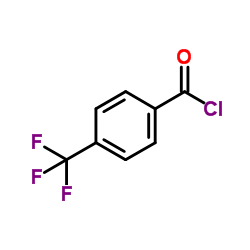 CAS#:329-15-7
 CAS#:201230-82-2
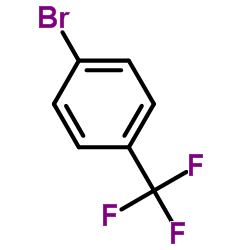 CAS#:402-43-7
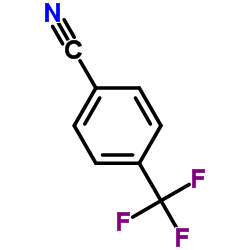 CAS#:455-18-5
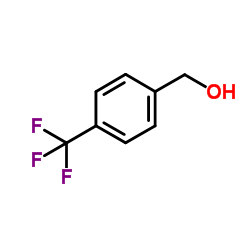 CAS#:349-95-1
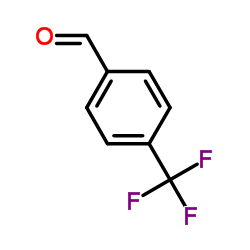 CAS#:455-19-6
![N-[[4-(trifluoromethyl)phenyl]methylidene]hydroxylamine Structure](https://image.chemsrc.com/caspic/097/66046-34-2.png) CAS#:66046-34-2
CAS#:66046-34-2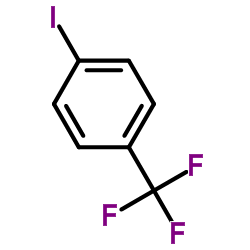 CAS#:455-13-0
 CAS#:32857-62-8
 CAS#:91888-96-9
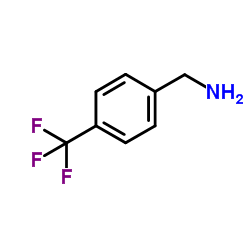 CAS#:3300-51-4
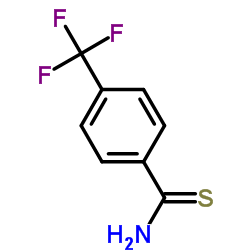 CAS#:72505-21-6
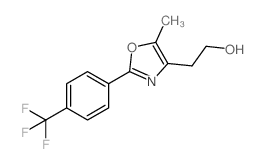 CAS#:141819-91-2
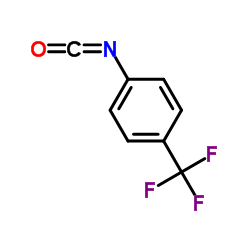 CAS#:1548-13-6
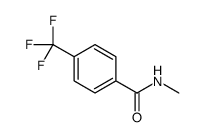 CAS#:65017-76-7
![5-[4-(trifluoromethyl)phenyl]-1,3,4-oxathiazol-2-one structure](https://image.chemsrc.com/caspic/214/851224-79-8.png) CAS#:851224-79-8
CAS#:851224-79-8 CAS#:851224-80-1
![(3-[4-(TRIFLUOROMETHYL)PHENYL]-1,2,4-THIADIAZOL-5-YL)METHANOL structure](https://image.chemsrc.com/caspic/311/851224-81-2.png) CAS#:851224-81-2
CAS#:851224-81-2| HS Code | 2924299090 |
|---|---|
| Summary | 2924299090. other cyclic amides (including cyclic carbamates) and their derivatives; salts thereof. VAT:17.0%. Tax rebate rate:13.0%. . MFN tariff:6.5%. General tariff:30.0% |
|
Name: Octanol-water partition coefficient, log P of the compound at pH 10 to 11 by HPLC ana...
Source: ChEMBL
Target: N/A
External Id: CHEMBL3992812
|
|
Name: Discovery of Small Molecules to Inhibit Human Cytomegalovirus Nuclear Egress
Source: ICCB-Longwood/NSRB Screening Facility, Harvard Medical School
Target: HCMV UL50
External Id: HMS1262
|
|
Name: Equilibrium thermodynamic aqueous solubility of the compound at 0.5 to 5 mg after 2 t...
Source: ChEMBL
Target: N/A
External Id: CHEMBL3992820
|
|
Name: Solubility of the compound in acetonitrile/water mixture at 10 mM measured after 24 b...
Source: ChEMBL
Target: N/A
External Id: CHEMBL3992819
|
|
Name: A screen for compounds that inhibit the activity of LtaS in Staphylococcus aureus
Source: ICCB-Longwood/NSRB Screening Facility, Harvard Medical School
External Id: HMS979
|
|
Name: Cell-based high throughput primary assay to identify activators of GPR151
Source: The Scripps Research Institute Molecular Screening Center
Target: RecName: Full=G-protein coupled receptor 151; AltName: Full=G-protein coupled receptor PGR7; AltName: Full=GPCR-2037; AltName: Full=Galanin receptor 4; AltName: Full=Galanin-receptor-like protein; Short=GalRL
External Id: GPR151_PHUNTER_AG_LUMI_1536_1X%ACT
|
|
Name: A screen for compounds that inhibit viral RNA polymerase binding and polymerization a...
Source: ICCB-Longwood/NSRB Screening Facility, Harvard Medical School
Target: Chain A, Poliovirus Polymerase With Gtp
External Id: HMS750
|
|
Name: Aqueous solubility of the compound in pH 6.8 buffer incubated for 24 hrs under shakin...
Source: ChEMBL
Target: N/A
External Id: CHEMBL4618329
|
|
Name: Permeability across apical to basolateral side in human Caco2 cells measured up to 2 ...
Source: ChEMBL
Target: N/A
External Id: CHEMBL4618331
|
|
Name: Equilibrium thermodynamic aqueous solubility of the compound in pH 6.8 buffer incubat...
Source: ChEMBL
Target: N/A
External Id: CHEMBL4618330
|
Total 14, Current Page 1 of 2
1
2
| 4-(Trifluoromethyl)benzamide |
| MFCD00007998 |
| EINECS 217-571-9 |
| para-trifluoromethylbenzamide |
| ZVR DXFFF |
| p-(Trifluoromethyl)benzamide |
| α,α,α-Trifluoro-p-toluamide |
| 4-trifluoromethylbenzamide |
| 4-Carbamoylbenzotrifluoride |