BI-1622
Modify Date: 2025-08-28 16:24:25
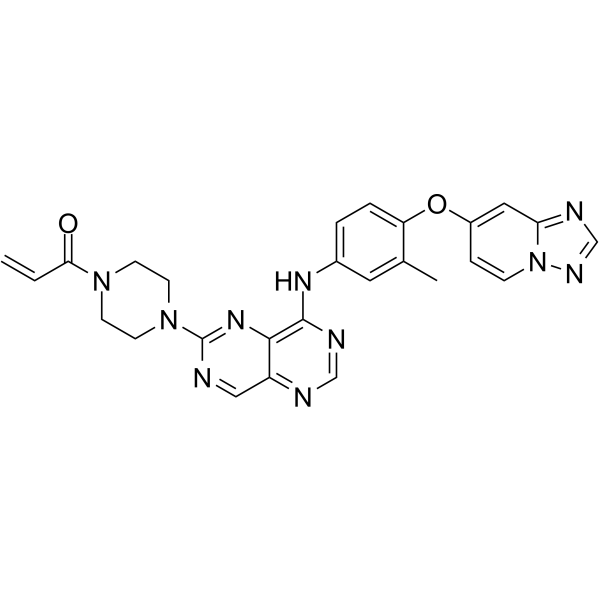
BI-1622 structure
|
Common Name | BI-1622 | ||
|---|---|---|---|---|
| CAS Number | 2681392-19-6 | Molecular Weight | 508.53 | |
| Density | N/A | Boiling Point | N/A | |
| Molecular Formula | C26H24N10O2 | Melting Point | N/A | |
| MSDS | N/A | Flash Point | N/A | |
Use of BI-1622BI-1622 is an orally active, potent and highly selective HER2 (ERBB2) inhibitor, with an IC50 of 7 nM. BI-1622 shows greater than 25-fold selectivity over EGFR. BI-1622 shows high antitumor efficacy in vivo in xenograft mouse tumor models with engineered H2170 and PC9 cells and had a favorable drug metabolism and pharmacokinetics profile[1]. |
| Name | BI-1622 |
|---|
| Description | BI-1622 is an orally active, potent and highly selective HER2 (ERBB2) inhibitor, with an IC50 of 7 nM. BI-1622 shows greater than 25-fold selectivity over EGFR. BI-1622 shows high antitumor efficacy in vivo in xenograft mouse tumor models with engineered H2170 and PC9 cells and had a favorable drug metabolism and pharmacokinetics profile[1]. |
|---|---|
| Related Catalog | |
| Target |
HER2:7 nM (IC50) ErbB4 EGFR CDK11B JAK3 |
| In Vitro | BI-1622 (0-5 µM, 72 h or 96 h) inhibits the proliferation of HER2-dependent cell lines[1]. BI-1622 induces a dose-dependent decrease in pHER2 and pERK levels in NCI-H2170 HER2YVMA and PC-9 HER2YVMA cells with an accompanying decrease in DUSP6 messenger RNA levels[1]. BI-1622 displays good permeability and no PgP-mediated efflux liability[1]. BI-1622 shows good in vitro clearance in mouse liver microsomes and mouse hepatocytes[1]. Cell Proliferation Assay[1] Cell Line: Ba/F3 cells Concentration: 0-5 µM Incubation Time: 72 h or 96 h Result: Potently inhibited the proliferation of cancer cell lines dependent on amplified HER2 or an NRG-1 fusion. Inhibited different HER2 oncogenic variants and HER2WT with IC50 values below 50 nM in tumor cell lines, while sparing EGFRWT-driven cells. |
| In Vivo | BI-1622 (1 mg/kg, IV; 10 and 100 mg/kg, Orally; once) shows moderate clearance, a moderate volume of distribution, and good to moderate bioavailability[1]. BI-1622 (0-100 mg/kg, orally, twice daily) inhibits tumor growth and inhibits oncogenic signaling in vivo[1]. Animal Model: Female NMRI-Foxn1nu mice (6-8 weeks old, 8-10 mice per cage, engrafted subcutaneously with PC-9 HER2YVMA, NCI-H2170 HER2YVMA or NCI-N87 cells)[1] Dosage: 10, 30 and 100 mg/kg Administration: orally, twice daily Result: In the NCI-H2170 HER2YVMA mechanistic model, 100 mg/kg twice daily BI-1622 resulted in a delay in tumor growth (73% TGI). In the ST3107 HER2 exon 20 mutant model, both BI-4142 (100 mg/kg twice daily) resulted in tumor regressions. Animal Model: NMRI Foxn1nu mice (n=3 per group)[1] Dosage: 1 mg/kg (IV); 10 and 100 mg/kg (Orally) Administration: IV, Orally; once (Pharmacokinetic Analysis) Result: Showed moderate in vivo clearance (50% hepatic blood flow), a moderate volume of distribution, and good to moderate bioavailability of up to 68%. |
| References |
| Molecular Formula | C26H24N10O2 |
|---|---|
| Molecular Weight | 508.53 |
| InChIKey | KXUBSQUYDKKQTR-UHFFFAOYSA-N |
| SMILES | C=CC(=O)N1CCN(c2ncc3ncnc(Nc4ccc(Oc5ccn6ncnc6c5)c(C)c4)c3n2)CC1 |